








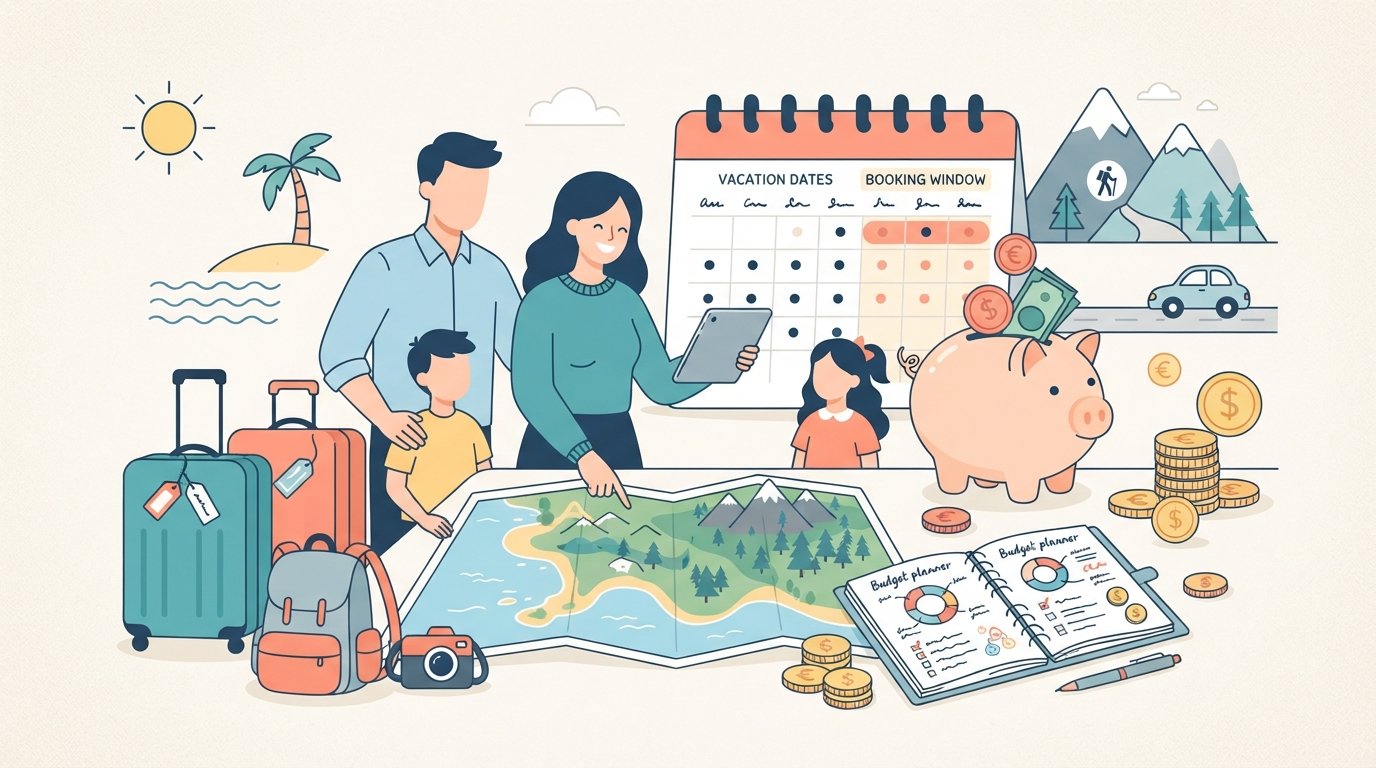
A family vacation is one of the most memorable things you can do together. It is also one of the easiest things to overspend on — and one of the most common reasons families take on debt that follows them home long after the trip ends.
The tension is real. You want to create experiences your children will remember, but you also need to protect the financial stability that keeps your household running the other fifty weeks of the year. The good news is that memorable vacations and responsible spending are not opposites. The difference between a vacation that builds memories and one that builds debt is not the destination — it is the planning.
This guide walks through how to plan a vacation on a budget step by step, shares practical cheap family vacation ideas, and covers the budget travel planning strategies that let your family travel well without overspending. With the right approach, the same trip can cost significantly less while feeling just as special.
If you are building this into a broader household money plan, start with our guide on household budgeting for families — a vacation is one large discretionary expense within the bigger framework.
Why Family Vacations Overshoot the Budget
Before looking at how to save, it helps to understand why family vacations so often cost more than expected. The causes are predictable, which means they are preventable.
The “Once a Year” Mindset
Because vacations are infrequent, families approach them with a mindset of “we deserve this” or “we may not do this again for a while.” That mindset loosens spending limits. Every meal, activity, and souvenir feels justified because the trip is special — and by the time the trip ends, the total is far above what was planned.
Hidden Costs Add Up Fast
The advertised price of a vacation is rarely the full cost. Flights, lodging, and a rental car are the visible expenses. The hidden ones — airport parking, baggage fees, tips, resort fees, travel-size toiletries, snacks, souvenirs, travel insurance, and the cost of someone watching your pets or home — can add hundreds to a trip that looked affordable on paper.
Last-Minute Decisions Are Expensive
When planning happens in advance, you have time to compare prices, book early, and find deals. When decisions are made on the road — where to eat, what activity to book, which hotel to choose — you pay whatever is available, which is usually the most expensive option.
Children’s Expectations Grow With Age
A toddler is happy with a beach and a bucket. A teenager may want attractions, shopping, and experiences that cost significantly more. As children grow, the cost of keeping them engaged rises, and budgets that worked three years ago may no longer be sufficient.
Step 1: Set a Total Vacation Budget First
The most important step happens before you choose a destination: deciding how much you can spend without going into debt or sacrificing other financial goals.
Decide the Total Based on Savings, Not Borrowing
Your vacation total should be the amount you have saved or can save by the trip date — not what you can charge to a credit card and pay off later. If the money is not there yet, either save more before the trip or choose a less expensive option. A vacation you cannot afford is not a vacation — it is a debt obligation with memories attached.
Divide the Total Into Categories
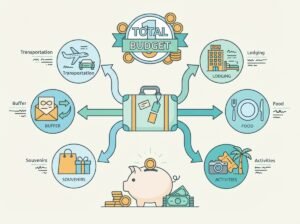
Break your total into the major cost categories so each has an assigned amount:
| Category | What It Covers | Typical Share of Budget |
|---|---|---|
| Transportation | Flights, gas, rental car, airport parking, baggage | 25–35% |
| Lodging | Hotel, vacation rental, camping fees | 25–35% |
| Food | Restaurants, groceries, snacks, drinks | 15–20% |
| Activities | Attractions, tours, tickets, equipment rental | 10–15% |
| Souvenirs and extras | Gifts, photos, unexpected purchases | 5–10% |
| Buffer | Hidden costs and last-minute expenses | 5–10% |
Your percentages will vary based on your destination and travel style. A road trip will have a higher transportation share; a resort stay will have a higher lodging share. The point is to assign money before spending so no single category quietly absorbs the entire budget.
Include a Buffer for Hidden Costs
Every trip produces costs that were not in the original plan — a baggage fee, a road toll, an unplanned meal, a higher-than-expected gas bill. A buffer of 5 to 10% prevents these from turning into stress or debt. If you do not use it, the surplus becomes a head start on your next trip.
Step 2: Choose a Destination That Fits the Budget
The destination should follow the budget, not the other way around. When families fall in love with a destination first and then try to make the budget fit, they almost always overspend.
Match the Destination to the Total
If your total budget is $1,500 for a family of four, a flights-and-resort trip to a distant destination may consume the entire budget on transportation and lodging alone, leaving nothing for food and activities. A driving trip to a nearby destination may fit the same budget comfortably, with room for experiences.
Consider Cheap Family Vacation Ideas by Category
| Vacation Type | Why It Saves Money | Best For |
|---|---|---|
| National or state parks | Low lodging and activity costs, free natural activities | Families who love the outdoors |
| Nearby beach or lake towns | Shorter travel distance, affordable rentals | Families who want relaxation |
| Camping or glamping | Lowest lodging cost, cooking your own food | Adventurous families |
| Staycations | Zero travel cost, explore your own area | Families on a tight budget or short timeline |
| Visiting family or friends | Free or low-cost lodging | Families with out-of-town connections |
| Off-season destinations | Lower prices on lodging and flights | Flexible families who can travel off-peak |
The best vacation is not the one that looks most impressive on social media — it is the one your family enjoys most within a budget you can afford.
Step 3: Save on Transportation and Lodging
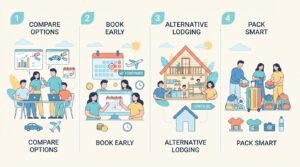
Transportation and lodging are usually the two largest categories. Saving on these two frees up money for the experiences that make the trip memorable.
Save on Transportation
- Compare driving versus flying. For a family of four, driving is often cheaper than four flights once baggage fees, airport parking, and transport at the destination are included.
- Book flights early and be flexible on dates. Flight prices rise as the travel date approaches. Shifting departure or return by a day or two can significantly reduce the fare.
- Travel off-peak when possible. Shoulder seasons — the weeks just before or after peak season — offer lower prices on both flights and lodging with similar weather and fewer crowds.
- Pack light to avoid baggage fees. Baggage fees can add $100 or more per round trip for a family. Packing carry-ons only, or traveling with laundry options, eliminates this cost.
Save on Lodging
- Consider vacation rentals over hotels. For families, a rental with a kitchen allows you to cook some meals, which reduces food costs significantly. A rental also provides more space for the same or lower price than a hotel room.
- Look beyond the obvious locations. Staying slightly outside the main tourist area usually lowers the lodging cost while adding only a short drive or transit ride to activities.
- Compare total costs, not nightly rates. A hotel at $120 per night with a $25 resort fee and paid parking may cost more than a rental at $140 per night with free parking and a kitchen.
- Consider camping or state park lodges. These are among the most affordable lodging options available and often place you directly in the destination’s best natural attractions.
Step 4: Control Food Costs Without Sacrificing the Experience
Food is the category where most vacation budgets leak. Every restaurant meal for a family of four can cost as much as a day’s lodging, and snacking and drinks add a constant drip of spending.
Cook Some Meals at Your Lodging
If your lodging has a kitchen — even a basic one — plan to cook breakfast and one other meal per day. Eating one restaurant meal per day instead of three can save a family hundreds across a week-long trip without making the vacation feel cheap.
Pack Snacks and Drinks
Airport and attraction food is priced at a premium. Pack snacks, water bottles, and simple breakfast items. For road trips, bring a cooler with sandwiches and drinks. This single habit can save $50 to $100 over a few days.
Choose Local Over Tourist Restaurants
Restaurants in the heart of tourist areas charge more for the same food. Walking a few blocks to where locals eat usually produces better food at lower prices. Ask locals or check reviews outside the main tourist zones.
Set a Food Budget Per Day
Decide how much you will spend on food each day and track it. This keeps the category under control without requiring you to track every receipt — a daily total is easier to manage than a running tally of individual purchases.
Step 5: Plan Activities and Limit Souvenirs
Activities and souvenirs are the categories where emotional spending is highest — and where a plan saves the most.
Prioritize a Few Meaningful Activities
You do not need to do everything. Choose two or three activities that matter most to your family and budget for those. Leave room for free or low-cost experiences — hiking, beaches, local parks, community events — which are often the most memorable parts of a trip.
Book Activities in Advance
Booking tours, tickets, and attractions ahead of time usually costs less than buying at the gate, and it prevents impulse decisions driven by excitement. Research prices online before you travel.
Set Souvenir Limits Before the Trip
Decide in advance how much each child can spend on souvenirs, and tell them the amount before the trip begins. This turns every souvenir shop from a negotiation into a simple budgeting exercise — and it is one of the best real-world money lessons a child can get. For more on age-appropriate money skills, pair this with our guide on teaching children financial responsibility.
Focus on Experiences Over Things
The most memorable vacation moments are rarely the souvenirs. They are the experiences — a hike, a swim, a shared meal, a laugh. Directing your budget toward experiences rather than objects produces richer memories and lower spending.
Real-World Example: A Family’s $1,500 Vacation
Consider a family of four planning a five-day trip with a total budget of $1,500, saved over six months at $250 per month.
Step 1 — Budget allocation:
- Transportation: $400 (driving, gas and tolls)
- Lodging: $500 (vacation rental with a kitchen, five nights at $100)
- Food: $300 (one restaurant meal per day, cooking the rest)
- Activities: $200 (two paid attractions, plus free hiking and beach days)
- Souvenirs: $50 ($25 per child, agreed in advance)
- Buffer: $50
Step 2 — Destination:
They choose a state park area within a four-hour drive, with a nearby lake town. Lodging is a rental cabin with a full kitchen. The destination fits the budget because driving eliminates flight costs.
Step 3 — Saving on transport and lodging:
They drive instead of flying, saving roughly $800 compared to four round-trip flights. They book the cabin three months in advance, securing a lower rate than last-minute options. They pack a cooler with snacks and drinks for the drive.
Step 4 — Food:
They cook breakfast and lunch at the cabin and eat one restaurant meal per day. They bring coffee and breakfast staples from home. Total food spending: $275 — $25 under budget.
Step 5 — Activities and souvenirs:
They book two paid attractions online in advance, saving $30 versus gate prices. They fill the remaining days with free hiking, beach time, and a local community event. Each child picks one souvenir within their $25 limit. Total: $180 — $70 under budget.
Final spending: $1,255, with $245 left unspent. The surplus rolls into the next vacation fund. The family returns with memories, photos, and no debt — and the trip cost less than many families spend on a single long weekend at a resort.
Common Vacation Budgeting Mistakes to Avoid
- Choosing the destination before setting the budget: The destination should fit the money, not the other way around.
- Forgetting hidden costs: Parking, baggage fees, tips, tolls, travel-size items, and pet care add up — include a buffer.
- Eating every meal at restaurants: Cooking one or two meals per day at your lodging saves hundreds across a trip.
- Not booking in advance: Last-minute bookings for flights, lodging, and activities almost always cost more.
- Trying to do every activity: Prioritize a few meaningful ones and fill the rest with free or low-cost experiences.
- Setting no souvenir limits: Without a per-child limit, souvenir spending becomes a daily negotiation that drains the budget.
- Comparing your vacation to others: Social media vacation content creates pressure to spend on a trip that may not match your budget or values.
- Borrowing to travel: A vacation charged to a credit card and paid off over months costs far more than the sticker price — and the memories fade while the payments continue.
- Not saving in advance: The best vacation budget is funded monthly, not in a single paycheck before the trip.
- Overplanning every minute: A packed itinerary creates pressure to spend constantly. Leave room for free, unplanned moments.
Frequently Asked Questions
How much should I budget for a family vacation?
The right amount depends on your family size, destination, travel style, and what you have saved. The key principle is that the total should be funded by savings — not debt. Decide what you can save by the trip date and let that number guide the destination.
How can I plan a vacation on a budget?
Start by setting a total budget, divide it into categories, choose a destination that fits the budget, save on transportation and lodging by booking early and comparing options, cook some meals at your lodging, and prioritize a few meaningful activities over trying to do everything.
What are some cheap family vacation ideas?
Affordable options include national or state parks, nearby beach or lake towns, camping, staycations, visiting family or friends, and off-season destinations. The cheapest option is not always the least memorable — natural destinations often provide the richest experiences at the lowest cost.
Should I use a credit card to pay for a vacation?
You can use a credit card for convenience and protection, but only if you can pay the full balance with money you have already saved. Charging a vacation and paying it off over months means paying interest on memories — the worst possible financial outcome.
How do I save on vacation food?
Cook breakfast and one other meal per day at your lodging if it has a kitchen. Pack snacks and drinks for travel days and attractions. Choose local restaurants over tourist-area restaurants. Set a daily food budget and track it.
How do I handle vacation souvenirs with kids?
Set a per-child dollar limit before the trip and tell your children the amount in advance. Let them choose how to spend it. This turns souvenir shopping into a budgeting exercise and eliminates daily negotiations. For more on teaching kids money skills, see our guide on teaching children financial responsibility.
Is a staycation a real vacation?
Yes. A staycation — exploring your own area, taking day trips, and treating your home as a base — eliminates travel and lodging costs entirely while still creating family experiences. For families on a tight budget or short timeline, it can be the best option.
How does vacation planning fit with my household budget?
A vacation is a discretionary expense that should be planned with a monthly sinking fund, just like back-to-school or holiday spending. See our guide on household budgeting for families for how to build this into your overall plan. And if vacation savings are part of a bigger financial goal, our guide on how to set financial goals you’ll actually stick to can help you stay on track.
Key Takeaways
- A memorable family vacation does not require a large budget — it requires planning.
- Set a total budget first, based on savings, and let the destination follow the money.
- Divide the budget into categories with a buffer for hidden costs.
- Save on transportation by comparing driving and flying, booking early, and traveling off-peak.
- Save on lodging by considering vacation rentals, camping, and locations outside main tourist areas.
- Control food costs by cooking some meals at your lodging and packing snacks.
- Prioritize a few meaningful activities and fill the rest with free or low-cost experiences.
- Set souvenir limits before the trip and turn them into a money lesson for kids.
- Fund the vacation monthly through a sinking fund, not with debt.
- The best vacation is the one your family enjoys without bringing debt home.
To build vacation savings into your full household money plan, read our pillar guide on household budgeting for families. For another seasonal spending guide with similar planning strategies, see our holiday budgeting guide. And if your vacation is part of a larger set of financial goals, our guide on how to set financial goals you’ll actually stick to will help you keep the bigger picture on track.
A family vacation is not about how far you go or how much you spend — it is about the time together and the memories you create. Plan the budget, choose the destination that fits, and enjoy the trip without the weight of debt waiting at home.
This article is for informational purposes only and is not financial advice. Travel costs and budgeting needs vary by household, destination, and location.