










If you spend any time reading about early retirement or financial independence, one number appears more than any other: 4%.
The 4% rule is the most famous guideline in the FIRE movement — the single calculation that turns a vague dream of “retiring early” into a concrete target with a dollar amount attached to it. It is the bridge between how much you spend and how much you need to save. Without it, financial independence is an abstract idea. With it, independence becomes a number you can calculate, track, and work toward.
This guide explains what is the 4% rule in plain language, where it comes from, how it answers the questions of how to retire early and how much do you need to retire early, and what its limitations are. Understanding this one concept changes early retirement from a wish into a plan.
If you are new to the FIRE framework, start with our pillar guide on financial independence for beginners — this article is the math layer that sits underneath that broader strategy.
What Is the 4% Rule?
The 4% rule is a guideline for how much you can safely withdraw from your investment portfolio each year in retirement without running out of money.
The Basic Idea
If you have a portfolio invested in a diversified mix of stocks and bonds, you can withdraw roughly 4% of the starting portfolio value in your first year of retirement. In each following year, you withdraw the same dollar amount adjusted for inflation. Under this guideline, the portfolio should last for at least 30 years — and in many historical scenarios, it lasts far longer.
The Multiplication Shortcut: 25 Times Your Expenses
The 4% rule works in both directions. If 4% of your portfolio covers your expenses, then your target portfolio is your annual expenses multiplied by 25.
- If you spend $40,000 per year, your target is $1,000,000
- If you spend $30,000 per year, your target is $750,000
- If you spend $50,000 per year, your target is $1,250,000
This is how the 4% rule answers the question how much do you need to retire early — it converts your annual spending into a single target number. That number is your FI (financial independence) number.
Why 4% and Not 5% or 3%?
The 4% figure was not chosen at random. It comes from historical research on how portfolios perform across decades of different market conditions — including crashes, recessions, and periods of high inflation. The researchers found that 4% was the highest withdrawal rate that survived even the worst historical scenarios. Higher rates ran out of money in some periods; 4% survived them all.
Where the 4% Rule Comes From
The 4% rule comes from a landmark 1994 study by financial advisor William Bengen, often called the Trinity Study when referenced alongside a later academic paper. Bengen wanted to answer a practical question: how much could a retiree safely withdraw without risking ruin?
The Method
Bengen tested different withdrawal rates against actual historical market data going back to the 1920s. He looked at rolling 30-year retirement periods — for example, someone retiring in 1929 just before the Great Depression, or in 1973 just before a severe market downturn. For each period, he calculated whether a portfolio invested in stocks and bonds would have survived 30 years of withdrawals.
The Finding
At a 4% withdrawal rate, the portfolio survived every single 30-year period tested — even the worst ones. In many periods, the portfolio not only survived but grew significantly, meaning the retiree ended up with more money than they started with. At 5% or higher, the portfolio ran out of money in some historical scenarios.
The Key Insight
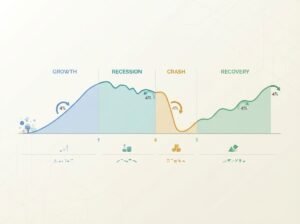
The danger in retirement is not average market returns — it is the sequence of returns. If a major market crash occurs in the first few years of retirement, while you are withdrawing money, the portfolio can be damaged so badly that it never recovers — even if average returns over 30 years are strong. The 4% rule was calibrated to survive this worst-case scenario: a crash at the worst possible time.
How the 4% Rule Answers “How to Retire Early”
The 4% rule is not just a retirement withdrawal guideline — it is the planning tool that makes early retirement calculable. Here is how it connects the pieces.
Step 1: Know Your Annual Expenses
Your annual expenses determine everything. The lower your expenses, the lower your target portfolio, and the faster you reach independence. This is why how to retire early is as much about spending as it is about earning. See our guide on how to live below your means for the practical side of reducing expenses sustainably.
Step 2: Multiply by 25
Take your annual expenses and multiply by 25. This is your FI number — the portfolio size at which you are financially independent under the 4% rule.
| Annual Expenses | FI Number (× 25) |
|---|---|
| $20,000 | $500,000 |
| $30,000 | $750,000 |
| $40,000 | $1,000,000 |
| $50,000 | $1,250,000 |
| $60,000 | $1,500,000 |
| $80,000 | $2,000,000 |
Step 3: Track Your Progress as a Percentage
Instead of tracking your portfolio as a raw dollar amount, track it as a percentage of your FI number. If your FI number is $1,000,000 and you have $250,000 saved, you are 25% of the way there. This makes progress visible and motivating, regardless of market fluctuations.
Step 4: Understand the Role of Assets
The 4% rule only works if your money is invested in assets that grow — typically a diversified portfolio of stocks and bonds. Money sitting in a low-interest savings account will not support a 4% withdrawal over decades because it does not grow enough to offset inflation and withdrawals. This is why understanding the difference between growing and stagnant assets matters — see our guide on assets vs liabilities for the foundational concept.
Step 5: Reach Your Number and Withdraw 4%
Once your portfolio reaches your FI number, you can theoretically begin withdrawing 4% per year to cover your expenses. At this point, your investments are working for you instead of you working for money. This is the moment of financial independence.
The Limitations of the 4% Rule

The 4% rule is a guideline, not a guarantee. Understanding its limitations is essential for anyone using it to plan early retirement.
It Was Designed for 30 Years
The original research tested 30-year retirement periods. If you retire early — say at age 40 or 45 — your retirement could last 50 years or more. A 4% withdrawal rate may not survive that long in all scenarios. Many early retirement planners use a more conservative rate — 3.5% or even 3% — to account for the longer time horizon.
It Assumes a Stock and Bond Portfolio
The 4% rule was tested on a portfolio of roughly 50% to 75% stocks and the rest in bonds. If your investments are concentrated in a single asset, real estate, or cash, the rule may not apply. The guideline depends on the historical performance of a diversified portfolio.
It Assumes You Adjust Spending During Downturns
The 4% rule survives worst-case scenarios, but in those scenarios, the retiree may need to reduce spending during market crashes to avoid depleting the portfolio too quickly. Inflexible spending — withdrawing the full inflation-adjusted amount no matter what — increases the risk of running out.
Past Performance Does Not Guarantee Future Results
The 4% rule is based on historical data. Future market conditions may be better or worse than the past. If returns are lower over the next few decades, a 4% withdrawal rate may be less safe than it was historically. This uncertainty is why many planners recommend a buffer or a more conservative rate.
Inflation Varies
The rule adjusts withdrawals for inflation each year, but inflation is unpredictable. A period of high inflation would increase your withdrawals faster and could strain the portfolio. The 4% rule survived historical high-inflation periods, but future inflation patterns are unknown.
Taxes Are Not Included
The 4% rule is about gross withdrawals from your portfolio. If some of your money is in tax-advantaged accounts and some is not, your actual spendable income after taxes may be less than 4% of your portfolio value. Factor in taxes when calculating your real target.
It Is a Guideline, Not a Formula
The 4% rule gives you a starting point and a target. It does not replace ongoing monitoring, flexibility, and adjustment. Retirees who track their portfolio, adjust spending when needed, and stay informed are far more likely to succeed than those who set 4% and forget it.
How Simple Living Changes the 4% Rule Math
The 4% rule reveals why simple living and financial independence are so deeply connected. Your spending level determines your target portfolio, and lower spending means a lower target — which means fewer years of saving.
The Power of Lower Expenses
| Annual Expenses | FI Number | Years to FI at 50% Savings Rate |
|---|---|---|
| $60,000 | $1,500,000 | ~17 years |
| $40,000 | $1,000,000 | ~17 years |
| $30,000 | $750,000 | ~17 years |
The years to FI at a 50% savings rate are roughly the same regardless of the expense level — but the dollar target is very different. A person who lives on $30,000 needs a portfolio of $750,000. A person who lives on $60,000 needs $1,500,000. Both reach independence in roughly the same number of years if their savings rate is the same — but the lower spender needs half the portfolio.
This is the mathematical reason why how much do you need to retire early is answered by your spending, not by a universal dollar amount. The lower your spending, the less you need — and the more realistic early retirement becomes.
Simple Living Creates a Margin of Safety
Lower expenses not only reduce your target portfolio but also create a margin of safety. If you retire with a portfolio that covers $30,000 of expenses and your spending temporarily drops to $25,000 during a market downturn, your portfolio is under less stress. A higher spender who needs $60,000 has less room to adjust.
Flexibility Is the Real Safety Net
The most robust early retirement plans are not the ones with the biggest portfolios — they are the ones with the most flexibility. The ability to reduce spending during downturns, earn occasional income, or adjust withdrawal rates is what makes the 4% rule work in practice. See our guide on household budgeting for families for how to build a spending plan that can flex when needed.
Real-World Example: Two Retirees, Two Target Portfolios
Consider two people pursuing early retirement with the same income but different spending levels.
Person A — Spends $50,000 per year:
- FI number: $1,250,000
- At a 50% savings rate, reaches FI in roughly 17 years
- In retirement, withdraws $50,000 per year (4% of $1,250,000)
- If markets drop, has less room to cut spending because $50,000 covers essentials
Person B — Spends $30,000 per year:
- FI number: $750,000
- At a 50% savings rate, reaches FI in roughly 17 years
- In retirement, withdraws $30,000 per year (4% of $750,000)
- If markets drop, has more room to cut spending because $30,000 already reflects a simpler lifestyle
Both reach independence in the same number of years — but Person B needs $500,000 less in their portfolio and has more flexibility during downturns. The 4% rule did not change. The spending did. And the spending is what made the difference.
This is why the 4% rule and simple living are not separate topics — they are the same topic viewed from two angles.
Common 4% Rule Mistakes to Avoid
- Using 4% as a guarantee: It is a guideline based on historical data, not a promise about the future. Build in flexibility and a buffer.
- Retiring early with a 30-year time horizon in mind: If you retire at 40, your retirement may last 50+ years. Consider a lower withdrawal rate like 3.5% or 3%.
- Not accounting for taxes: Your spendable income after taxes may be less than 4% of your portfolio. Calculate your real net withdrawal.
- Keeping the portfolio in cash or low-growth assets: The 4% rule depends on investment growth. A portfolio that does not grow will not sustain withdrawals for decades.
- Withdrawing the full amount regardless of market conditions: During major downturns, reducing withdrawals can protect the portfolio and extend its life.
- Ignoring inflation: Your withdrawals need to adjust for inflation each year, or your purchasing power will decline.
- Forgetting one-time costs: Large irregular expenses — a new roof, a medical bill, a vehicle replacement — need to be factored into your annual expense estimate.
- Assuming expenses stay flat forever: Expenses can change in retirement — healthcare may rise, travel may increase or decrease, and family circumstances shift. Review your plan regularly.
- Stopping monitoring after reaching FI: Reaching your number is not the end of planning. Continue to track your portfolio and adjust as needed.
- Confusing the FI number with a magic number: The 4% rule gives you a target, but real retirement requires ongoing flexibility and judgment.
Frequently Asked Questions
What is the 4% rule?
The 4% rule is a retirement withdrawal guideline. It states that you can withdraw roughly 4% of your starting portfolio value in your first year of retirement, then adjust that amount for inflation each year, and your portfolio should last at least 30 years in most historical scenarios.
How much do you need to retire early?
Under the 4% rule, you need a portfolio equal to roughly 25 times your annual expenses. If you spend $40,000 per year, your target is $1,000,000. The lower your expenses, the lower your target — which is why spending is the most powerful variable in early retirement.
Is the 4% rule safe for early retirement?
The 4% rule was designed for 30-year retirements. If you retire early, your retirement may last 50 years or more, which increases the risk. Many early retirees use a more conservative rate — 3.5% or 3% — to account for the longer time horizon.
How do I calculate my FI number?
Multiply your annual expenses by 25. For example, if you spend $35,000 per year, your FI number is $875,000. This is the portfolio size at which a 4% withdrawal would cover your annual expenses.
Does the 4% rule work with any investment portfolio?
No. The 4% rule was tested on a diversified portfolio of stocks and bonds — typically 50% to 75% stocks. If your portfolio is concentrated in a single asset, real estate, or cash, the rule may not apply. The guideline depends on the growth characteristics of a diversified portfolio. See our guide on assets vs liabilities for the foundational concept.
What happens if the market crashes right after I retire?
This is called sequence-of-returns risk, and it is the most dangerous scenario for early retirees. If a crash occurs in the first few years of retirement while you are withdrawing money, the portfolio can be damaged severely. The 4% rule was designed to survive this scenario historically, but reducing withdrawals during downturns adds an extra layer of safety.
Should I use 4% or a lower rate?
For a traditional 30-year retirement, 4% is a reasonable starting point. For an early retirement lasting 50+ years, consider 3.5% or 3% for added safety. The trade-off is that a lower rate means you need a larger portfolio — but it also means more security.
How does the 4% rule connect to simple living?
Your annual expenses determine your target portfolio. Lower spending means a lower target, which means fewer years of saving and more flexibility in retirement. Simple living and the 4% rule are two sides of the same coin — both point toward spending less as the key to financial freedom. See our guide on how to live below your means for the practical side.
Key Takeaways
- The 4% rule is a guideline for how much you can safely withdraw from your portfolio each year in retirement — roughly 4% of the starting value, adjusted for inflation annually.
- Your FI number is your annual expenses multiplied by 25 — this is the target portfolio size for financial independence.
- The rule comes from historical research that tested withdrawal rates across decades of market conditions, including crashes and recessions.
- It was designed for 30-year retirements; early retirees with longer horizons should consider a more conservative rate like 3.5% or 3%.
- The 4% rule depends on a diversified, growth-oriented portfolio — it does not work with cash or non-growth assets.
- Lower expenses mean a lower target portfolio, which is why simple living and the 4% rule are deeply connected.
- Flexibility — reducing spending during downturns — is the real safety net, not the withdrawal rate alone.
- The 4% rule is a planning tool, not a guarantee. Monitor, adjust, and build in a buffer.
- Taxes, inflation, and one-time costs need to be factored into your real-world calculations.
To see how the 4% rule fits into the broader FIRE framework, read our pillar guide on financial independence for beginners. For the spending side that determines your target portfolio, see how to live below your means. For the foundational concept of what counts as a growth asset, read our guide on assets vs liabilities. And for building a household spending plan that can flex during retirement, see our guide on household budgeting for families.
The 4% rule is not magic — it is a guideline that turns the dream of early retirement into a number you can calculate and a plan you can follow. Understand the math, respect the limitations, and let your spending level be the variable that makes independence achievable.
This article is for informational purposes only and is not financial, investment, or tax advice. Investment returns are not guaranteed and vary based on market conditions. The 4% rule is a historical guideline, not a promise about future performance. Consult a licensed professional for advice specific to your situation.