







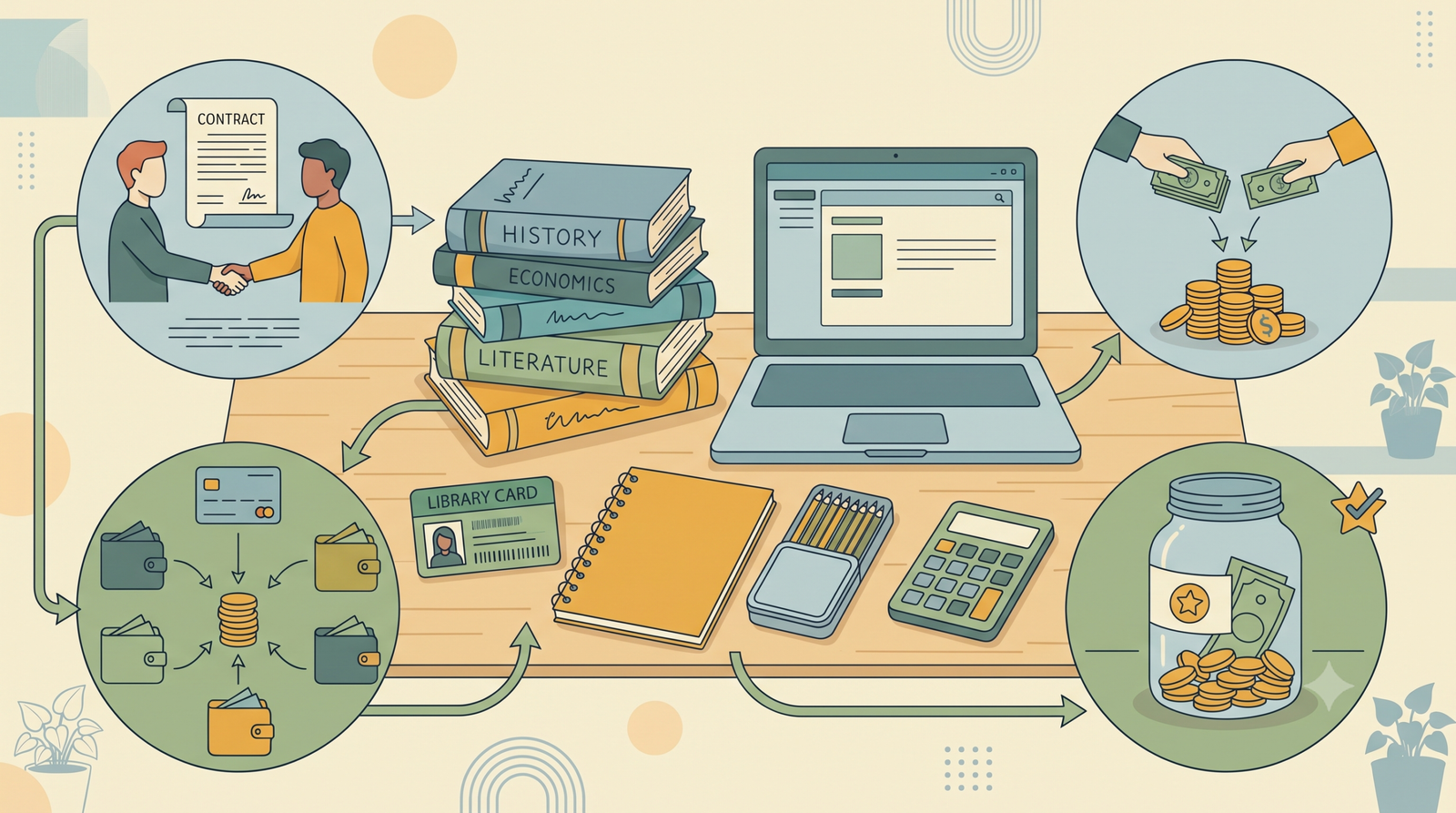
Textbooks and school supplies are necessary student expenses, but they can become much more expensive than expected. A single course may require a textbook, online access code, workbook, lab materials, printing, notebooks, software, and special equipment.
The difficulty is that these expenses often arrive at the same time. Students may know that a new semester is approaching but still feel surprised when several required purchases create a large bill within one or two weeks.
The good news is that buying the most expensive version of every item is rarely necessary. With careful planning, you may be able to borrow, rent, buy used, share, reuse, or delay some purchases until you know they are genuinely required.
This guide explains how to save money on textbooks, compare buying options, reduce school-supply costs, avoid unnecessary purchases, and plan for education expenses before the semester begins.
It also connects to the budgeting principles in our personal finance guide for students and budgeting on a small income article.
Why Textbooks and School Supplies Cost So Much
Education costs often include more than tuition.
Students may also pay for:
- Textbooks
- Digital access codes
- Workbooks
- Laboratory materials
- Art supplies
- Technology
- Printing
- Transportation
- Uniforms
- Stationery
- Course-specific equipment
- Exam or application fees
Several factors make these costs difficult to manage.
Required Editions Change
A professor or instructor may require a specific edition because page numbers, examples, assignments, or online resources differ.
However, not every course uses every feature of the newest edition. It is important to ask before buying an older version.
Digital Codes May Be Non-Transferable
Some digital access codes can be used only once. A used textbook may not include a valid code, which means you could end up paying for it separately.
Students Buy Before Confirming Requirements
Students may purchase supplies listed in a general course description before receiving the specific instructions from the instructor.
Some items may be recommended rather than required.
Convenience Raises the Price
Campus bookstores are convenient, but convenience can come with higher prices. Comparing options may reduce the cost significantly.
Small Items Add Up
A notebook, pens, folders, printer ink, calculators, and storage items may each seem affordable. Together, they can create a significant semester expense.
Create a School Expense Plan Before Shopping
Before buying anything, list every expected education-related cost.
Include:
- Course books
- Digital resources
- Supplies
- Equipment
- Technology
- Transportation
- Printing
- Lab or studio fees
- Uniforms
- Application fees
- Projects
- Exam costs
Separate the list into three groups:
Already Owned
Check your home, previous semester supplies, and storage areas. You may already have:
- Pens
- Pencils
- Folders
- Notebooks
- Backpacks
- Calculators
- Rulers
- Art materials
- Laptop accessories
- Reusable containers
Required and Confirmed
These are items that the instructor, school, or official course information clearly says you need.
Possible or Recommended
These may be useful but should be confirmed before purchase.
Do not assume that every item mentioned online or by another student is required for your specific class.
Ask Important Questions Before Buying
Contact the instructor, department, library, or school bookstore when you need clarification.
Ask:
- Is the textbook definitely required?
- Is a specific edition necessary?
- Will an older edition work?
- Is an online access code required?
- Can the code be purchased separately?
- Is the textbook available through the library?
- Will assignments depend on a workbook?
- Can students use a digital edition?
- Is a rental acceptable?
- Can the item be returned if the course changes?
- Is a calculator or device required, or simply recommended?
A short question can prevent an expensive mistake.
Do not rely only on a seller’s product description. Confirm requirements through an official course source whenever possible.
Ways to Save Money on Textbooks
1. Check the Library First
Your school or public library may have:
- Physical copies
- Digital copies
- Reserve copies
- Short-term loans
- Reference copies
- Related editions
- Interlibrary loan access
Some libraries keep high-demand textbooks behind a service desk so students can use them for a limited period.
A library copy may not be convenient for every assignment, but it can reduce the need to buy a book immediately.
2. Search for Used Textbooks
Used textbooks can cost much less than new copies.
Check:
- Campus bookstores
- Student groups
- Used bookshops
- Online marketplaces
- Community groups
- Previous students
- Notice boards
Inspect the condition and confirm:
- Edition
- ISBN
- Missing pages
- Writing or highlighting
- Included supplements
- Access-code availability
A used book with heavy notes may still be useful, but do not pay full price for a damaged or incomplete copy.
3. Compare the ISBN
The ISBN identifies a specific textbook edition and format.
Use it to compare:
- New copies
- Used copies
- Rental versions
- Digital editions
- Different sellers
- International editions
Comparing only the title can lead to buying the wrong edition.
If the instructor requires a specific edition, confirm that the ISBN matches before paying.
4. Compare Buying, Renting, and Digital Options
A textbook may be available as:
- A new physical copy
- A used physical copy
- A rental
- A digital book
- A short-term digital access option
Compare the total price and how long you need the material.
Buying May Make Sense When:
- You will use the book for multiple semesters
- It is a reference book
- The resale value is reasonable
- The rental period is too short
- You prefer physical books
Renting May Make Sense When:
- The book is expensive
- You need it for only one course
- You do not need to write in it
- The return deadline is manageable
Digital Access May Make Sense When:
- You need the book temporarily
- The digital price is meaningfully lower
- You prefer searchable text
- Your device and internet access are reliable
Do not choose only by the lowest advertised price. Check fees, return dates, access periods, and included content.
5. Be Careful With International Editions
International editions may cost less, but they may have:
- Different page numbering
- Different examples
- Different problem sets
- Different chapter order
- Lower-quality binding
- Delayed shipping
- Restrictions on resale
An international edition may be acceptable for some courses, but confirm with your instructor before buying.
6. Buy Access Codes Separately When Possible
Some courses require online homework or digital assignments.
A used textbook may not include a valid access code because the code has already been redeemed. In some cases, buying the book used and the code separately may still be cheaper. In other cases, the package may be the better value.
Calculate:
Used textbook price + access code price = total cost
Compare that total with the cost of a new package or digital option.
7. Share With a Classmate
Sharing can work when:
- You have different schedules
- Assignments do not require simultaneous access
- You live close together
- You trust each other
- The cost savings justify the inconvenience
Create a clear schedule for exams, assignments, and reading periods.
Sharing may not work well when both students need the book every day or when highlighting and writing are important.
8. Buy From a Previous Student
A student who completed the same course may sell a textbook directly.
This can reduce:
- Seller fees
- Shipping
- Waiting time
- Markup
Ask about:
- Edition
- Condition
- Access codes
- Included materials
- Return options
Meet in a safe public place when purchasing from someone you do not know.
9. Sell or Return Books Promptly
If you plan to sell a book after the course, do not wait too long. Prices may change when a newer edition is introduced or demand falls.
Check:
- Buyback deadlines
- Rental return dates
- Condition requirements
- Missing access materials
- Shipping timelines
- Resale demand
Keep books in reasonable condition if you may sell them. Avoid unnecessary damage, torn covers, or lost supplements.
Ways to Save Money on School Supplies
10. Take Inventory Before Shopping
Collect supplies from previous semesters and organize them.
You may have enough:
- Pens
- Pencils
- Paper
- Folders
- Binders
- Notebooks
- Sticky notes
- Envelopes
- Art supplies
- Calculators
- USB drives
- Backpacks
Shopping from memory often leads to duplicate purchases.
11. Wait for the Specific Supply List
General school-supply lists can encourage unnecessary purchases.
Wait until you know:
- Which courses you are taking
- What each instructor requires
- Whether digital tools are used
- Whether you need special equipment
- Whether existing supplies are acceptable
Buy the basics first and add specialized materials later.
12. Choose Reusable Supplies
Reusable items may reduce costs over several semesters.
Examples include:
- Durable folders
- Refillable notebooks
- Reusable binders
- Pencil cases
- Water bottles
- Lunch containers
- Rechargeable batteries
- Quality backpacks
- Refillable pens
Do not pay a premium for durability unless you are likely to use the product long enough to benefit.
13. Buy Basic Brands
For many ordinary supplies, the least expensive acceptable option may work well.
Compare quality for:
- Pens
- Pencils
- Paper
- Folders
- Notebooks
- Index cards
- Sticky notes
Premium branding often adds cost without improving academic results.
14. Buy in Bulk Carefully
Bulk buying may reduce the unit price, but only when you will actually use the items.
Bulk purchases make more sense for:
- Paper
- Pens
- Printer supplies
- Frequently used materials
- Shared household items
Split bulk purchases with roommates or classmates when appropriate.
15. Use Digital Notes When Practical
Digital notes can reduce paper, folders, and printing costs.
However, consider:
- Device reliability
- Battery access
- Required software
- Backup systems
- Instructor preferences
- Accessibility
- Distraction
Use cloud or external backups for important work. A lost device can create costs and stress that exceed the savings.
16. Print Strategically
When printing is required:
- Use double-sided printing
- Preview documents first
- Print only necessary pages
- Compare campus and local prices
- Use print credits when available
- Avoid repeated drafts
- Save digital copies
Do not print entire documents when only selected pages are required.
17. Borrow or Rent Equipment
Some courses require expensive equipment that you may use only temporarily.
Check whether you can:
- Borrow from the school
- Rent from a department
- Share with classmates
- Use a campus facility
- Purchase used equipment
- Sell the equipment afterward
Ask about maintenance, deposits, insurance, and return conditions.
Create a Semester Supply Budget
Rather than paying for school expenses only when they appear, create a semester fund.
Estimate:
- Textbooks
- Digital access
- Supplies
- Printing
- Transportation
- Project materials
- Equipment
- Exam or application fees
If the expected semester cost is $600 and you have six months to prepare, saving $100 per month may make the expense easier to manage.
If you do not have six months, divide the cost across the remaining paychecks and prioritize confirmed requirements.
Use a separate savings category or envelope so education money does not get confused with everyday spending.
Use Student Resources Before Paying
Schools often provide resources that students do not realize are available.
Check:
- Library textbook reserves
- Academic departments
- Equipment lending
- Laptop loan programs
- Free software
- Printing allowances
- Student discounts
- Financial aid offices
- Emergency grants
- Food support
- Career centers
- Study spaces
- Tutoring services
Ask early. Some programs have limited availability or application deadlines.
Using these resources is part of managing money responsibly. There is no benefit to paying for something that is already available through a school or community program.
Common Textbook and Supply Mistakes
Buying Every Item Before Classes Begin
Some items may not be needed. Buy confirmed essentials first.
Choosing the Wrong Edition
Check the ISBN, edition, and format before purchasing.
Forgetting Access Codes
A used book may not include an active access code. Calculate the complete cost.
Ignoring Return Deadlines
A textbook rental or online purchase may have strict return rules. Save receipts and reminders.
Buying New When Used Is Available
Compare used, rental, digital, library, and shared options.
Buying Supplies Based on Branding
Premium supplies may not improve your academic performance. Compare function and price.
Purchasing Large Quantities Without a Plan
Bulk items may expire, become obsolete, or remain unused.
Forgetting Resale Value
If you may sell a book, keep it in reasonable condition and check demand before assuming it will retain value.
Paying for Tools You Can Borrow
Look for campus, library, department, or community lending options.
Using Debt for Routine School Supplies
Avoid using expensive credit for ordinary supplies when a lower-cost option, delay, borrowing arrangement, or school resource is available.
A Realistic Semester Savings Example
Suppose a student expects these costs:
| Expense | New Purchase Cost |
|---|---|
| Textbook 1 | $180 |
| Textbook 2 | $150 |
| Digital access | $120 |
| Notebooks and stationery | $80 |
| Calculator and supplies | $100 |
| Printing and project materials | $70 |
| Total | $700 |
The student compares alternatives:
- Used Textbook 1: $90
- Rental Textbook 2: $65
- Digital access: $120
- Existing notebooks and supplies: $30
- Borrowed calculator: $0
- Printing and project materials: $50
The revised cost becomes approximately $355, creating potential savings of $345.
The actual result depends on course requirements and local prices. The student should still confirm editions, access codes, return dates, and instructor policies.
The example shows why comparing options before shopping can matter more than searching for a small discount after choosing the most expensive version.
Frequently Asked Questions
What is the cheapest way to buy textbooks?
Compare library copies, used books, rentals, digital editions, student marketplaces, and previous students. Check the ISBN and access-code requirements before purchasing.
Are textbook rentals worth it?
Rentals may be useful when you need a book for only one course and do not need to keep it. Compare the total rental cost, return date, damage rules, shipping, and included materials.
Can I use an older textbook edition?
Sometimes, but not always. Ask the instructor or department first because page numbers, exercises, and required content may be different.
Are digital textbooks cheaper?
They can be, especially for short-term access, but compare the access period and restrictions. Some digital products expire after a semester or cannot be resold.
How can I save money on school supplies?
Take inventory of what you already own, wait for the official supply list, buy basic brands, reuse supplies, borrow equipment, and compare prices before shopping.
Should I buy school supplies in bulk?
Buy in bulk only when you will use the items, have storage space, and the unit price is genuinely lower. Sharing bulk purchases can reduce waste.
What should I do with textbooks after the semester ends?
Check resale and buyback options promptly. You can also keep useful reference books, donate them, or sell directly to another student.
How can I plan for school expenses with a small income?
Estimate the total semester cost, divide it across the months or paychecks available, and create a separate education savings category. Our guide on budgeting on a small income explains how to manage limited and irregular income.
Key Takeaways
- Do not buy every textbook or supply before confirming course requirements.
- Ask whether a specific edition, access code, or equipment is truly required.
- Compare library copies, used books, rentals, digital editions, and student marketplaces.
- Check the ISBN before purchasing a textbook.
- Take inventory of supplies you already own.
- Buy reusable and basic supplies when they provide enough value.
- Borrow, share, or rent expensive equipment used only temporarily.
- Track return dates, access periods, and buyback deadlines.
- Create a semester education fund for textbooks, supplies, printing, and project costs.
- Use school, library, community, and student resources before paying full price.
- Readers can combine these ideas with personal finance for students, budgeting on a small income, and broader frugal living tips.
- Building these habits early also supports good money habits before graduation.
Textbooks and school supplies are real education expenses, but the highest price is not always necessary. A few questions, comparisons, and early planning steps can reduce the total cost significantly.
Start by confirming what you actually need. Then compare the available options, use what you already own, and plan for the expenses before the semester begins. Saving money on education costs is not about buying the cheapest item automatically. It is about paying for the materials that genuinely support your education without spending more than necessary.
This article is for informational purposes only and is not financial advice.