






Frugal living is often misunderstood as living without comfort, fun, or convenience. Some people imagine extreme couponing, never eating out, refusing every purchase, or spending hours searching for the cheapest possible option.
That is not what sustainable frugal living has to be.
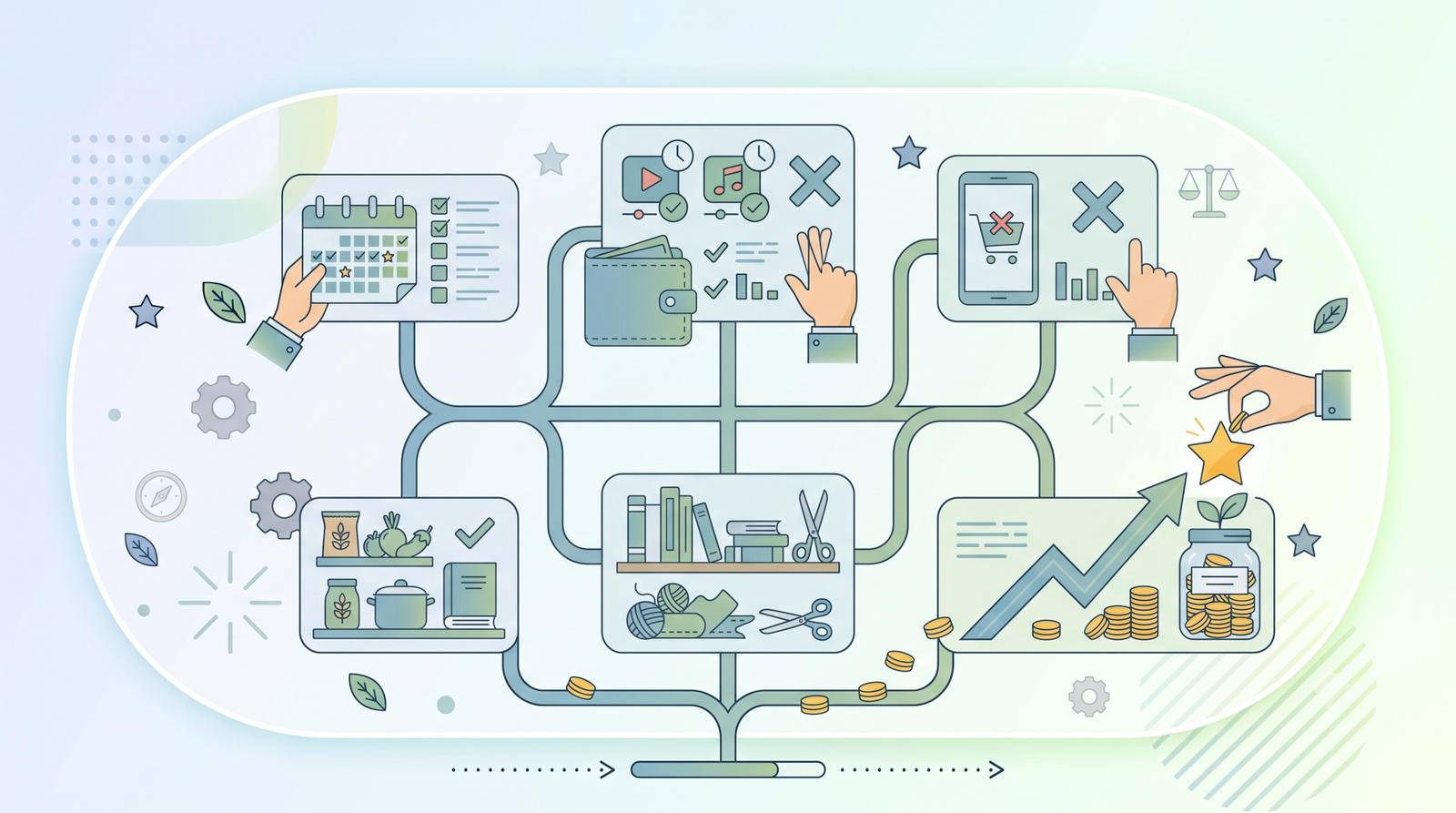
Frugal living is simply the practice of using your money intentionally. It means deciding what matters most to you, reducing spending that provides little value, and directing more of your income toward goals that improve your financial life.
For one person, that may mean cooking at home more often. For another, it may mean moving to a less expensive home, canceling unused subscriptions, buying secondhand clothing, or avoiding unnecessary upgrades. The best approach depends on your income, responsibilities, location, health, family situation, and personal priorities.
This guide explains frugal living tips for beginners who want to spend less without making life miserable. You will learn how to identify wasteful expenses, lower regular costs, make better buying decisions, and create a frugal lifestyle that feels realistic rather than restrictive.
Frugal living also connects closely with the principles in our financial literacy 101 guide. Once you understand where your money goes and what your priorities are, spending less becomes less about punishment and more about making your money work better.
What Is Frugal Living?
Frugal living means making thoughtful decisions about how you use money, time, energy, and resources.
A frugal person does not necessarily spend the least amount possible on everything. Instead, they focus on value. They try to spend more on things that genuinely improve their lives and less on things that are forgotten quickly, purchased automatically, or used mainly because of habit.
For example, frugal living may involve:
- Comparing prices before a large purchase
- Cooking some meals at home
- Repairing items instead of replacing them immediately
- Canceling subscriptions that are rarely used
- Buying quality items that last
- Choosing a smaller or older vehicle
- Planning errands to reduce fuel costs
- Borrowing items that are used only occasionally
- Saving for purchases instead of relying on credit
- Spending generously on a few meaningful priorities
Frugality is different from being cheap.
Being cheap usually focuses only on paying the lowest price, even when the result is poor quality, wasted time, or inconvenience for someone else. Frugality considers the total value of a decision.
For example, buying the cheapest shoes may not be frugal if they wear out quickly and need to be replaced several times. Paying a reasonable amount for durable shoes may cost less over their useful life.
The goal is not to win every individual price comparison. The goal is to improve the overall relationship between your money and your quality of life.
Why Frugal Living Matters
Frugal habits can help you create more financial flexibility, even when your income does not change.
When you reduce unnecessary expenses, the difference can be used to:
- Build an emergency fund
- Pay down high-interest debt
- Save for education
- Prepare for irregular bills
- Invest for long-term goals
- Reduce financial stress
- Work fewer hours in the future
- Create room for meaningful experiences
Small savings can also become more important when prices rise. As explained in how inflation affects your money, expenses can gradually increase over time. A habit that once felt affordable may become a larger burden after several years of price increases.
Frugal living does not stop inflation, but it can help you respond to it. Reviewing your expenses allows you to notice which categories are rising fastest and where a practical adjustment may be possible.
Another benefit is that frugality can reduce dependence on every paycheck. If your monthly expenses are lower, you may have more options during a job change, illness, family emergency, or unexpected repair.
This does not mean low spending solves every financial problem. Housing costs, medical expenses, debt, and income limitations can be difficult to change quickly. However, intentional spending can still improve the parts of your financial life that are within your control.
Frugal Living Starts With Spending Awareness
Before trying to cut your expenses, learn where your money is currently going.
Many people start by searching for extreme money-saving ideas when the biggest opportunities are hidden in ordinary transactions:
- Automatic subscriptions
- Delivery fees
- Unused memberships
- Frequent convenience purchases
- Duplicate services
- Impulse shopping
- High transportation costs
- Food waste
- Unplanned upgrades
- Recurring bank charges
Review your last 30 days of spending and organize purchases into broad categories.
A simple list might include:
| Category | Examples |
|---|---|
| Housing | Rent, mortgage, maintenance |
| Food | Groceries, restaurants, delivery |
| Transportation | Fuel, repairs, public transit |
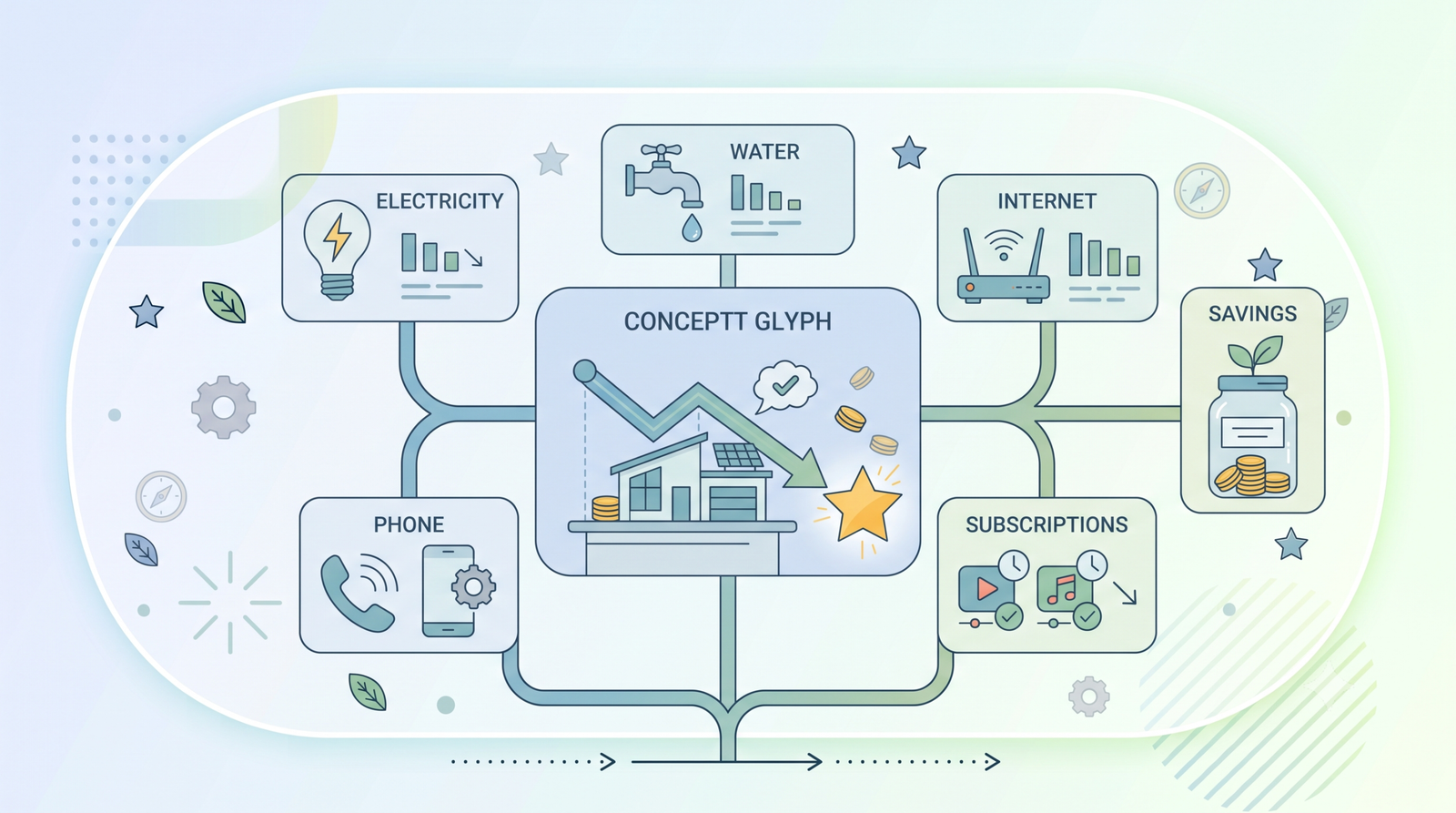
| Utilities | Electricity, water, internet, phone |
| Debt | Credit cards, loans, financing |
| Personal | Clothing, grooming, hobbies |
| Family | School, childcare, activities |
| Entertainment | Streaming, events, games |
| Financial goals | Savings, investing, extra debt payments |
The purpose is not to criticize yourself. It is to create a clear picture.
You may discover that the problem is not one large purchase. It may be several small expenses that repeat every week. A $7 purchase does not seem significant by itself, but repeated four or five times each week can become a meaningful monthly cost.
Spending awareness also helps you avoid cutting things that matter. If you discover that a modest hobby brings you genuine enjoyment and fits within your budget, there may be no reason to eliminate it. Frugality works best when it targets low-value spending first.
The Frugal Living Audit
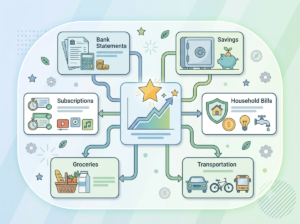
A spending audit is a structured review of your regular expenses. You can complete one using bank statements, receipts, bills, or a budgeting spreadsheet.
Step 1: List Every Recurring Expense
Write down monthly or annual payments such as:
- Streaming services
- Gym memberships
- Software subscriptions
- Phone plans
- Internet packages
- Insurance
- Storage fees
- Memberships
- Loan payments
- App subscriptions
For annual expenses, divide the total by twelve to understand the monthly cost.
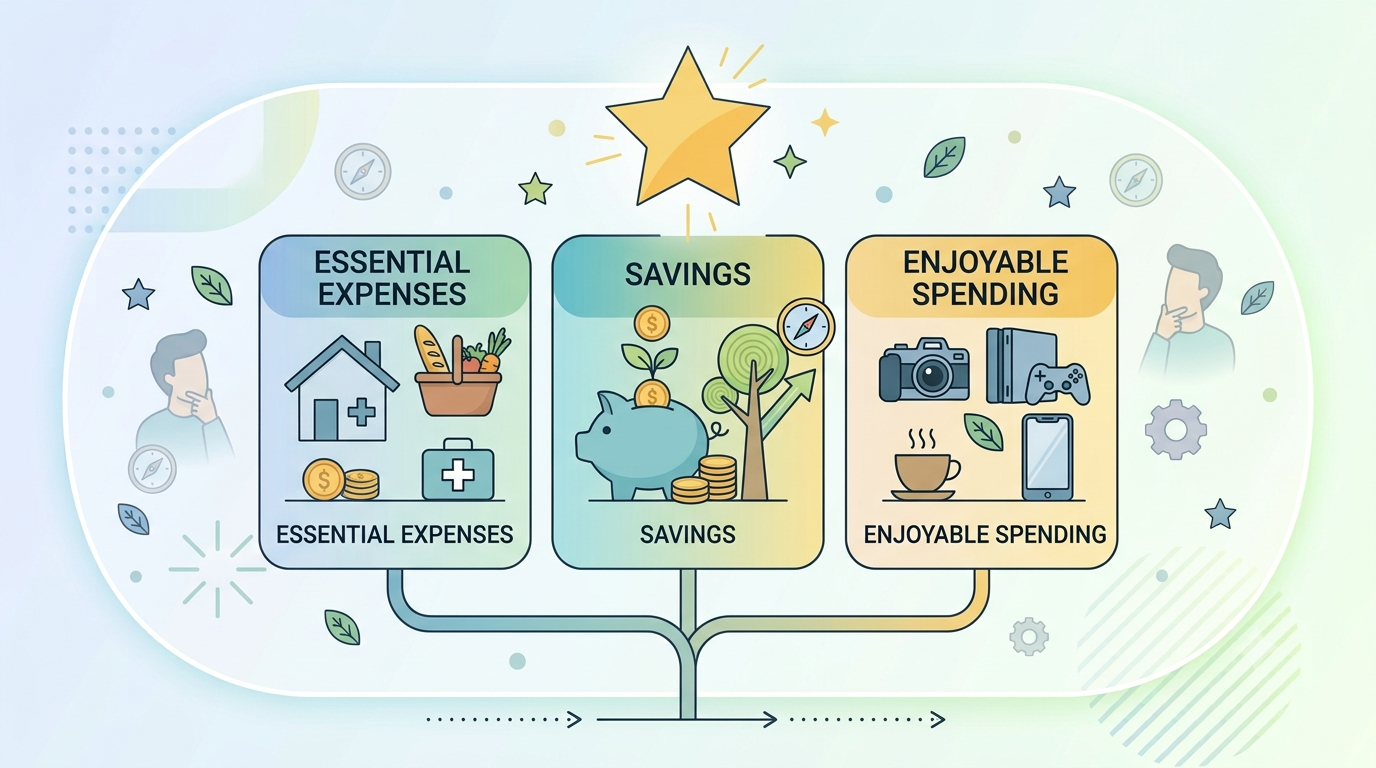
Step 2: Mark Each Expense as Essential, Flexible, or Optional
Use the same approach discussed in needs vs wants:
- Essential: Required for basic living, work, health, or safety
- Flexible: Necessary but adjustable
- Optional: Useful or enjoyable but not required
This classification is not permanent. A phone plan may be essential, but an expensive upgrade may be optional. Groceries are essential, but premium convenience foods may be flexible or optional.
Step 3: Identify Low-Value Expenses
Ask:
- Do I use this regularly?
- Would I notice if it disappeared?
- Is there a less expensive alternative?
- Did I choose it intentionally?
- Is it still worth the current price?
- Does it support one of my priorities?
Some expenses may be worth keeping. The purpose is to make that choice consciously.
Step 4: Choose a Small Number of Changes
Do not try to eliminate everything in one week. Select two or three changes that are realistic.
For example:
- Cancel one unused subscription
- Cook at home one additional night per week
- Compare phone plans
- Set a weekly limit for convenience spending
- Combine errands to reduce fuel use
Small changes are easier to maintain than an extreme financial reset.
Practical Frugal Living Tips That Make a Difference
Plan Meals Around What You Already Have
Food waste is one of the most common ways money disappears from a household budget.
Before shopping, check:
- The refrigerator
- The freezer
- The pantry
- Expiring products
- Ingredients left from previous meals
Plan a few meals around what is already available. This can reduce the number of items you buy and help prevent food from being forgotten.
You do not need a complicated meal plan. Even deciding on three or four main meals for the week can provide structure.
For more specific ideas, the upcoming guide to saving money on groceries will cover shopping lists, meal planning, store comparisons, and food-waste reduction in greater detail.
Use a Waiting Period for Nonessential Purchases
A waiting period is one of the simplest frugal habits.
Try waiting:
- 24 hours for small purchases
- One week for moderately expensive purchases
- Thirty days for major purchases
During the waiting period, write down the item and its price. You may discover that the desire fades once the immediate excitement is gone.
If you still want the item later and it fits your budget, you can buy it with greater confidence.
Compare Total Cost, Not Just the Price
A purchase can have costs beyond the checkout amount.
Consider:
- Maintenance
- Repairs
- Replacement parts
- Subscription fees
- Delivery charges
- Accessories
- Storage
- Time required to use or maintain it
For example, a cheap printer may require expensive ink. A low-cost appliance may consume more energy or fail sooner. A discounted fitness machine may become an expensive piece of furniture if it is never used.
The best value is not always the lowest initial price.
Repair, Reuse, or Borrow Before Replacing
Before replacing an item, ask whether it can be:
- Repaired
- Cleaned
- Repurposed
- Borrowed
- Rented
- Bought secondhand
- Shared with someone else
This works especially well for tools, party equipment, occasional appliances, books, furniture, and formal clothing.
Borrowing is often more practical than purchasing something you will use only once or twice.
Reduce Convenience Costs
Convenience spending is not automatically wasteful. Sometimes convenience saves time that could be used for work, rest, childcare, or health.
However, convenience can become automatic.
Look for patterns such as:
- Delivery meals several times per week
- Ride-hailing for short trips
- Paid express shipping
- Ready-made drinks purchased daily
- Grocery delivery when shopping is manageable
- Cleaning or laundry services used out of habit rather than necessity
Try reducing the frequency instead of removing the service completely. For example, use delivery once per week rather than four times, or prepare drinks at home on weekdays.
Buy Secondhand When Appropriate
Secondhand shopping can reduce the cost of:
- Furniture
- Clothing
- Books
- Bicycles
- Tools
- Children’s items
- Kitchen equipment
- Exercise equipment
Inspect condition carefully and consider safety. Some products, such as helmets, car seats, mattresses, or electrical equipment, may not be suitable to buy used unless you can verify their history and condition.
Reduce Energy Waste
Small household habits can reduce utility costs over time:
- Turn off unused lights
- Unplug devices that consume standby power
- Use energy-efficient bulbs
- Adjust heating or cooling settings modestly
- Wash full loads of laundry
- Reduce unnecessary hot-water use
- Seal obvious drafts
- Maintain appliances properly
The goal is not to make your home uncomfortable. It is to reduce waste that provides no benefit.
Make Your Own Rules for Upgrades
Technology, vehicles, clothing, and home goods are often replaced before they stop working.
Create a replacement rule based on function:
- Replace an item when it becomes unreliable
- Replace it when repairs cost more than reasonable alternatives
- Upgrade when the improvement solves a genuine problem
- Avoid upgrading simply because a newer version exists
Marketing is designed to make functional items feel outdated. A frugal decision asks whether the new version changes your daily life enough to justify the cost.
How to Stay Frugal Without Feeling Deprived
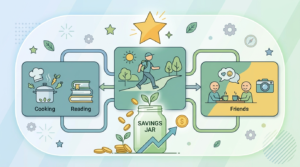
Frugality becomes difficult when it removes every activity that makes life enjoyable. A sustainable plan should protect your most important sources of happiness while reducing spending that does not matter much.
Spend More on What You Value
Make a short list of the expenses that provide the most value in your life.
These might include:
- Family activities
- Health and fitness
- Travel
- Books
- A creative hobby
- Quality food
- Time-saving services
- Education
- Community or social events
You do not need to spend equally in every category. You can spend more intentionally on a few priorities while cutting back elsewhere.
Find Low-Cost Versions of Enjoyable Activities
Many activities have cheaper alternatives:
- Cook a special meal at home instead of dining out
- Visit a public park instead of paying for entertainment
- Borrow books instead of buying every title
- Attend free community events
- Exercise outdoors or at home
- Host friends instead of meeting at a restaurant
- Use a library for books, media, and activities
- Plan local day trips instead of expensive travel
The point is not that free options are always better. It is that enjoyment does not always require high spending.
Give Yourself a Flexible Spending Allowance
A small personal allowance can prevent the feeling that every expense must be approved.
The amount should fit your income and responsibilities. Once it is spent, you wait until the next budget period.
This approach creates a boundary without requiring constant self-denial.
Avoid Comparing Your Lifestyle to Someone Else’s
Social media can make other people’s spending look normal and necessary. You may see vacations, new cars, restaurants, home renovations, and expensive clothing without seeing:
- Debt
- Financial help from family
- Credit card balances
- Business expenses
- Sponsorships
- Previous savings
- The stress behind the image
Frugal living is easier when your spending is compared with your own goals rather than someone else’s highlights.
Common Frugal Living Mistakes to Avoid
Trying to Cut Everything at Once
A sudden extreme budget may work for a few days but become difficult to maintain. Sustainable change usually comes from repeated habits rather than dramatic restrictions.
Ignoring Large Expenses
Saving money on small purchases can help, but large fixed expenses often have a bigger impact.
Review:
- Housing
- Transportation
- Debt payments
- Insurance
- Phone and internet plans
- Childcare
- Regular subscriptions
A small change in a major expense may save more than eliminating occasional treats.
Buying Unnecessary Items Because They Are Cheap
A cheap item is still expensive if you do not need it. Low prices can encourage overbuying, clutter, and repeated small purchases.
Confusing Frugality With Poor Quality
Some low-cost choices create more expense later. Consider durability and total cost before choosing the cheapest option.
Spending Too Much Time Saving Very Little
Time has value. Spending two hours to save a tiny amount may not be worthwhile if that time could be used for work, rest, family, or something meaningful.
Using Credit to Maintain an Image
A lifestyle that requires debt is not truly affordable. Frugal living involves making choices that fit your actual income rather than trying to appear wealthier than you are.
Failing to Plan for Irregular Expenses
Car repairs, gifts, school costs, annual bills, and medical expenses are not always monthly, but they are still predictable parts of life.
Create separate savings categories for irregular expenses so they do not constantly feel like emergencies.
A Realistic Monthly Frugal Living Example
Consider a household with monthly take-home income of $3,600 and the following expenses:
| Expense | Current Monthly Cost |
|---|---|
| Housing | $1,250 |
| Utilities and internet | $280 |
| Transportation | $420 |
| Groceries | $650 |
| Restaurants and delivery | $300 |
| Subscriptions | $85 |
| Shopping | $240 |
| Debt payments | $250 |
| Miscellaneous | $225 |
| Total | $3,700 |
This household is spending approximately $100 more than its monthly income.
Instead of trying to eliminate every enjoyable activity, the household could make several targeted changes:
- Reduce restaurant and delivery spending by $120
- Cancel unused subscriptions and save $35
- Reduce shopping by $75
- Plan groceries more carefully and save $80
- Reduce miscellaneous spending by $40
The total monthly improvement would be approximately $350. After covering the original $100 shortfall, about $250 could be directed toward savings or debt repayment.
The household does not need to eliminate restaurants, hobbies, or all personal spending. It only needs to identify which expenses can be adjusted without damaging quality of life.
Over twelve months, an average improvement of $250 per month would create approximately $3,000 of additional financial capacity. The exact result depends on actual spending, but the example demonstrates how several moderate changes can matter more than one extreme sacrifice.
Frequently Asked Questions
Is frugal living the same as being cheap?
No. Frugal living focuses on value, priorities, and long-term usefulness. Being cheap usually focuses only on paying the lowest price, even when that creates poor quality, wasted time, or additional costs later.
How can I start living frugally as a beginner?
Start by reviewing your last 30 days of spending. Identify one recurring expense to remove, one flexible category to reduce, and one habit that can prevent future impulse purchases. Small changes are easier to maintain than a complete lifestyle overhaul.
Can frugal living help if my income is very low?
Frugal habits may help reduce avoidable expenses, but they cannot solve every income problem. If essential costs already consume most of your income, increasing income, seeking assistance, renegotiating bills, or addressing debt may be just as important as cutting spending.
Should I stop eating out to live frugally?
Not necessarily. You can reduce the frequency, choose less expensive options, set a monthly limit, or replace some restaurant meals with enjoyable meals at home. A sustainable budget makes room for selected wants.
Is buying in bulk always frugal?
No. Buying in bulk can be useful when the product will be used before it expires and the unit price is genuinely lower. It is not frugal if it causes waste, requires extra storage, or encourages you to buy more than necessary.
How do I stay motivated while living frugally?
Connect your spending changes to a meaningful goal. Saving without a purpose can feel restrictive, while saving for debt freedom, a home, education, travel, or financial security can make the effort feel worthwhile.
What is the fastest way to reduce monthly expenses?
Review large recurring expenses first, including housing, transportation, debt, utilities, insurance, phone plans, and subscriptions. These categories often provide more savings potential than focusing only on small daily purchases.
Key Takeaways
- Frugal living means using money intentionally, not eliminating every enjoyable purchase.
- Focus on value instead of always choosing the lowest price.
- Begin with a 30-day spending audit to identify recurring, flexible, and optional expenses.
- Review large fixed costs as well as small daily purchases.
- Meal planning, waiting periods, secondhand shopping, repairs, and lower convenience spending can create meaningful savings.
- A sustainable budget should include room for enjoyment and personal priorities.
- Frugal living works best when it supports a specific goal, such as building savings, reducing debt, or creating more financial flexibility.
- Inflation makes regular spending reviews more important because everyday costs can rise gradually over time.
- The distinction between needs and wants can help you decide what to reduce without cutting everything that matters.
- Readers who want to focus specifically on food costs can continue with ways to save money on groceries, while readers working on recurring expenses can explore how to lower monthly bills.
Frugal living is not about making your life smaller. It is about making your spending more deliberate. When you reduce expenses that do not matter much, you create more room for the people, goals, and experiences that do.
The most effective approach is usually not the most extreme one. Start with a few changes you can repeat, review your progress regularly, and adjust your plan as your income, responsibilities, and priorities change.
This article is for informational purposes only and is not financial advice.