






Graduation often feels like a financial starting line. You may expect a full-time job, a larger paycheck, a new home, or greater independence.
But graduation can also bring new responsibilities:
- Rent or mortgage payments
- Transportation costs
- Insurance
- Student loan payments
- Taxes
- Workplace expenses
- Moving costs
- Utility bills
- Professional clothing
- Emergency repairs
- Retirement or long-term savings
A higher income can help, but it does not automatically create financial stability. Without good money habits, it is easy for new income to disappear into higher rent, frequent restaurant meals, upgraded technology, travel, subscriptions, and lifestyle changes.
The habits you build before graduation can make the transition easier. You do not need a large income or a perfect financial plan. You need a few repeatable systems that help you understand your money and make decisions before problems become urgent.
This guide explains practical money habits for young adults, including budgeting, saving, credit awareness, debt management, career preparation, and lifestyle decisions. It builds on our personal finance guide for students and financial literacy 101 article.
Why Build Financial Habits Before Graduation?
Habits become more valuable when life becomes busier.
After graduation, you may have less time to examine every transaction. Work, commuting, moving, relationships, and new responsibilities can make financial decisions feel urgent.
If you already know how to:
- Track spending
- Pay bills on time
- Save automatically
- Compare major costs
- Review account statements
- Avoid unnecessary debt
- Set financial priorities
then you have a foundation to use when your income and expenses change.
Good money habits also reduce decision fatigue. You do not need to decide from scratch every payday whether to save, pay bills, or plan for irregular expenses. A system can handle much of the routine work.
This does not mean your habits should never change. Your budget as a student will probably look different from your budget after graduation. The purpose is to develop the skills needed to adjust responsibly.
Habit 1: Know Exactly What Comes In and Goes Out
The first habit is basic but important: know your actual income and expenses.
Track:
- Paychecks
- Allowances
- Scholarships
- Freelance income
- Rent
- Groceries
- Transportation
- Phone bills
- School expenses
- Subscriptions
- Debt payments
- Personal spending
- Savings
You can use a spreadsheet, notes app, budgeting app, or notebook. The tool does not matter as much as reviewing it regularly.
Start with one month of observation. Do not immediately try to change every habit. First, identify your patterns.
You may discover that:
- Weekend spending is higher than weekday spending
- Food delivery happens after long study days
- Transportation costs rise during busy weeks
- Small purchases are more frequent than expected
- Annual expenses are not included in your budget
- A subscription is no longer useful
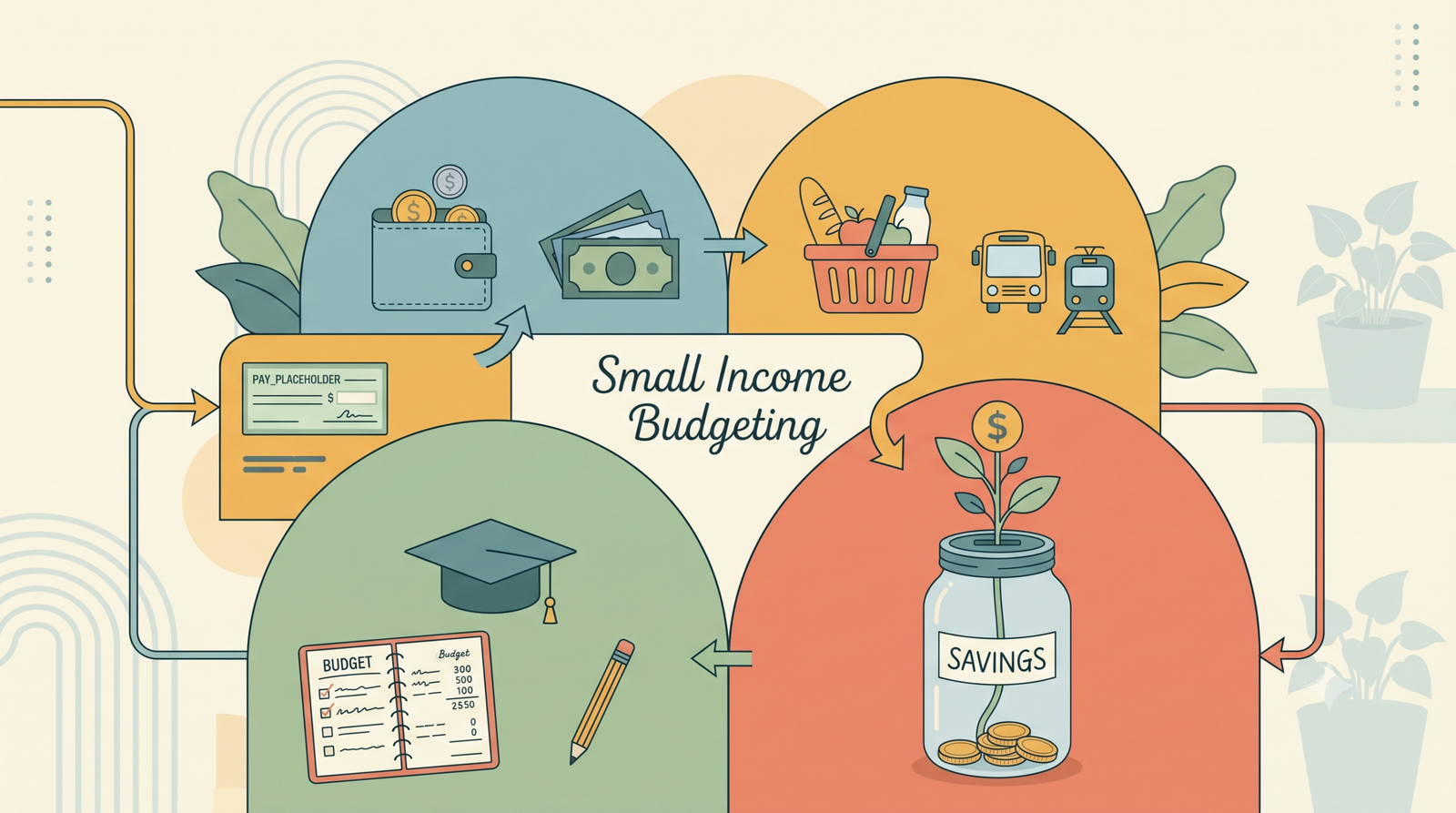
Awareness creates a stronger foundation for change. This is also the first step explained in how to budget on a small income.
Habit 2: Build a Budget Around Real Priorities
A budget should reflect what matters to you, not only what another person recommends.
Start by listing:
- Essential living costs
- Education or work costs
- Debt payments
- Savings
- Personal spending
- Future goals
Needs such as housing, food, transportation, medication, and required bills usually come first. But personal spending should not automatically be treated as irresponsible.
A budget that allows no room for enjoyment may be difficult to maintain. The goal is to make optional spending intentional rather than accidental.
Use realistic amounts. If you consistently spend $250 per month on food, setting a target of $80 without a clear plan may create frustration. Reduce gradually while learning what works.
You may also use a weekly spending limit for flexible categories. Weekly limits can be easier to follow than a single monthly number.
Habit 3: Save Before You Spend the Rest
Saving what remains at the end of the month often produces inconsistent results. If possible, set aside savings soon after receiving income.
This can be done through:
- Automatic transfers
- A separate savings account
- A scheduled payment to a savings goal
- A dedicated emergency fund
- A sinking fund for future expenses
The amount can be small. Saving $10 or $20 regularly may be more useful than waiting until you can afford a large amount.
Start with practical goals:
- $100 starter buffer
- One week of essential expenses
- Textbook or school expense fund
- Moving fund
- Medical or transportation reserve
- Emergency savings
Later, you can work toward a larger emergency fund based on your expenses and responsibilities.
The key habit is to make saving a regular part of your financial routine rather than an occasional decision.
Habit 4: Prepare for Irregular Expenses
Many young adults budget only for monthly bills and then feel surprised by expenses that occur every few months.
These may include:
- Vehicle maintenance
- Travel
- Gifts
- Clothing
- Professional fees
- Annual subscriptions
- Insurance renewals
- Medical costs
- Technology replacement
- Moving expenses
Create a list of irregular expenses and estimate the yearly amount.
If an expense is predictable, it belongs in your planning even if it does not happen every month.
Divide the expected amount by the number of months available. If you need $600 for a future expense in six months, setting aside $100 per month may be easier than trying to find the full amount at the last moment.
These categories are often called sinking funds. They can be kept in separate savings categories or tracked in a spreadsheet.
Habit 5: Understand Your Bank Accounts
Before graduation, learn how your accounts work.
Understand:
- Current balance
- Available balance
- Pending transactions
- Payment dates
- Transfer limits
- Overdraft rules
- Account fees
- Interest, if applicable
- ATM charges
- Statement dates
A current balance may not reflect payments that have not yet cleared. Spending based only on the visible balance can lead to overdrafts or missed payments.
Review statements regularly and report unfamiliar transactions promptly.
If you have several accounts, know the purpose of each one. For example:
- Everyday spending
- Bills
- Emergency savings
- Education costs
- Long-term goals
Separate accounts are not required, but clear categories can make money easier to manage.
Habit 6: Use Credit Carefully
Credit can be useful, but it is not extra income.
Before using a credit card or loan, understand:
- Interest rate
- Minimum payment
- Due date
- Annual fee
- Late fees
- Promotional period
- Total repayment cost
- What happens if you miss a payment
Try to use credit only when you have a reasonable plan to repay it.
Avoid using credit to support a lifestyle that your income cannot afford. A purchase may feel manageable when divided into monthly payments, but several payment plans can create pressure at the same time.
If you already use a credit card, review the statement each month. Check that the balance and transactions are accurate and that you understand the amount required to avoid late fees or additional interest according to the account terms.
Habit 7: Build a Positive Payment History
If you have credit accounts or recurring bills, timely payments are important.
Use:
- Calendar reminders
- Automatic payments
- Payment alerts
- A bill checklist
- A separate bills account
Automatic payments can reduce the chance of forgetting, but make sure enough money is available in the account. An automatic payment that causes an overdraft does not solve the problem.
Review your credit reports where available in your country and check for errors. Keep records of accounts you close or repay.
Do not open accounts only to chase rewards or promotional offers. Every account creates responsibilities that should be understood first.
Habit 8: Avoid Lifestyle Inflation
Lifestyle inflation happens when spending increases as income increases.
For example, a person may receive a raise and immediately:
- Move into a more expensive apartment
- Upgrade a vehicle
- Eat at restaurants more often
- Subscribe to more services
- Buy expensive clothing
- Travel more frequently
- Increase recurring payments
Some lifestyle improvements are worthwhile. The problem is increasing fixed costs so quickly that the raise disappears.
A useful approach is to divide an income increase before spending it.
For example:
- 50% toward savings or debt
- 25% toward a meaningful lifestyle improvement
- 25% toward flexible spending or future costs
The percentages are only examples. The principle is to give the extra income a purpose before it becomes part of your regular lifestyle.
Habit 9: Learn How to Compare Major Costs
Small purchases matter, but major recurring expenses can shape your financial life for years.
Before choosing housing, transportation, insurance, internet, or a loan, compare the total cost.
Consider:
- Monthly payment
- Deposit
- Interest
- Fees
- Maintenance
- Insurance
- Fuel
- Utilities
- Contract terms
- Time and transportation costs
- Cancellation or resale conditions
A lower monthly payment is not automatically cheaper. A longer loan term may create a larger total cost. A lower-rent home may require more transportation. A discounted service may become expensive after the promotion ends.
Develop the habit of comparing complete costs rather than focusing only on the advertised monthly amount.
Habit 10: Plan for the Transition After Graduation
Graduation may create one-time expenses.
Possible costs include:
- Moving
- Security deposits
- Professional clothing
- Transportation
- Work equipment
- Job applications
- Relocation
- New insurance
- Utility connections
- Licensing
- Career training
Create a graduation or transition fund if possible.
Even a small amount can help with:
- Interview travel
- A reliable work bag
- Basic clothing
- Temporary housing
- Moving supplies
- A delayed first paycheck
Do not assume that a job offer means your first paycheck will arrive immediately. Ask about the start date, pay schedule, benefits, and any required expenses.
Habit 11: Build Career Skills Without Overspending
Career development can be valuable, but not every paid course or certification is necessary.
Before paying, ask:
- Is the qualification recognized?
- Is it required for the job?
- Can the school or employer cover it?
- Is there a lower-cost alternative?
- Will it realistically improve employment opportunities?
- What is the total cost?
- Are there renewal fees?
Use school career services, public libraries, free workshops, professional associations, and employer training when available.
Investing in skills can be useful, but avoid purchasing courses based only on promises of quick success or guaranteed income.
Habit 12: Keep Your Financial Information Organized
Create a secure system for important information.
Track:
- Bank accounts
- Loan balances
- Credit cards
- Insurance
- Employment details
- Tax records
- Scholarships
- Account numbers
- Payment dates
- Important documents
Do not store sensitive passwords in an unsecured document. Use strong, unique passwords and available security features.
Keep digital and physical records organized so you can find information when applying for housing, employment, education, or financial assistance.
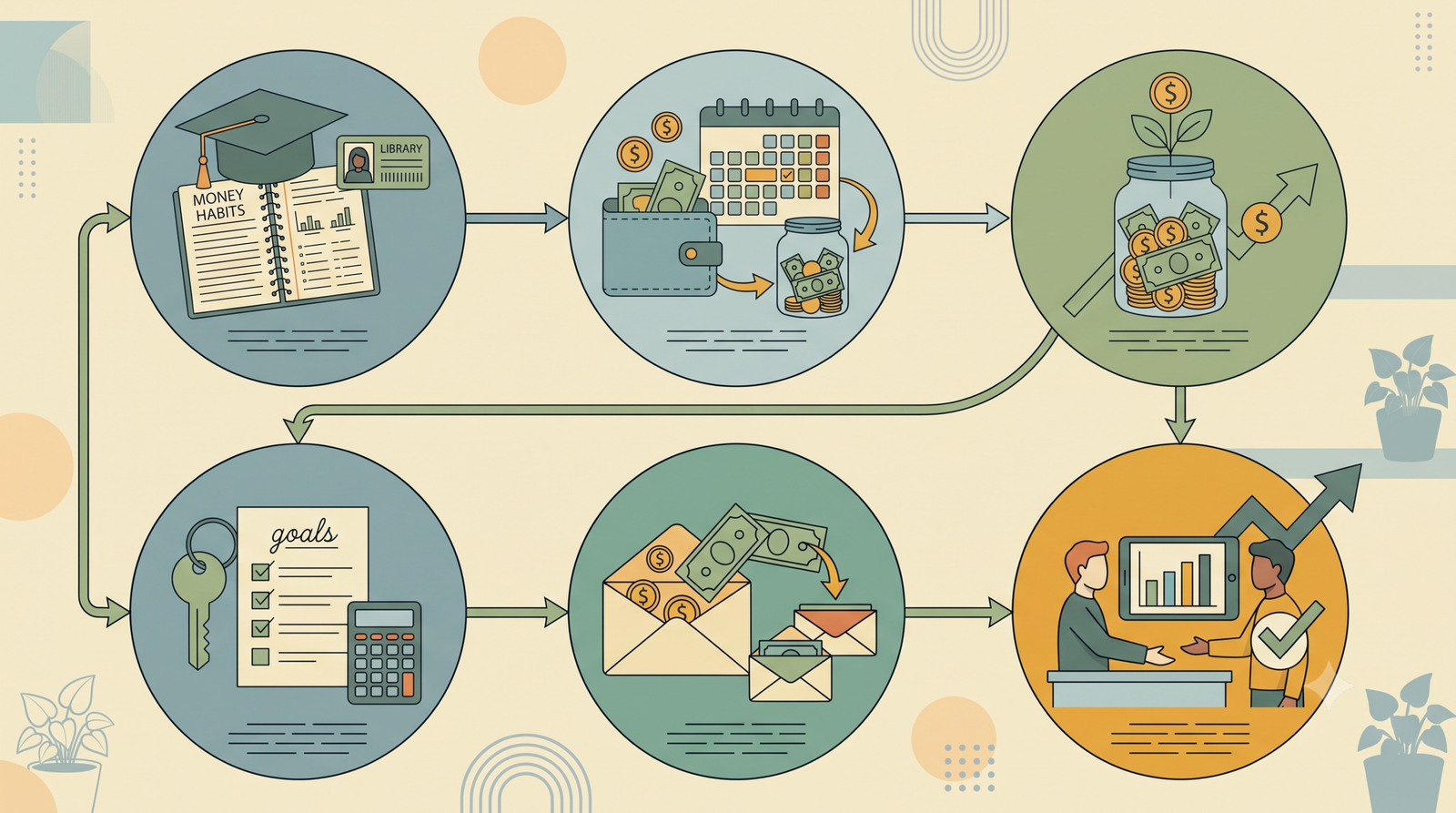
Create a Pre-Graduation Money Checklist
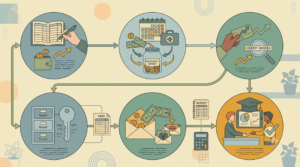
Complete the following before graduation where possible:
Step 1: Track One Full Month of Spending
Understand your actual habits.
Step 2: Create a Basic Post-Graduation Budget
Estimate housing, transportation, food, insurance, debt, and savings.
Step 3: List All Debt
Record balances, interest rates, lenders, and payment dates.
Step 4: Start a Small Emergency Fund
Choose a realistic first target.
Step 5: Review Your Credit and Bank Accounts
Check for errors, fees, and forgotten accounts.
Step 6: Plan Transition Costs
Estimate moving, work clothing, transportation, and delayed-paycheck expenses.
Step 7: Decide What to Do With Extra Income
Create a plan for raises, bonuses, gifts, and freelance money.
Step 8: Set One Short-Term and One Long-Term Goal
Examples include saving for a deposit and reducing debt.
Habit 13: Set Financial Goals
A goal gives your money direction.
Instead of saying:
I want to be better with money.
Create a more specific goal:
I will save $300 for a graduation transition fund over the next six months.
A useful goal includes:
- Amount
- Purpose
- Deadline
- Regular contribution
- Progress method
Goals may include:
- Emergency savings
- Debt repayment
- Moving costs
- Education
- Travel
- A vehicle
- Professional equipment
- Long-term investing
Our guide on how to set financial goals explains how to create targets that are specific enough to follow.
Habit 14: Protect Against Impulse Spending
Impulse spending can become more difficult when you begin earning more. A larger balance may create the feeling that purchases are affordable even when they conflict with longer-term goals.
Use simple barriers:
- Wait 24 hours before nonessential purchases
- Remove saved payment details
- Unsubscribe from promotional emails
- Avoid shopping when stressed
- Use a wish list instead of buying immediately
- Set a monthly personal allowance
- Review recent purchases every week
The aim is not to remove all spontaneity. It is to create enough time to decide whether a purchase is genuinely valuable.
For more techniques, see how to stop impulse spending.
Habit 15: Learn the Difference Between Saving and Investing
Saving and investing serve different purposes.
Savings are generally used for:
- Emergency funds
- Short-term goals
- Upcoming expenses
- Money that must remain accessible
Investing is generally associated with longer-term goals and involves the possibility of losing value. The appropriate choice depends on time horizon, risk tolerance, financial situation, and local rules.
Do not invest money you need immediately for rent, tuition, food, or emergency expenses. Build a stable foundation first and learn the basics before making decisions.
A Realistic Young Adult Money Example
Imagine a graduate beginning a first full-time job with monthly take-home income of $3,200.
Their starting plan is:
| Category | Monthly Amount |
|---|---|
| Rent and utilities | $1,100 |
| Groceries | $350 |
| Transportation | $300 |
| Phone and internet | $120 |
| Insurance | $180 |
| Debt payments | $250 |
| Emergency savings | $300 |
| Retirement or long-term savings | $200 |
| Personal spending | $250 |
| Miscellaneous | $150 |
| Total | $3,200 |
This budget may need adjustments based on actual costs. The important habits are:
- Savings are included before the month begins
- Debt payments are visible
- Housing and transportation are considered together
- Personal spending has a boundary
- Irregular costs require a separate plan
If the graduate receives a raise later, increasing every category immediately may create lifestyle inflation. Keeping some of the increase for savings or debt can improve future flexibility.
Common Money Mistakes Before Graduation
Assuming a Bigger Paycheck Solves Everything
Higher income helps, but expenses often rise at the same time.
Waiting Until the First Full-Time Job to Budget
Practice budgeting before graduation so the transition is less overwhelming.
Ignoring Benefits and Deductions
Understand how taxes, insurance, retirement contributions, and other deductions affect take-home pay.
Accepting the First Housing Option Without Comparing Costs
Rent is only one part of housing expense. Include utilities, transportation, deposits, and furnishing.
Using Credit to Build a Lifestyle Immediately
Delay expensive upgrades until your income and budget are stable.
Forgetting Emergency Savings
A new job does not eliminate unexpected expenses.
Treating Career Expenses as Unavoidable
Compare professional clothing, training, equipment, and transportation costs. Some may be covered by an employer or school.
Comparing Yourself With Friends
People graduate with different levels of support, debt, income, and responsibilities.
Trying to Become Perfect With Money
A sustainable system is more useful than a perfect plan followed for one week.
Frequently Asked Questions
What money habits should I build before graduation?
Track spending, create a realistic budget, save automatically, understand credit, list debt, prepare for irregular expenses, avoid impulse spending, and plan for the costs of moving into work or independent living.
How much should I save before graduating?
There is no universal amount. Start with a realistic emergency or transition fund. Even a small amount can help with transportation, supplies, moving costs, or a delayed paycheck.
Should I invest before graduation?
Investing may be appropriate for long-term goals, but it should not replace essential savings or money needed soon. Learn the basics and consider your time horizon and risk before making decisions.
How can I avoid lifestyle inflation after getting a job?
Create a budget before your first paycheck, decide what percentage of extra income will go toward savings or debt, and delay major upgrades until your financial situation is stable.
What should I do with my first full-time paycheck?
Cover essential expenses, set aside savings, pay required bills, and observe your actual costs before making major lifestyle changes. Your first paycheck may not represent a typical month if you have moving or employment-start expenses.
How can I prepare for student loan payments?
List your balances, interest rates, repayment dates, and required payments. Include the expected payment in your post-graduation budget before repayment begins.
Should I open a credit card before graduating?
A credit card creates responsibility and is not required for everyone. If you use one, understand the interest rate, fees, payment date, and repayment plan. Do not use it to spend more than you can afford.
What if I already made poor financial decisions?
Start by listing your current income, expenses, debt, and obligations. Focus on the next useful action rather than trying to undo every past decision immediately.
Key Takeaways
- Good money habits can make the transition after graduation easier.
- Track income and spending before trying to change your financial life.
- Build a budget around real priorities, not unrealistic percentages.
- Save regularly, even if the amount is small.
- Prepare for irregular expenses and graduation-related costs.
- Understand bank accounts, credit, debt, interest, fees, and payment dates.
- Avoid increasing every expense immediately after receiving a higher income.
- Compare the total cost of housing, transportation, insurance, and loans.
- Use school and employer resources for career costs when available.
- Protect yourself from impulse spending by creating waiting periods and clear limits.
- Readers can continue with personal finance for students, how to budget on a small income, and how to set financial goals.
- Learning the foundations in financial literacy 101 can also help you make better decisions as your responsibilities grow.
The goal of building money habits before graduation is not to have everything solved. It is to understand your financial situation well enough to make thoughtful decisions when life changes.
Start with one habit: track your spending, save a small amount, review your accounts, or list your debts. Once that habit becomes familiar, add another. Financial stability is usually built through ordinary decisions repeated over time.
This article is for informational purposes only and is not financial advice.