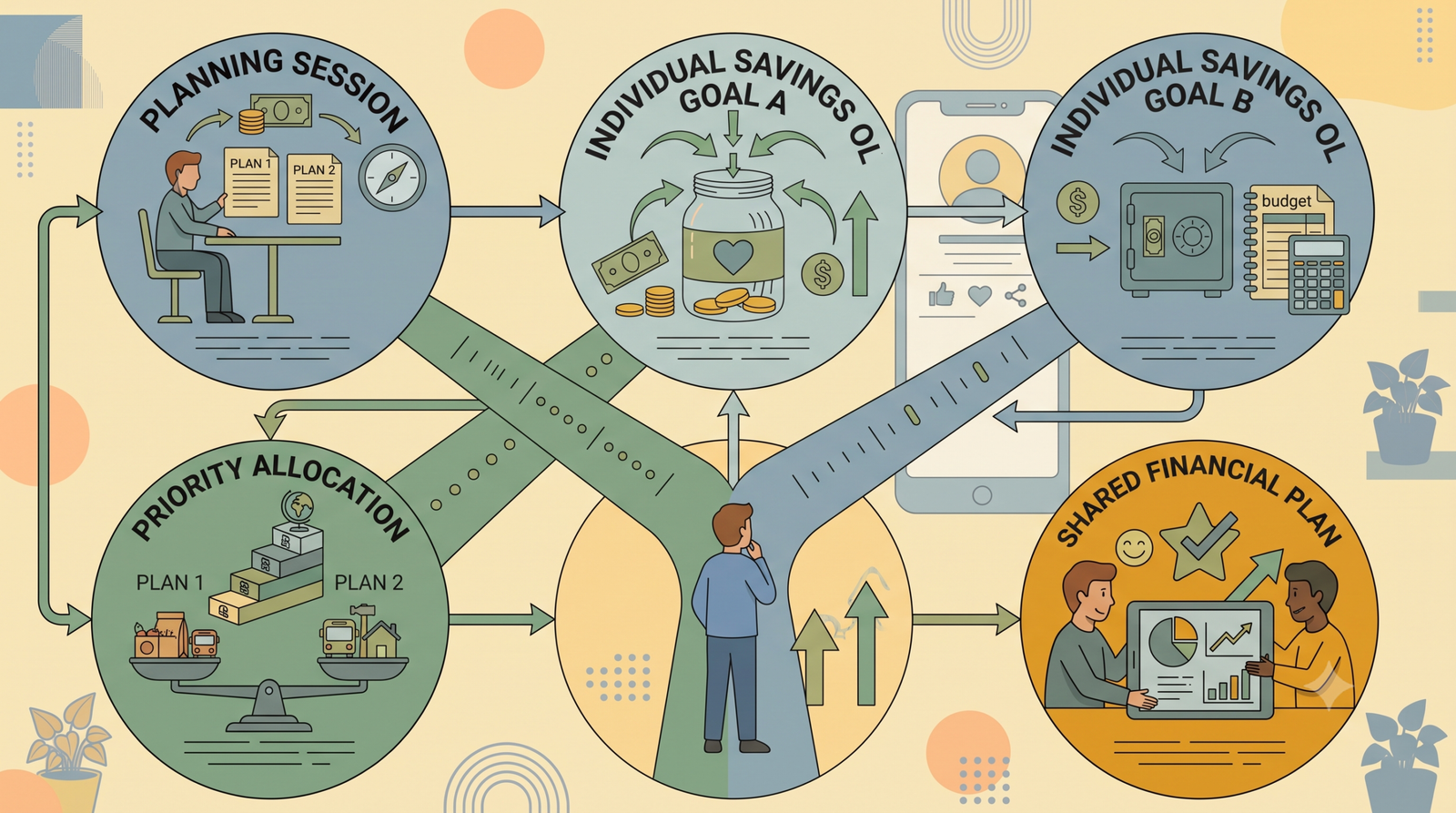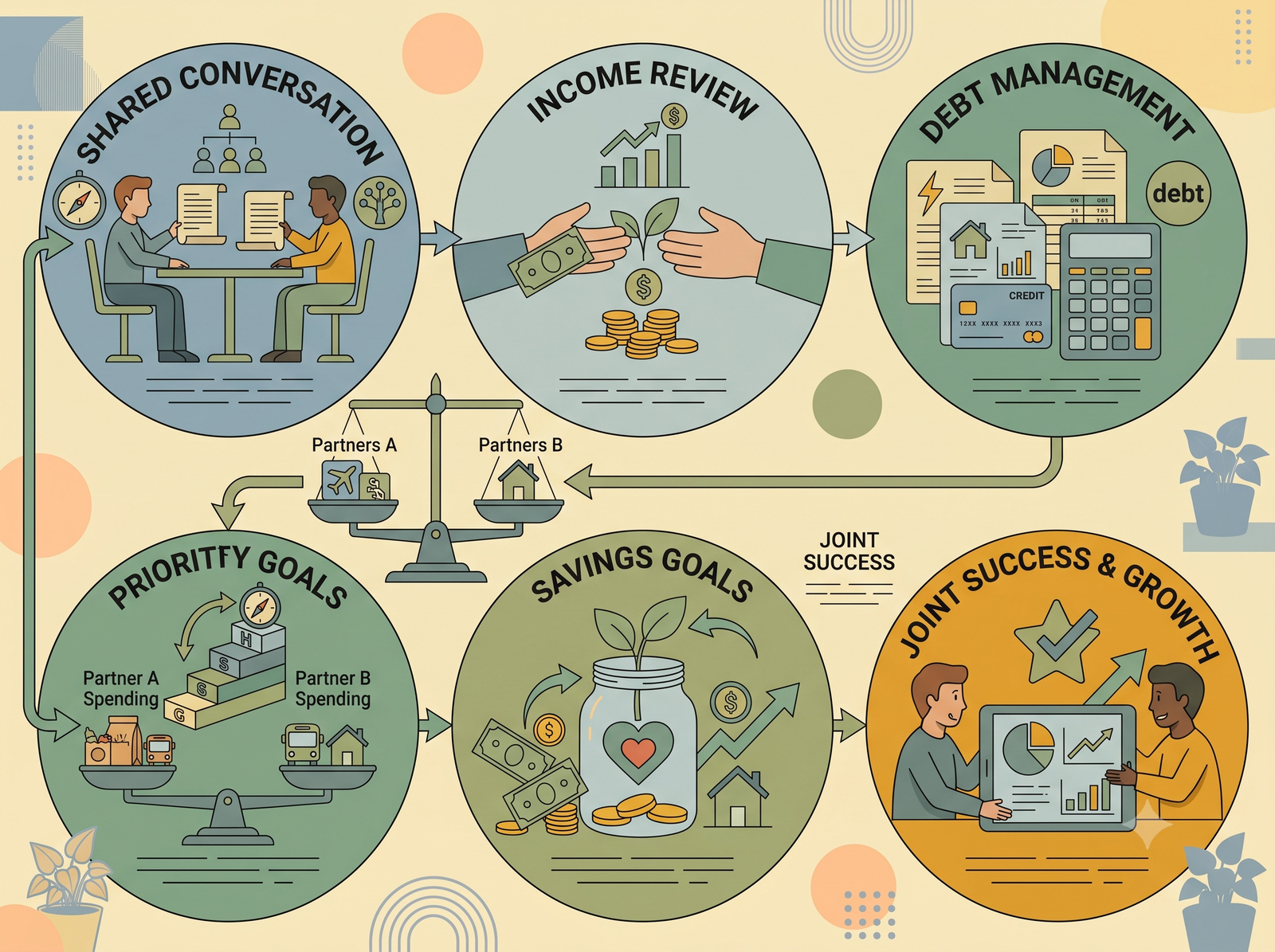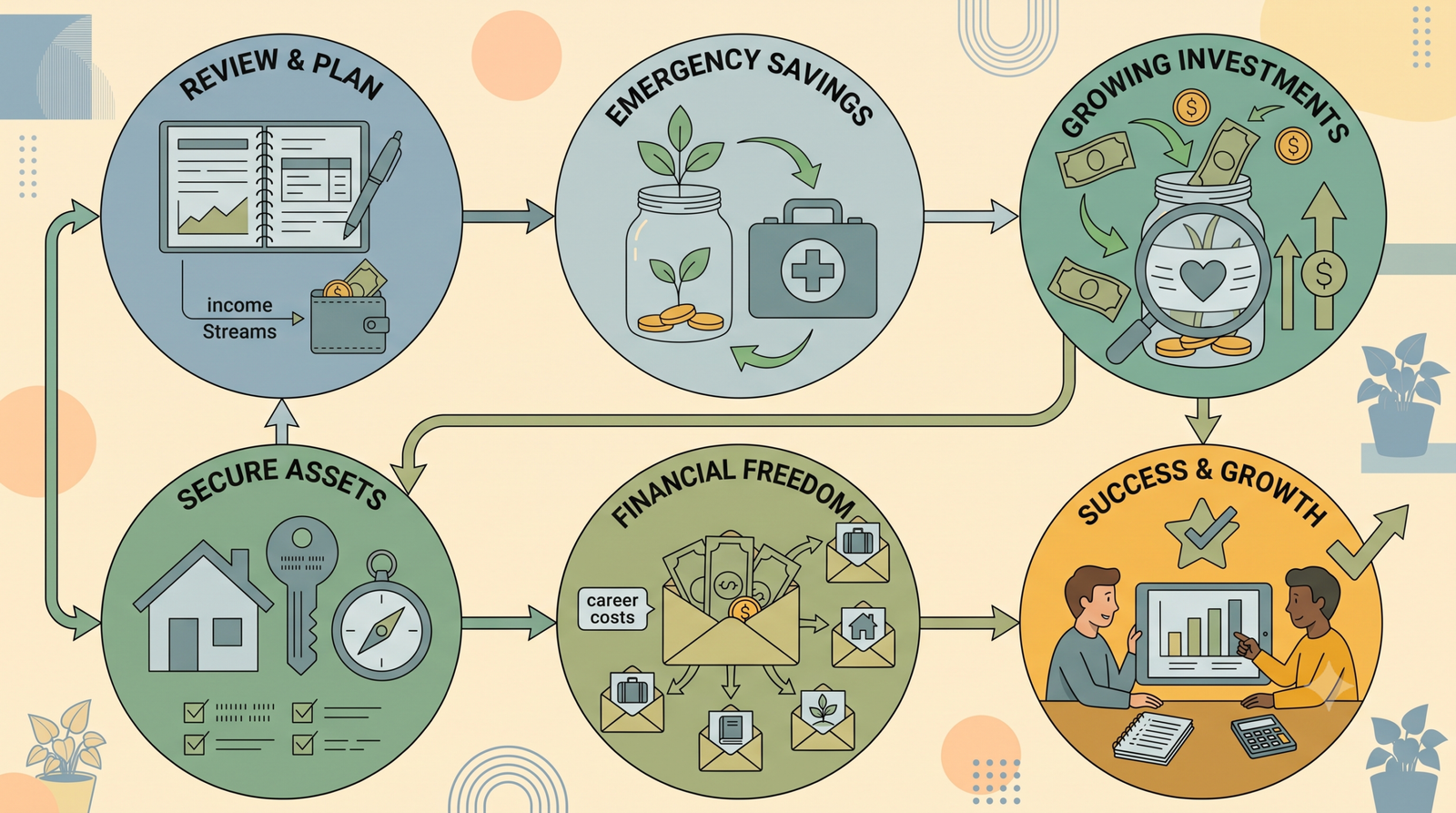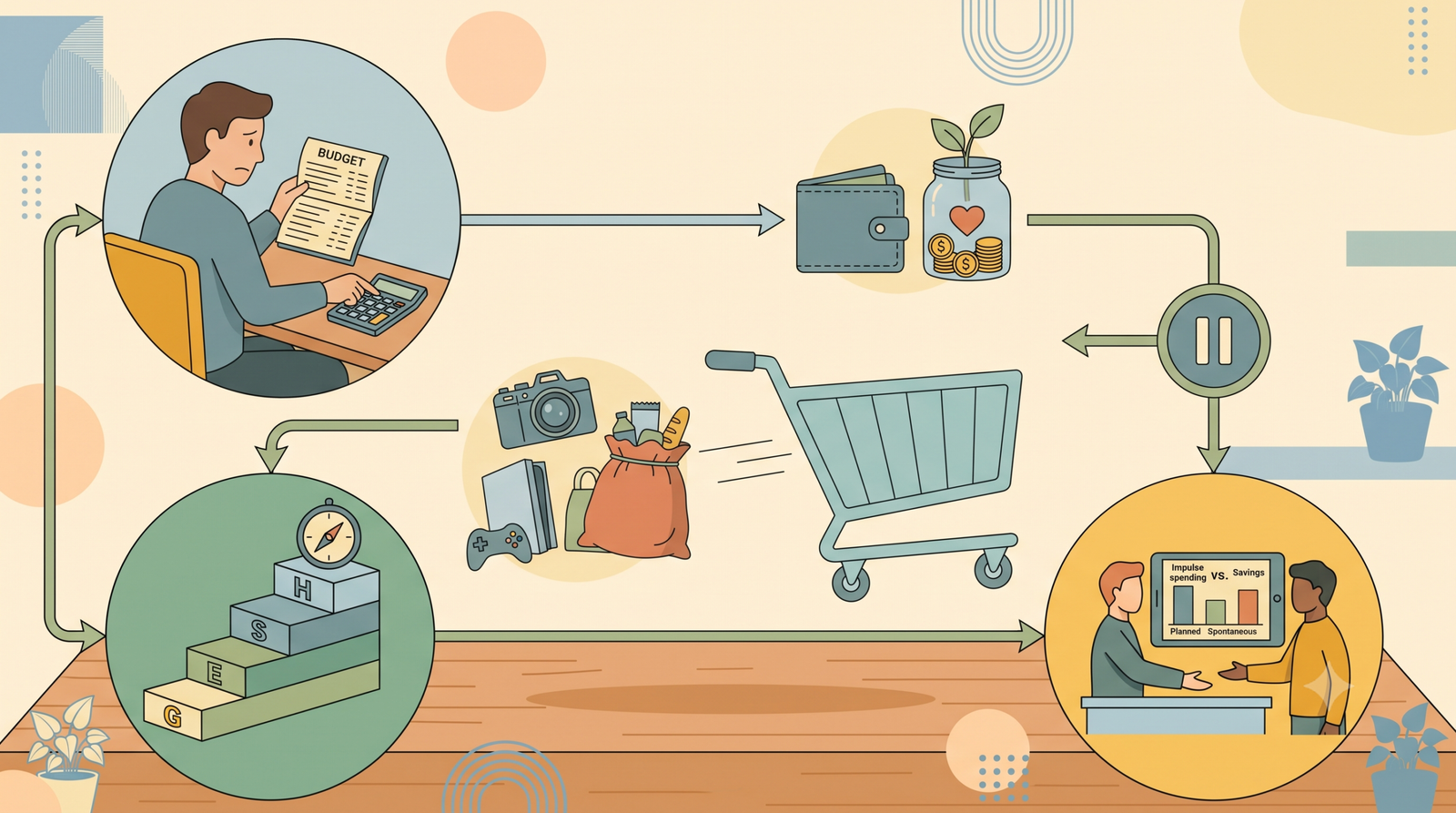








Money is often treated as a mathematical problem. People are told to create a budget, save a certain percentage, avoid debt, and make better decisions.
Those actions matter, but money is also connected to emotions, habits, family history, identity, stress, relationships, and personal values.
Two people with the same income can make completely different financial choices. One may feel calm checking a bank account, while another avoids opening statements because money creates anxiety. One person may spend to feel successful, while another refuses to spend even on important needs because saving feels safer.
A healthy relationship with money does not mean loving spreadsheets or never making mistakes. It means understanding what money means to you, recognizing your patterns, and creating systems that support your real priorities.
This guide explains how to develop a healthy money mindset, manage financial stress, recognize unhealthy spending patterns, set realistic goals, and create financial habits that work over time.
The ideas also connect to our financial literacy 101 guide, because financial knowledge becomes more useful when it is supported by practical behavior.
What Is a Healthy Relationship With Money?
A healthy relationship with money means using it as a tool rather than allowing it to control every decision.
It may involve:
- Knowing how much money you have
- Paying attention to financial information
- Spending according to your priorities
- Saving for important goals
- Managing debt responsibly
- Allowing reasonable enjoyment
- Asking for help when needed
- Accepting that mistakes can be corrected
- Making decisions based on facts rather than shame or comparison
A healthy relationship does not look exactly the same for everyone.
One person may need to focus on reducing debt. Another may need to overcome fear of spending. Someone else may need to create boundaries with family members or stop using shopping as emotional relief.
The goal is not to achieve a perfect financial life. The goal is to create a relationship with money that is honest, flexible, and supportive of your well-being.
How Your Money Beliefs Develop
Many money beliefs begin before you manage money independently.
You may have learned ideas such as:
- Money is difficult to earn
- Talking about money is rude
- Wealthy people are selfish
- Spending money proves success
- Saving is the only responsible choice
- Debt is always unavoidable
- Asking about income is inappropriate
- Financial mistakes are embarrassing
- You should never say no to family
- Money problems should be hidden
Some beliefs may be useful in certain situations. Others may create stress or confusion.
For example, learning to save during a difficult childhood may have built discipline. But if that habit becomes an inability to spend on healthcare, rest, or necessary repairs, it may no longer be serving you.
Think about the messages you received about:
- Spending
- Saving
- Debt
- Work
- Wealth
- Generosity
- Financial success
- Financial failure
You do not need to blame anyone for these beliefs. Simply noticing them can help you decide which ideas still fit your current life.
Signs Your Relationship With Money May Need Attention
Money problems are not always visible through income or account balances.
Possible signs include:
- Avoiding bank statements
- Feeling anxious whenever you spend
- Spending quickly after receiving income
- Hiding purchases from others
- Using shopping to change your mood
- Feeling guilty about every nonessential purchase
- Comparing your finances constantly
- Refusing to discuss money with a partner
- Relying on credit without tracking balances
- Believing financial mistakes cannot be fixed
- Trying to appear wealthier than you feel
- Giving money away out of fear or pressure
- Ignoring bills until they become urgent
Having one of these patterns does not mean you are financially irresponsible. It means there may be a habit or belief worth examining.
Money behavior often develops as a response to stress or uncertainty. Understanding the cause can make it easier to choose a different response.
Begin With Financial Awareness, Not Judgment
The first step is to look at your finances without immediately criticizing yourself.
Gather:
- Recent bank statements
- Credit card statements
- Bills
- Loan balances
- Savings accounts
- Regular income information
- Recurring subscriptions
- Recent receipts
Write down the numbers as they are.
Do not call yourself lazy, careless, or hopeless because you find a problem. A financial statement is information. It is not a description of your character.
Once you have the information, sort expenses into:
- Essential
- Flexible
- Optional
- Debt-related
- Savings or future goals
This is similar to the framework in our needs versus wants article. The purpose is to understand your choices, not to label yourself as good or bad.
Awareness can feel uncomfortable at first, but uncertainty often creates more anxiety than the actual number.
Separate Your Self-Worth From Your Net Worth
Financial numbers can be useful, but they do not measure your value as a person.
Your income, savings, debt, or net worth can change because of:
- Health
- Family responsibilities
- Job loss
- Economic conditions
- Education
- Location
- Disability
- Inheritance
- Opportunity
- Timing
- Circumstances outside your control
Net worth can help you measure financial progress, but it should not become a measure of personal worth.
A person with debt may still be responsible, hardworking, and capable. A person with a high income may still experience fear, stress, or poor financial habits.
Use financial numbers to guide decisions, not to decide whether you deserve respect or care.
Define What “Enough” Means to You
Without a personal definition of enough, it is easy to keep increasing spending.
More income may lead to:
- A larger home
- A newer vehicle
- More subscriptions
- More expensive travel
- Higher-status clothing
- More convenience services
- Larger financial obligations
Some improvements may genuinely improve your life. Others may provide only temporary satisfaction.
Ask:
- What do I want my money to make possible?
- Which expenses improve my daily life?
- What level of comfort is enough?
- Which possessions require too much maintenance?
- What goals matter more than appearing successful?
- How much flexibility do I need?
- What would financial peace look like for me?
Your definition of enough can change, but having one helps prevent endless comparison.
Create Values-Based Spending Priorities
A values-based budget connects spending to what matters most.
Choose three to five priorities, such as:
- Health
- Family
- Education
- Security
- Travel
- Creativity
- Community
- Freedom
- Time
- Home
- Personal growth
Then review your spending.
For example, if family is a major priority but most optional spending goes toward solo online shopping, you may decide to redirect some money toward shared activities.
If health is important but expensive convenience spending is preventing you from buying quality food or paying for necessary care, your budget may need to change.
This exercise does not mean every dollar must have a profound purpose. Some spending can simply be enjoyable. The goal is to notice whether your money generally reflects what you say matters.
Build Financial Habits That Reduce Stress
Check Your Accounts on a Schedule
Avoiding financial information usually increases anxiety.
Choose a regular time, such as once per week, to:
- Review balances
- Check upcoming bills
- Look for unfamiliar transactions
- Update your spending tracker
- Confirm savings transfers
You do not need to check constantly. A regular schedule provides awareness without encouraging obsession.
Automate Important Actions
Automation can help with:
- Savings
- Bill payments
- Debt payments
- Retirement contributions
- Sinking funds
Make sure automatic payments match your income timing and that sufficient money is available.
Create a Small Financial Buffer
A buffer can prevent every minor problem from becoming a crisis.
Start with a realistic goal, such as:
- $100
- One week of essential expenses
- A basic repair cost
- One upcoming bill
A buffer is not a sign that you expect bad things to happen. It is a way to reduce the impact when ordinary problems occur.
Use a Simple Budgeting Routine
At the beginning of each month or pay period:
- List expected income
- Set aside essential bills
- Plan for irregular expenses
- Allocate savings
- Set flexible spending limits
- Review the plan at the end of the period
A routine reduces the need to make financial decisions while stressed.
Learn to Spend Without Unnecessary Guilt

Some people believe that every nonessential purchase is irresponsible. This can create guilt, anxiety, and an unhealthy fear of using money.
If your essential needs are covered, your financial responsibilities are being handled, and the purchase fits your plan, spending on enjoyment can be reasonable.
Consider creating a planned personal spending category for:
- Hobbies
- Restaurants
- Entertainment
- Clothing
- Gifts
- Travel
- Personal care
- Small treats
This gives optional spending a boundary without making it forbidden.
A planned purchase is usually easier to enjoy than an impulsive purchase followed by regret.
Address Emotional Spending
Emotional spending occurs when you use purchases to change how you feel.
Common triggers include:
- Stress
- Boredom
- Loneliness
- Anger
- Sadness
- Celebration
- Social pressure
- Fatigue
- Feeling unsuccessful
- Wanting control
The purchase may provide temporary relief, but the underlying emotion often returns.
Before buying, pause and ask:
- What am I feeling right now?
- What do I expect this purchase to change?
- Is there another way to meet that need?
- Will I still want this tomorrow?
- Does the purchase fit my budget?
- Am I trying to avoid another problem?
Alternative responses might include:
- Taking a walk
- Calling someone
- Resting
- Eating a planned meal
- Writing down the problem
- Exercising
- Doing a free activity
- Waiting before deciding
You do not have to suppress emotions. You are simply creating more than one possible response.
For specific strategies, see how to stop impulse spending.
Manage Financial Comparison
Comparing yourself to other people can damage both your confidence and your decisions.
You may compare:
- Income
- Homes
- Cars
- Clothes
- Vacations
- Savings
- Career progress
- Family support
- Social activities
You rarely see the complete picture behind someone else’s lifestyle. You may not know their debt, financial assistance, stress, or long-term obligations.
Instead, compare your current situation with:
- Your previous spending
- Your previous savings
- Your debt balance
- Your financial goals
- Your emergency fund
- Your ability to handle unexpected costs
- Your consistency
Progress is often quiet. Paying off debt, avoiding an unnecessary purchase, or saving a small amount may not look impressive online, but it can improve your actual life.
Talk About Money More Clearly
A healthy relationship with money includes communication.
With a partner, family member, roommate, or friend, discuss:
- Shared expenses
- Income differences
- Financial responsibilities
- Savings goals
- Debt
- Family support
- Boundaries
- Expectations
- Future plans
Use neutral language.
Instead of:
You always spend too much.
Try:
I am worried that our current spending is making it difficult to cover our savings goal. Can we review the budget together?
Avoid discussing money only during emergencies. Regular conversations are usually easier than urgent arguments.
You do not have to share every financial detail with everyone. Healthy communication also includes privacy and boundaries.
Set Financial Goals That Feel Meaningful
Goals give your habits direction.
A meaningful goal might be:
- Build a starter emergency fund
- Pay off a credit card
- Save for education
- Move to a safer home
- Take time off work
- Support a family member within limits
- Start a business
- Buy a reliable vehicle
- Prepare for retirement
Use a clear format:
I will save $600 for an emergency fund over six months by transferring $100 per month.
Your goal should include:
- Amount
- Purpose
- Deadline
- Contribution
- Progress check
The best goal is not always the largest. A goal that feels achievable can build confidence and encourage future progress.
Our guide on how to set financial goals explains this process in more detail.
Common Unhealthy Money Patterns
Avoidance
Ignoring bills or account balances does not make the problem disappear. Start with one small piece of information and continue gradually.
All-or-Nothing Budgeting
A budget does not need to be perfect. One unplanned purchase does not erase every positive decision.
Shame-Based Motivation
Shame may create short-term urgency but rarely supports lasting change. Use facts, goals, and practical systems instead.
Over-Restriction
Cutting all enjoyable spending may lead to burnout and rebound spending.
Status Spending
Purchasing things mainly to appear successful can create financial pressure and dissatisfaction.
Financial Secrecy
Hiding debt, purchases, or obligations can damage relationships and make solutions harder.
Constant Comparison
Other people’s visible lifestyles are not complete financial information.
Confusing Knowledge With Action
Reading about budgeting does not replace tracking spending, paying bills, or saving regularly. Choose one habit and practice it.
Trying to Fix Everything at Once
Focus on one or two important improvements. Gradual progress is easier to maintain.
A Realistic Example of Changing Money Habits
Imagine someone who earns $3,000 per month and feels anxious about money despite paying bills on time.
They discover:
- They do not check statements regularly
- They spend more on delivery after stressful workdays
- They have three unused subscriptions
- They save only when money remains
- They feel guilty about every personal purchase
- They compare their lifestyle with friends online
They create a new system:
- Review accounts every Sunday
- Cancel unused subscriptions
- Set a weekly food and personal spending limit
- Automate $150 toward savings
- Keep a $100 monthly enjoyment category
- Remove shopping apps
- Stop comparing financial lifestyles online
- Set a six-month emergency savings goal
The person does not become financially perfect. They simply replace avoidance and guilt with awareness, boundaries, and a plan.
That is what a healthier relationship with money often looks like in practice.
Frequently Asked Questions
What is a healthy money mindset?
A healthy money mindset involves viewing money as a tool, understanding your financial situation, spending according to your priorities, saving consistently, managing debt responsibly, and learning from mistakes without defining your self-worth by financial numbers.
How can I stop feeling anxious about money?
Start with a small amount of information, such as listing upcoming bills or checking one account. Create a regular review routine, separate urgent problems from long-term goals, and seek qualified help when the situation feels too difficult to manage alone.
Is it wrong to spend money on wants?
No. Wants can be part of a healthy budget. The important questions are whether the purchase is affordable, planned, and consistent with your priorities.
How do I stop comparing my finances to other people?
Reduce exposure to comparison triggers, remember that you cannot see someone else’s complete financial situation, and track your own progress using savings, debt, spending, and goals.
Can a healthy money mindset solve debt?
A healthier mindset can support better decisions, but debt may also require practical repayment strategies, increased income, lower expenses, negotiation, or professional guidance.
Should I discuss all my financial details with family?
Not necessarily. Share information when it affects shared responsibilities, but maintain appropriate privacy and boundaries around personal accounts and decisions.
How often should I review my budget?
A brief weekly review and a more complete monthly review work well for many people. Review more often during major changes such as moving, changing jobs, or managing irregular income.
What if I have already made serious financial mistakes?
Start with the current facts. List income, expenses, debt, and immediate obligations. Focus on the next practical action instead of trying to solve the entire past at once.
Key Takeaways
- A healthy relationship with money is based on awareness, intentional decisions, and realistic habits.
- Your income, savings, debt, and net worth do not determine your personal worth.
- Notice the money beliefs you learned and decide which ones still serve you.
- Review your finances regularly instead of avoiding statements and bills.
- Create a budget that reflects your values and leaves room for reasonable enjoyment.
- Build small buffers, automate savings, and prepare for irregular expenses.
- Recognize emotional spending triggers and create alternative responses.
- Avoid comparing your complete financial life with someone else’s visible lifestyle.
- Communicate clearly about shared money responsibilities and boundaries.
- Set meaningful financial goals that give your habits direction.
- Readers can continue with financial literacy 101, frugal living tips, and personal finance for students.
- For specific behavior changes, explore how to stop impulse spending and how to set financial goals.
A healthy relationship with money is not created by one perfect budget or one month of disciplined spending. It develops through repeated choices: looking at the numbers, planning before spending, saving when possible, communicating honestly, and correcting mistakes without giving up.
Money is important, but it is a tool for supporting your life—not a final judgment about who you are. When your habits reflect your priorities and your decisions are based on information rather than fear or comparison, money can become more manageable and less emotionally overwhelming.
This article is for informational purposes only and is not financial advice.