







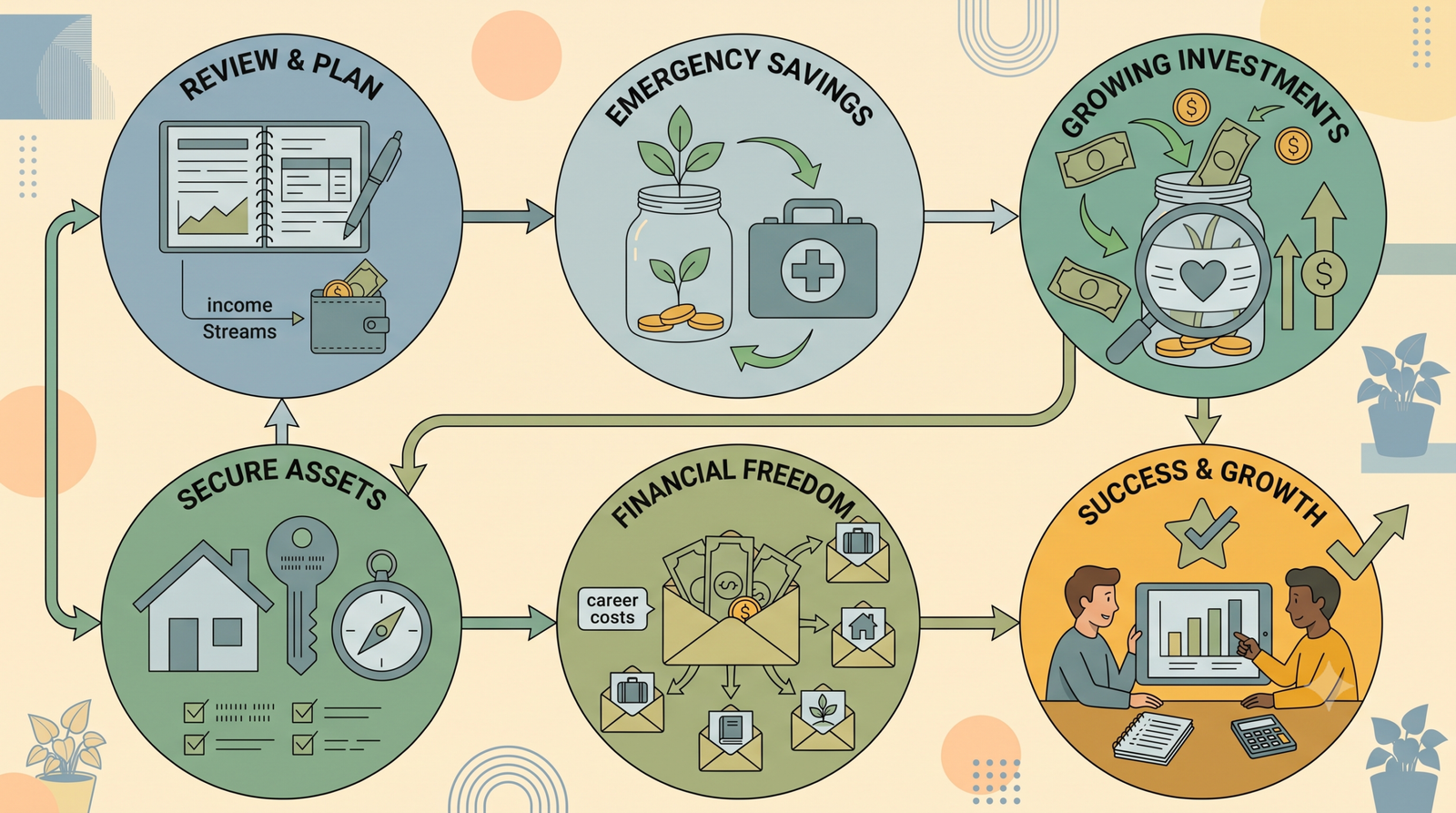
Most people have financial goals. They may want to save more, pay off debt, buy a home, travel, build an emergency fund, start a business, or feel less stressed about money.
The problem is that many goals are too vague to guide daily decisions.
“I want to save more” sounds positive, but it does not answer:
- How much should you save?
- What are you saving for?
- When do you want to reach the goal?
- How much should you save each week or month?
- What will you do if your income changes?
Without clear answers, the goal can remain an idea rather than becoming a plan.
This guide explains how to set financial goals that are specific, realistic, measurable, and connected to your life. You will learn how to choose priorities, calculate the required amount, create milestones, handle setbacks, and stay motivated over time.
Goal setting also supports the healthy money habits explained in our healthy money mindset guide.
What Is a Financial Goal?
A financial goal is a specific outcome you want your money to help you achieve.
Examples include:
- Saving $500 for emergencies
- Paying off a credit card
- Saving for a deposit
- Building a moving fund
- Buying a reliable vehicle
- Paying for education
- Taking a planned vacation
- Building retirement savings
- Starting a small business
- Reducing financial stress
A goal can be short-term, medium-term, or long-term.
Short-Term Goals
These may take a few weeks or months.
Examples:
- Saving for school supplies
- Paying an upcoming bill
- Building a small emergency buffer
- Buying necessary equipment
- Paying off a small balance
Medium-Term Goals
These may take one to five years.
Examples:
- Replacing a vehicle
- Moving to a new home
- Paying down significant debt
- Saving for education
- Building a larger emergency fund
- Starting a business
Long-Term Goals
These may take many years.
Examples:
- Buying a home
- Funding retirement
- Paying for a child’s education
- Reaching financial independence
- Building long-term investment savings
Understanding the time frame helps you choose an appropriate strategy. Money needed soon generally requires more accessibility and stability than money intended for a distant goal.
Why Financial Goals Often Fail
Financial goals commonly fail for predictable reasons.
The Goal Is Too Vague
“I want to be better with money” is difficult to measure.
The Goal Is Unrealistic
Saving an amount that leaves you unable to pay essential expenses will not work for long.
There Is No Deadline
Without a target date, it is easy to postpone action.
There Is No Monthly Plan
A goal needs regular contributions or specific actions.
Too Many Goals Compete
Trying to save for a home, pay off debt, build emergency savings, invest, travel, and upgrade your vehicle at the same time can make progress feel invisible.
The Goal Is Based on Someone Else’s Priorities
A goal should reflect your life, not social media or family pressure.
There Is No Plan for Setbacks
Unexpected expenses, job changes, and health problems can affect progress. A goal that allows no flexibility may be abandoned after one disruption.
The solution is not simply stronger motivation. A well-designed goal is easier to maintain because it tells you what to do next.
Choose Your Most Important Financial Priorities
Before setting several goals, decide what matters most right now.
Start by asking:
- What financial problem causes the most stress?
- What expense is coming soon?
- What would create the most stability?
- Which debt has the highest cost?
- What goal supports my family or education?
- What would give me more flexibility?
- What is within my control?
For many people, early priorities may include:
- Covering essential bills
- Avoiding missed payments
- Building a starter emergency fund
- Paying down expensive debt
- Preparing for known expenses
- Saving for long-term goals
The order depends on your circumstances. Someone facing an immediate housing problem may need to focus on stability first. Someone with stable expenses may be ready to prioritize a larger savings goal.
You do not need to pursue every goal at maximum speed. Choose one main goal and one or two supporting habits.
Use the SMART Framework Carefully
The SMART framework is often used for goal setting. It encourages goals to be:
- Specific
- Measurable
- Achievable
- Relevant
- Time-bound
For example:
I will save $600 for an emergency fund within six months by transferring $100 each month.
This goal is:
- Specific: It identifies an emergency fund
- Measurable: The target is $600
- Achievable: The monthly contribution is visible
- Relevant: It improves financial stability
- Time-bound: The deadline is six months
A SMART goal is useful, but it should not become a reason to create unrealistic expectations. If your income changes, revise the plan instead of treating the adjustment as failure.
Calculate the Monthly Amount You Need
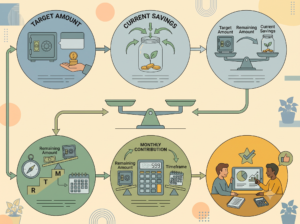
The basic calculation is:
Amount still needed ÷ Number of months remaining = Monthly contribution
For example:
- Goal: $1,200
- Current savings: $200
- Amount remaining: $1,000
- Time available: 10 months
$1,000 ÷ 10 = $100 per month
If $100 per month is not realistic, you have several options:
- Extend the deadline
- Reduce the target
- Increase income
- Reduce optional spending
- Use occasional extra income
- Break the goal into smaller stages
Do not create a plan that requires you to skip essential needs. The right goal is one that challenges you without making your basic budget impossible.
Separate Goals From Regular Expenses
Some expenses are goals, while others are normal responsibilities.
For example:
- Rent is a regular expense
- A future rental deposit is a financial goal
- Groceries are a regular expense
- A holiday grocery budget may be a planned sinking fund
- Debt minimum payments are obligations
- Extra debt repayment may be a financial goal
- A phone bill is a regular expense
- Saving for a replacement phone may be a future goal
This distinction helps you avoid spending money intended for future needs.
Create separate categories for:
- Emergency fund
- Annual expenses
- Education
- Transportation
- Travel
- Gifts
- Home needs
- Debt repayment
- Long-term savings
The categories can be separate accounts, envelopes, or spreadsheet sections.
Build Milestones Instead of Watching One Large Number
Large goals can feel discouraging because progress appears slow.
Break the goal into milestones.
For a $1,200 emergency fund:
- First milestone: $100
- Second milestone: $300
- Third milestone: $600
- Fourth milestone: $900
- Final milestone: $1,200
Celebrate progress without spending the money you saved. You might mark the achievement by taking a free day off, cooking a favorite meal, or sharing the progress with someone supportive.
Milestones make the process visible and provide regular evidence that your actions are working.
Automate What You Can
Automation can help turn a goal into a routine.
Possible automatic actions include:
- Transfers to savings
- Debt payments
- Contributions to a long-term account
- Payments into a sinking fund
- Transfers made after payday
Set automation for a date when money is available. Review the amount regularly, especially when income changes.
Automation is useful, but it should not replace awareness. Check that:
- The payment amount is correct
- The account has enough money
- The transfer is going toward the intended goal
- Fees are not being charged
- Your priorities have not changed
A small automatic contribution is often easier to maintain than waiting for motivation.
Make the Goal Visible
A goal becomes easier to remember when it has a visible place in your daily life.
You might use:
- A progress chart
- A calendar
- A savings thermometer
- A spreadsheet
- A note on your phone
- A separate account name
- A monthly checklist
Keep the reminder encouraging rather than stressful.
Instead of writing:
I am behind.
Use:
I am building this one step at a time.
Visibility helps connect ordinary decisions with future results. Choosing not to make an impulse purchase becomes easier when you can see what the money is helping you achieve.
Use the Right Account for the Goal
The appropriate place for money depends on when you need it and how important access is.
Money needed soon for:
- Emergency expenses
- Rent
- Tuition
- Transportation
- Annual bills
- A planned purchase
generally needs to remain accessible and relatively stable.
Money intended for long-term goals may involve different options, but investing can involve losses and should not be used casually for money you need immediately.
Before choosing an account or product, understand:
- Access rules
- Fees
- Interest
- Penalties
- Minimum balances
- Local regulations
- Risk
Do not choose something simply because it promises a higher return. Match the financial tool to the purpose and time frame.
Use the “Goal Before Upgrade” Rule
When income increases, decide in advance how much will support your goals before increasing lifestyle spending.
For example, you might direct:
- Part of a raise toward debt
- Part toward emergency savings
- Part toward a personal improvement
- Part toward future spending
This prevents lifestyle inflation from absorbing every increase.
A goal-before-upgrade rule does not mean refusing all improvements. It means building a stronger foundation before taking on new recurring costs.
Track Progress Monthly
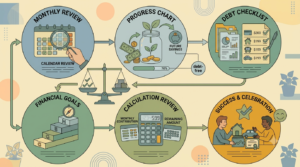
At the end of each month, review:
- How much did you contribute?
- Did the amount match your plan?
- What helped you make progress?
- What caused problems?
- Are you still working toward the right goal?
- Does the deadline need adjustment?
- Did an unexpected expense change your priorities?
A monthly review should be informative, not punitive.
If you saved less than planned, calculate the new timeline rather than abandoning the goal. If you saved more, decide whether to continue at the higher level or direct the extra money elsewhere.
How to Stay Motivated
Connect the Goal to a Real Benefit
“Saving $1,000” may feel abstract. “Having money available when the car needs a repair” is more meaningful.
Use Short-Term Rewards
Choose rewards that do not undo your progress. Enjoy a free activity, time with friends, or a favorite meal made at home.
Tell Someone You Trust
Supportive accountability can help. You do not need to announce every financial detail publicly.
Keep the Goal Flexible
A goal that adapts to income changes is more likely to survive.
Avoid Comparing Timelines
Someone else may reach a goal faster because they have a different income, cost of living, family support, or starting point.
Focus on the Next Action
When a goal feels overwhelming, ask:
What is the next useful step?
It might be checking a balance, making a transfer, canceling an unused subscription, or writing down the target amount.
What to Do When You Fall Behind
Setbacks are normal.
You may fall behind because of:
- Reduced work hours
- Medical costs
- Family responsibilities
- Repairs
- Higher prices
- Unexpected travel
- Job changes
- Poor planning
- Temporary overspending
Do not respond by pretending the problem did not happen. Review the new situation and revise the plan.
You can:
- Extend the deadline
- Reduce the monthly amount
- Pause temporarily
- Increase income
- Reduce optional spending
- Use an unexpected payment
- Choose a smaller short-term target
A changed plan is not the same as a failed goal.
The important question is whether the goal still supports your life and whether the new plan is realistic.
A Realistic Financial Goal Example
Suppose someone wants to save $3,000 for a professional training course in twelve months.
They currently have $500 saved.
- Total goal: $3,000
- Current savings: $500
- Remaining amount: $2,500
- Time available: 12 months
$2,500 ÷ 12 = approximately $209 per month
The person decides to contribute:
- $150 monthly from regular income
- $25 monthly by reducing optional spending
- $34 monthly from occasional freelance work
This creates approximately $209 per month.
After three months, the person’s work schedule changes and freelance income falls. Instead of abandoning the goal, they revise the plan:
- $150 monthly contribution
- Extend the deadline by four months
- Look for a lower-cost course
- Apply for employer or school assistance
The goal remains useful because it can adapt to reality.
Common Financial Goal-Setting Mistakes
Setting Too Many Goals
Choose one major goal and a small number of supporting priorities.
Choosing a Goal Without a Deadline
A deadline gives your contributions direction.
Ignoring Current Debt or Bills
A long-term goal may need to pause while urgent financial responsibilities are addressed.
Using Unrealistic Numbers
A plan that leaves no money for essential needs will not last.
Relying on Motivation Alone
Automate contributions and create reminders.
Forgetting Inflation and Price Changes
Future costs may be higher than today’s prices. Review long-term goals periodically.
Treating a Setback as Failure
Adjust the plan instead of abandoning it.
Using Money Needed Soon for Risky Investments
Match the account or tool to the goal’s timeline and access requirements.
Comparing Your Progress With Others
Your starting point and responsibilities are different.
Spending the Savings Before the Goal Is Complete
Keep goal money separate from everyday spending.
Frequently Asked Questions
What are good examples of financial goals?
Common goals include building an emergency fund, paying down debt, saving for education, preparing for a move, buying reliable transportation, planning a vacation, and building long-term savings.
How many financial goals should I have at once?
There is no universal number, but too many goals can divide your attention and make progress difficult to see. Start with one main goal and one or two smaller supporting goals.
How do I set a realistic savings goal?
Choose a specific target, subtract what you already have, divide the remainder by the time available, and compare the required contribution with your actual budget.
What if I cannot save enough each month?
Reduce the target, extend the deadline, increase income, lower optional spending, or use occasional extra money. Do not reduce essential expenses to maintain an unrealistic goal.
Should I pay debt or save first?
The right balance depends on the debt’s cost, required payments, emergency savings, and personal circumstances. Continue required payments and consider building at least a small buffer to avoid new debt when surprises occur.
How can I stay motivated while saving?
Connect the goal to a meaningful purpose, track milestones, automate contributions, use visible progress reminders, and focus on the next action rather than the entire distance.
Should I invest money saved for a short-term goal?
Money needed soon generally requires accessibility and stability. Investing involves the possibility of loss, so understand the timeline and risks before choosing where to keep goal money.
What should I do if my financial priorities change?
Review the goal honestly. You can pause it, adjust the deadline, change the amount, or replace it with a more urgent priority. Financial planning should adapt as life changes.
Key Takeaways
- A financial goal should be specific, measurable, realistic, relevant, and time-bound.
- Begin by choosing the priority that would improve your financial life most.
- Calculate the monthly amount required instead of relying on a vague intention.
- Separate future goals from regular monthly expenses.
- Break large goals into smaller milestones.
- Automate contributions when possible and review them regularly.
- Keep goal money organized and accessible according to the timeline.
- Build flexibility into your plan so one setback does not end your progress.
- Avoid pursuing too many major goals at the same time.
- Do not compare your timeline with someone else’s.
- Readers can connect goal setting with healthy money habits, frugal living strategies, and financial literacy basics.
- Students and young adults can also review personal finance for students.
Financial goals work best when they become part of your regular routine rather than a promise you make once a year. Choose a meaningful target, calculate the next step, and create a system that makes progress easier.
You may need to change the amount or deadline as your life changes. That does not make the goal pointless. A flexible plan is more useful than a perfect plan that cannot survive real life.
This article is for informational purposes only and is not financial advice