




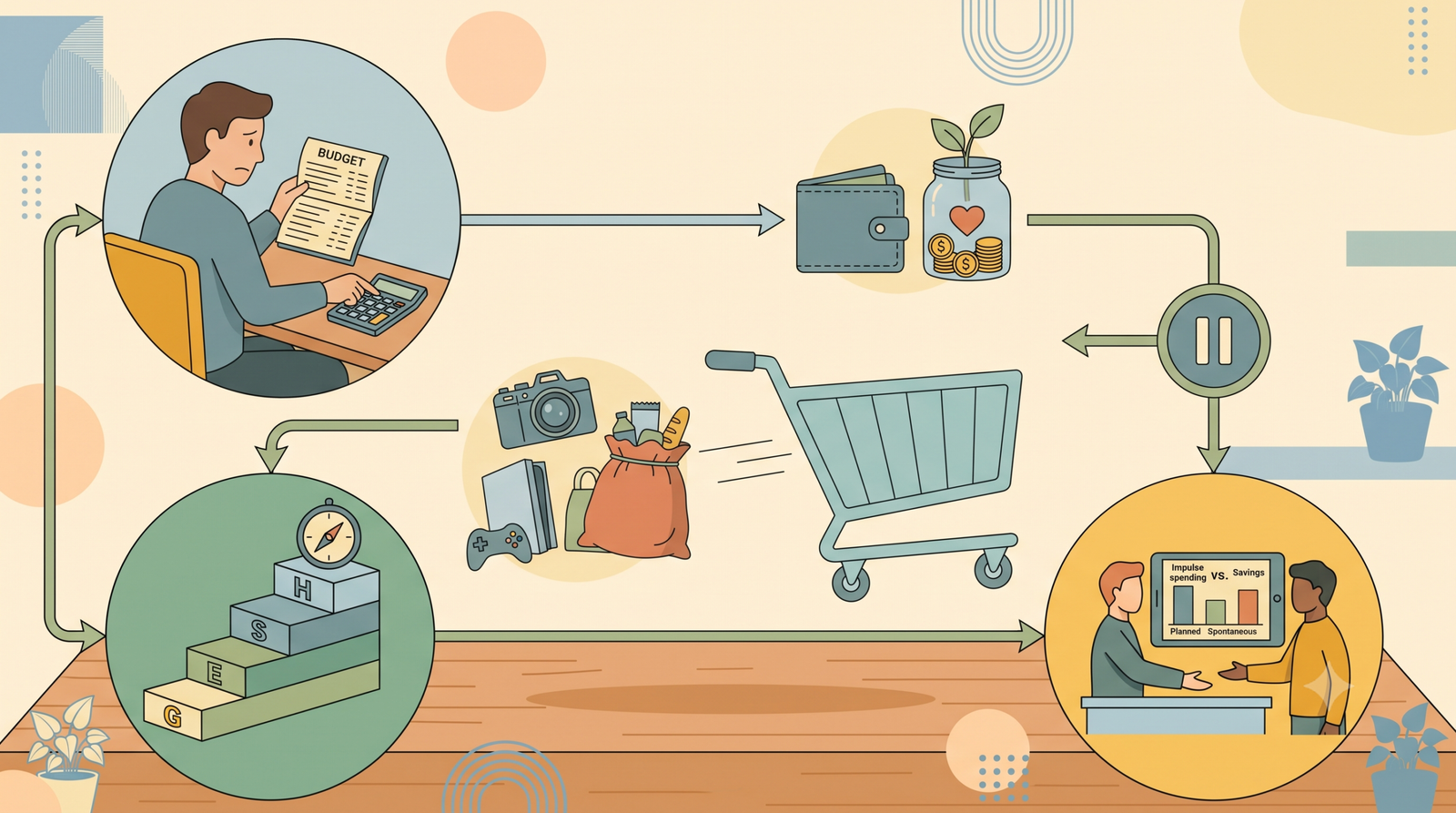
Impulse spending is often described as a lack of self-control. That explanation is too simple.
Many impulse purchases happen because of a predictable combination of emotions, habits, advertising, convenience, social pressure, and environment. You may buy something after a stressful day, while scrolling online, when a sale creates urgency, or because the purchase is easier than thinking through the decision.
The purchase may provide a short burst of excitement or relief. Later, you may feel regret, confusion, or frustration when you see the balance in your account.
This does not mean you are careless or incapable of managing money. It means a trigger has become connected to a spending response.
This guide explains how to stop impulse spending, why impulse buying happens, how to recognize your triggers, and which systems can create space between an urge and a purchase.
The strategies also connect to the practical framework in our needs versus wants guide and the broader ideas in building a healthy relationship with money.
What Is Impulse Spending?
Impulse spending is an unplanned purchase made quickly, often without considering its effect on your budget or priorities.
It may involve:
- Buying clothes you did not plan to purchase
- Ordering food because cooking feels inconvenient
- Adding products to an online cart after seeing an advertisement
- Purchasing items because they are discounted
- Buying upgrades before your current item stops working
- Spending money to improve your mood
- Paying for convenience without comparing alternatives
- Making repeated small purchases that do not feel important individually
Not every spontaneous purchase is harmful. You may occasionally decide to buy a snack, gift, or activity and still remain within your budget.
The problem is repeated spending that:
- Creates financial stress
- Uses money needed for bills
- Increases credit card balances
- Delays savings goals
- Causes regret
- Becomes difficult to control
- Happens automatically rather than intentionally
The goal is not to eliminate every unplanned purchase. It is to make sure your spending is a choice rather than a reflex.
Why Do I Impulse Buy?
Impulse buying can be connected to several different triggers.
Emotional Triggers
You may spend when feeling:
- Stressed
- Bored
- Lonely
- Sad
- Angry
- Anxious
- Tired
- Excited
- Insecure
- In need of a reward
Shopping can provide temporary distraction or comfort. The purchase becomes a way to change an emotional state.
However, the relief may not last. Once the excitement fades, the original emotion may return along with financial regret.
Environmental Triggers
Your surroundings can encourage spending through:
- Retail displays
- Targeted advertisements
- Limited-time offers
- Social media recommendations
- Email promotions
- Influencer content
- One-click payment
- Saved card details
- Checkout suggestions
- Free-shipping thresholds
The easier a purchase is to make, the less time you have to evaluate it.
Habit Triggers
Spending may become connected to repeated routines:
- Buying coffee on the way to work
- Ordering food after a late shift
- Shopping on payday
- Browsing stores on weekends
- Purchasing something after completing a difficult task
- Buying items during a lunch break
- Checking shopping apps before bed
Once a habit is repeated, the trigger can create an urge even when the purchase is not necessary.
Social Triggers
Friends, family, coworkers, and online communities can affect spending.
You may spend because:
- You want to fit in
- You do not want to seem cheap
- Everyone else is upgrading
- You feel pressure to give expensive gifts
- A social activity assumes spending
- You compare your lifestyle with others
Understanding the trigger helps you create a specific solution instead of simply telling yourself to “have more discipline.”
The Impulse Spending Cycle
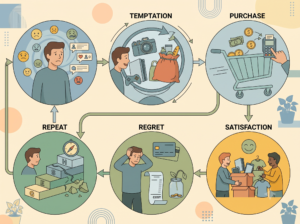
Impulse spending often follows a predictable sequence:
- Trigger: You feel an emotion or encounter a tempting message.
- Urge: You imagine how the purchase will improve your situation.
- Justification: You explain why the item is affordable or necessary.
- Purchase: You complete the transaction quickly.
- Reward: You feel excitement, relief, or satisfaction.
- After-effect: You experience regret, financial stress, or guilt.
- Repeat: The next trigger begins the cycle again.
The most useful place to interrupt the cycle is before the purchase.
Once payment is complete, the decision becomes more difficult to reverse. Creating a pause between the urge and the transaction gives you time to ask better questions.
10 Practical Ways to Stop Impulse Spending
1. Use a Waiting Period
Create a rule that nonessential purchases must wait.
Possible waiting periods include:
- 24 hours for small purchases
- 48 hours for moderate purchases
- Seven days for larger purchases
- Thirty days for expensive upgrades
Add the item to a written wish list rather than buying immediately.
During the waiting period, ask:
- Do I still want it?
- Do I already own something similar?
- What problem does it solve?
- Will I use it regularly?
- Does it fit my budget?
- What goal would be delayed if I buy it?
The longer the waiting period, the more useful it becomes for expensive or recurring purchases.
2. Remove Saved Payment Information
Saved payment details make transactions fast and automatic.
Consider removing:
- Saved credit cards
- Saved debit cards
- One-click payment options
- Shopping app payment settings
- Digital wallet access from retail apps
Entering your payment information manually creates a small pause. That pause may be enough to reconsider.
You do not need to make necessary purchases difficult. The goal is to create friction around optional spending.
3. Unsubscribe From Promotional Messages
Marketing messages create the feeling that you are missing an opportunity.
Unsubscribe from:
- Retail emails
- Flash-sale alerts
- Brand notifications
- Discount text messages
- Influencer shopping lists
- App promotions
- Personalized recommendations
If you want updates from a particular company, check the website when you have a planned purchase rather than receiving daily reminders.
4. Use a Personal Spending Allowance
A personal allowance gives optional spending a boundary.
Choose an amount that fits your income and financial responsibilities. It can be weekly or monthly.
You may use it for:
- Snacks
- Coffee
- Clothing
- Entertainment
- Hobbies
- Small gifts
- Restaurants
- Personal care
When the allowance is available, you can spend it without unnecessary guilt. When it is gone, you wait until the next period.
This approach is often more sustainable than banning every purchase.
5. Track Impulse Purchases
Write down every unplanned purchase for one month.
Record:
- Item
- Price
- Time
- Location
- Emotion
- Trigger
- Whether you still value it afterward
You may find patterns such as:
- More spending after work
- Increased purchases when tired
- Online shopping late at night
- Food spending during stressful weeks
- Shopping after seeing certain social media accounts
- Spending immediately after receiving income
Tracking turns a vague problem into specific information.
6. Create an “Avoided Purchase” List
When you decide not to buy something, record the amount you kept.
For example:
| Date | Purchase Avoided | Amount |
|---|---|---|
| Monday | Takeout meal | $25 |
| Wednesday | Unplanned clothing | $45 |
| Friday | Online accessories | $30 |
| Total | $100 |
This helps you see progress that would otherwise remain invisible.
You do not need to transfer the exact amount every time, especially if the purchase would not have happened otherwise. But you can use the list to estimate how much your habits may be costing you.
Move some of the amount toward a specific goal if possible.
7. Replace the Trigger, Not Just the Purchase
If spending is triggered by stress, boredom, or loneliness, simply saying “do not spend” may leave the underlying need unanswered.
Create alternatives that address the trigger.
If You Spend When Stressed
Try:
- Taking a walk
- Stretching
- Having a shower
- Calling someone
- Writing down the problem
- Preparing a simple meal
- Listening to calming music
If You Spend When Bored
Try:
- Reading
- Cooking
- Using a free hobby
- Organizing a room
- Watching something you already have
- Visiting a park
- Learning a skill
If You Spend When Lonely
Try:
- Calling a friend
- Joining a free community activity
- Visiting family
- Volunteering
- Attending a library event
- Taking part in a group hobby
Our guide on cheap and free hobbies includes more alternatives to shopping-based entertainment.
8. Avoid Shopping as Entertainment
Browsing stores or shopping apps can become a recreational habit.
If you enjoy browsing, replace some shopping time with:
- Window shopping without payment methods
- Public markets without a purchase plan
- Libraries
- Parks
- Museums with free entry
- Exercise
- Cooking
- Social visits
- Creative activities
You can also set a rule that you do not enter stores without a specific list.
9. Use a 24-Hour Cart Rule
If you shop online, place items in your cart but do not check out immediately.
Return to the cart after 24 hours. Remove anything that no longer seems useful.
You can strengthen the rule by:
- Turning off purchase notifications
- Closing the browser
- Removing shopping apps
- Writing the total cost on paper
- Checking your financial goals before buying
The cart becomes a holding place rather than an automatic path to payment.
10. Keep Financial Goals Visible
Impulse spending is easier to resist when your priorities are clear.
Create a visible reminder of:
- Emergency savings
- Debt repayment
- A future home
- Education
- Travel
- A business goal
- A family responsibility
- Financial independence
The reminder should not create shame. It should help you remember what the money could do instead.
For help creating goals, see how to set financial goals.
Use the “Pause, Question, Choose” Method
When you feel an urge to buy, follow three steps.
Pause
Do not click “buy” or enter the store immediately. Take a few breaths and wait.
Question
Ask:
- Is this a need or a want?
- Is this planned?
- Can I afford it without debt?
- Do I already own something similar?
- Am I buying because of an emotion?
- Will I value it next month?
- What goal could use this money?
Choose
After pausing and questioning, make a deliberate decision.
The answer may be:
- Buy it now
- Wait longer
- Find a cheaper option
- Borrow it
- Buy secondhand
- Remove it from the list
The method does not require you to reject every purchase. It changes the decision from automatic to intentional.
How to Handle Payday Impulse Spending
Some people spend more immediately after receiving income.
Payday can create temporary confidence:
- The account balance looks higher
- Bills feel far away
- You feel rewarded for working
- You want to celebrate
- You assume there is more money available than there really is
Create a payday routine:
- Check the amount received
- Set aside upcoming bills
- Transfer savings
- Pay required debt
- Allocate weekly spending
- Leave the remainder for planned expenses
Avoid shopping immediately after payday. Create a 24-hour waiting rule for nonessential purchases during the first day.
This allows the money to be assigned before emotions or excitement influence spending.
Impulse Spending and Social Media
Social media can make constant purchasing seem normal.
You may see:
- Clothing hauls
- Home upgrades
- Restaurant visits
- Travel
- New technology
- Beauty products
- Influencer recommendations
- Limited-time promotions
Remember that online content may involve advertising, sponsorships, gifted products, or carefully selected highlights.
Reduce exposure by:
- Unfollowing accounts that trigger spending
- Muting shopping-related content
- Avoiding “shop with me” videos
- Removing retail apps
- Taking regular social media breaks
- Following educational or non-commercial content
You do not need to avoid every advertisement. You need to recognize when repeated exposure is affecting your decisions.
How to Recover After an Impulse Purchase
An impulse purchase does not need to become a larger problem.
Review the Purchase Calmly
Ask:
- Can I return it?
- Is the return cost reasonable?
- Was it paid with credit?
- Will keeping it create a useful benefit?
- What triggered the decision?
Do Not Buy More to Relieve Regret
Some people respond to guilt by making another purchase or ignoring the account entirely. Instead, record the transaction and continue with your plan.
Adjust the System
If the purchase happened because of a specific trigger, change the environment:
- Remove the app
- Create a waiting period
- Set a category limit
- Unsubscribe from emails
- Plan an alternative activity
- Avoid shopping when tired
Avoid Extreme Compensation
You do not need to punish yourself by skipping necessary food, healthcare, or bills. Make a reasonable adjustment and continue.
A Realistic Impulse Spending Example
Consider someone who makes these unplanned purchases in one month:
| Purchase | Amount |
|---|---|
| Online clothing | $85 |
| Food delivery | $140 |
| Convenience drinks | $60 |
| Mobile accessories | $45 |
| Unplanned entertainment | $70 |
| Total | $400 |
The person reviews the pattern and notices:
- Clothing purchases happen late at night
- Delivery happens after long workdays
- Drinks are bought during the commute
- Accessories are triggered by online recommendations
- Entertainment spending occurs when plans are made at the last minute
The person creates new systems:
- Remove shopping apps
- Prepare two emergency meals
- Carry drinks from home
- Use a 48-hour clothing rule
- Set a weekly entertainment allowance
If these systems reduce impulse spending by half, the person may free approximately $200 per month for savings or debt repayment.
The goal is not perfect control. It is reducing repeated spending that does not provide enough value.
Common Mistakes When Trying to Stop Impulse Spending
Relying Only on Willpower
Willpower changes with stress, sleep, hunger, and environment. Systems are usually more reliable.
Banning Every Optional Purchase
Extreme restrictions can lead to frustration and rebound spending.
Keeping Shopping Apps Easily Available
Convenience makes automatic purchases more likely.
Ignoring Emotional Triggers
If spending changes your mood temporarily, you need replacement strategies rather than only stricter rules.
Treating Discounts as Savings
A discounted item still costs money. Buy it only when it is planned and useful.
Using Credit to Hide the Cost
A purchase is still spending when it goes on a credit card or installment plan.
Not Tracking Small Purchases
Small impulse purchases can become expensive when repeated.
Feeling That One Mistake Ruins Everything
Progress is not erased by one purchase. Review the trigger and continue.
Comparing Yourself to Other People
Other people’s spending may not reflect their actual financial situation.
Setting a Rule You Cannot Maintain
A realistic limit is more useful than a perfect rule abandoned quickly.
Frequently Asked Questions
Why do I impulse buy even when I know I should save?
Impulse buying may be connected to emotion, habit, convenience, advertising, or social pressure. Knowing the financial consequences is helpful, but changing the trigger and creating a pause can be more effective than relying on knowledge alone.
What is the best way to stop impulse spending?
Start with a waiting period, remove saved payment details, track triggers, set a personal spending allowance, and keep financial goals visible. Combining several small barriers is usually more effective than one strict rule.
How long should I wait before making a purchase?
Try 24 hours for small nonessential purchases, 48 hours for moderate purchases, and one week or longer for expensive items. The appropriate waiting period depends on the cost and your personal pattern.
Is impulse spending always bad?
No. An occasional unplanned purchase may not be harmful if it fits your budget. It becomes a problem when it is repeated, unaffordable, emotionally driven, or connected to debt and financial stress.
How can I stop impulse spending online?
Remove saved payment details, unsubscribe from promotions, delete shopping apps, use a 24-hour cart rule, and avoid browsing when bored or stressed.
How can I stop spending when I am stressed?
Identify alternatives that provide relief, such as walking, calling someone, resting, journaling, exercising, or using a free hobby. If financial behavior feels connected to serious emotional distress, consider speaking with a qualified professional.
What should I do after an impulse purchase?
Check whether it can be returned, review what triggered the purchase, adjust your system, and continue with your financial plan. Avoid using shame or extreme restrictions as a response.
Can a no-spend challenge stop impulse spending?
A no-spend challenge can reveal spending triggers and create a temporary pause. Long-term improvement usually comes from keeping some of the habits after the challenge ends.
Key Takeaways
- Impulse spending is often caused by emotions, habits, convenience, advertising, or social pressure.
- The goal is not to eliminate every spontaneous purchase but to stop spending that creates regret or financial stress.
- Use waiting periods before buying nonessential items.
- Remove saved payment details and unsubscribe from promotional messages.
- Track impulse purchases and identify the situations that trigger them.
- Create a personal spending allowance so optional spending has a clear boundary.
- Replace emotional shopping with alternative ways to handle stress, boredom, or loneliness.
- Keep your financial goals visible and use a payday routine.
- A single mistake does not erase your progress.
- Sustainable systems are generally more effective than relying on willpower alone.
- Readers can continue with building a healthy relationship with money, needs versus wants, and frugal living tips.
- A short no-spend challenge can also help you observe and reset spending patterns.
Impulse spending is not a permanent personality trait. It is a behavior connected to specific situations, and behaviors can change when the environment and response change.
Start with one pause. Wait before buying, remove one shopping trigger, or write down one purchase you nearly made. Small interruptions can become strong habits when repeated consistently.
This article is for informational purposes only and is not financial advice.