







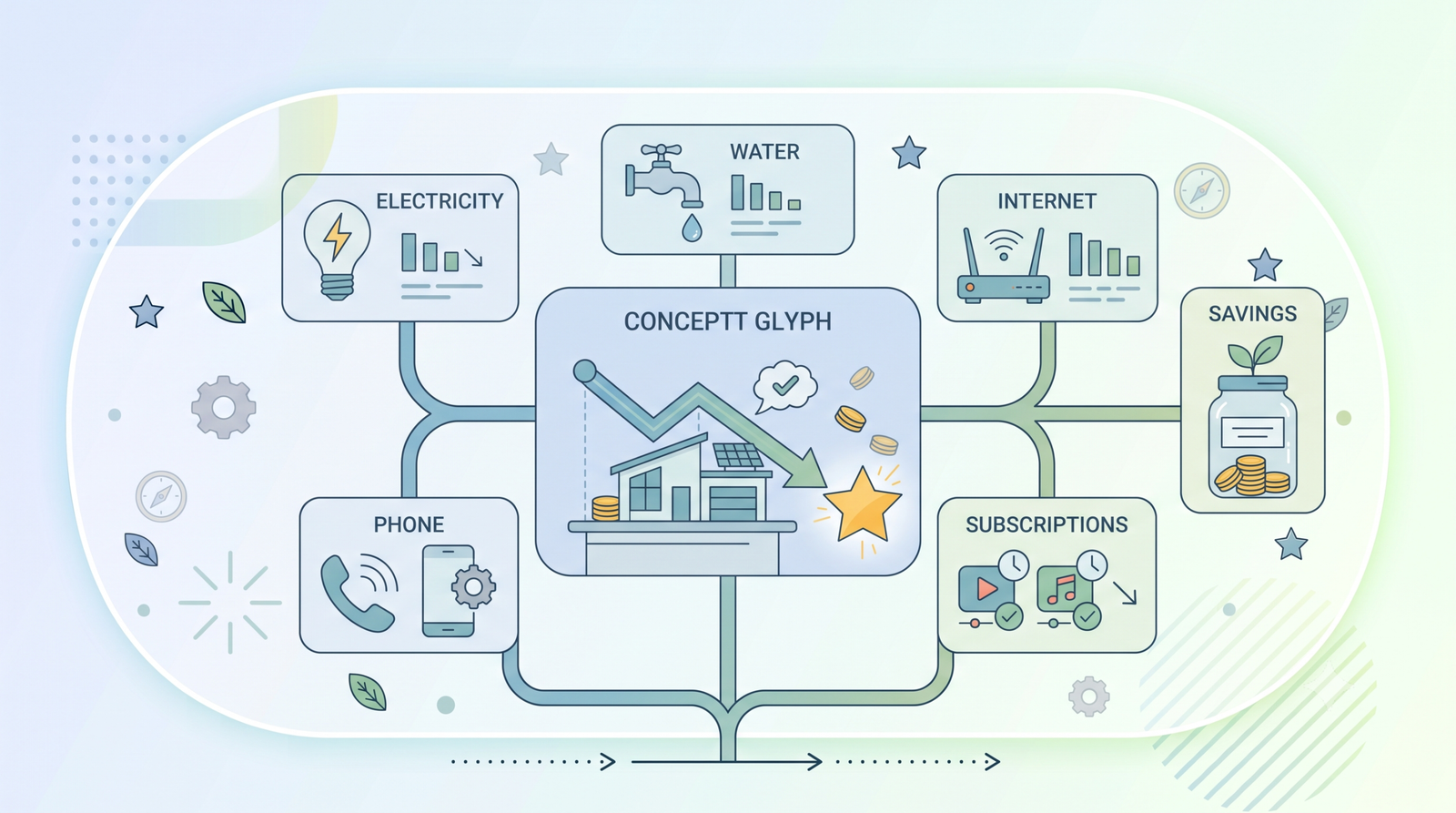
Monthly bills have a way of becoming invisible.
You may notice the total leaving your bank account, but not remember when each payment increased, whether you still use every service, or whether a cheaper option is available. A phone plan gets upgraded, an online subscription renews, an insurance premium changes, and a utility bill rises slightly. One change may not seem serious, but several increases can quietly consume money that could have gone toward savings, debt payments, or other priorities.
Lowering your monthly bills does not require turning your home into an uncomfortable place or removing every service you enjoy. The goal is to identify expenses that are overpriced, unused, duplicated, or larger than your household actually needs.
This guide explains how to lower monthly bills step by step, including housing, utilities, phone and internet plans, insurance, subscriptions, transportation, and everyday household expenses. It also connects to the broader principles in our frugal living guide, where the focus is spending less without giving up the things that genuinely improve your life.
Why Monthly Bills Deserve a Regular Review
A monthly bill is not necessarily a permanent bill.
Prices, plans, household needs, and available alternatives change over time. A service that was useful two years ago may now be unnecessary. A promotional rate may have expired. Your household may have changed, leaving you paying for more capacity than you use.
Regular bill reviews can help you identify:
- Services you no longer use
- Plans with features you do not need
- Duplicate subscriptions
- Fees that could be removed
- Bills that were increased without your noticing
- Better options from the same provider
- Expenses that can be paid annually or seasonally
- Household habits that increase utility costs
The review does not need to happen every week. A quarterly or twice-yearly check is enough for many households.
Choose a regular date, such as the beginning of a new season or the month before your insurance renews. Review your statements and write down the current price of each recurring bill.
The goal is not to cancel everything. It is to make sure every recurring expense still deserves its place in your budget.
Create a Monthly Bills Inventory
Before lowering your bills, create a complete list.
Include both fixed and variable expenses.
| Bill Category | Examples | Usually Fixed or Variable |
|---|---|---|
| Housing | Rent, mortgage, maintenance | Mostly fixed |
| Electricity | Power and cooling | Variable |
| Water | Water and sewer charges | Variable |
| Internet | Home internet service | Mostly fixed |
| Phone | Mobile plan and device payments | Mostly fixed |
| Insurance | Auto, home, health, renters | Fixed or changing |
| Transportation | Car payment, fuel, transit | Mixed |
| Debt payments | Credit cards and loans | Mostly fixed |
| Subscriptions | Streaming, apps, memberships | Fixed |
| Childcare | Daycare, after-school care | Fixed or changing |
| Education | Tuition, lessons, school fees | Mixed |
| Household services | Cleaning, lawn care, storage | Mixed |
For each bill, record:
- Provider
- Current monthly amount
- Payment date
- Contract end date
- Cancellation terms
- Whether you use the service
- Whether the amount has recently changed
- Whether you could switch, reduce, or remove it
This inventory can reveal something important: the issue may not be that one bill is extremely high. It may be that several medium-sized expenses have accumulated without review.
Fixed Bills vs Flexible Expenses
It helps to separate monthly expenses into two broad groups.
Fixed Bills
Fixed bills usually stay similar from month to month.
Examples include:
- Rent
- Mortgage payments
- Phone plans
- Internet
- Insurance
- Loan payments
- Memberships
- Subscription services
These expenses can be difficult to change immediately, but reducing one fixed bill can create savings every month going forward.
Flexible Expenses
Flexible expenses change based on your use.
Examples include:
- Electricity
- Water
- Fuel
- Groceries
- Dining out
- Household supplies
- Entertainment
- Clothing
Flexible expenses can often be reduced more quickly, but the savings may require consistent daily or weekly habits.
A useful bill-reduction plan addresses both types. Negotiating a lower internet plan can help, but it is just as important to reduce avoidable energy waste or convenience spending.
How to Lower Your Monthly Bills
1. Cancel Services You No Longer Use
Start with subscriptions and memberships.
Look for:
- Streaming platforms
- Fitness memberships
- Mobile apps
- Cloud storage
- Software subscriptions
- Meal kits
- Gaming services
- Online learning platforms
- Delivery memberships
- Storage units
- Duplicate music or media services
Check your bank and card statements rather than relying only on memory. Some services renew annually instead of monthly.
If you rarely use a service, cancel it. If you use it occasionally, consider pausing it and reactivating it only when needed.
2. Review Every Subscription’s Value
Not every subscription needs to be canceled. Some provide genuine value.
Ask:
- How often do I use it?
- Does it save meaningful time?
- Could I share the cost legally under the provider’s rules?
- Is there a cheaper plan?
- Does another service already provide the same feature?
- Would I notice if it disappeared?
This connects to the difference between needs and wants. A subscription can be a want and still be worth paying for. The important thing is knowing what it costs and whether it fits your priorities.
3. Reduce Your Phone Plan
Phone plans can become more expensive after device upgrades, added data, international features, or extra lines.
Review:
- Monthly data usage
- Number of active lines
- Device financing
- Insurance or protection plans
- International calling features
- Hotspot usage
- Premium add-ons
- Unused messages or data packages
If you consistently use much less data than your plan allows, compare a lower tier. If your phone is paid off, check whether the provider offers a less expensive service-only plan.
Do not cancel important features without checking your household’s needs. A cheaper plan is useful only if it still supports work, school, emergencies, and daily communication.
4. Compare Internet Plans
Internet providers often offer several speed levels. Households sometimes pay for more speed than they use.
Compare:
- Current monthly price
- Download and upload speed
- Data limits
- Equipment rental
- Installation fees
- Contract terms
- Promotional pricing
- Cancellation charges
If your household uses the internet for basic browsing, streaming, and work, the fastest plan may not be necessary. However, households with multiple remote workers, gamers, or heavy upload needs may reasonably require more capacity.
Call the provider and ask whether a lower-cost plan is available. You do not need to threaten cancellation or accept a plan that does not suit your needs. Simply ask what options exist.
5. Review Insurance Coverage
Insurance is important, but policies should match your actual circumstances.
Review whether:
- Your coverage limits are appropriate
- You still need every add-on
- Your deductible fits your emergency savings
- You qualify for discounts
- You have duplicate coverage
- Your vehicle information is accurate
- Your home inventory or usage has changed
- Bundling policies would reduce the total cost
Do not reduce important protection blindly. A lower premium may not be a good deal if it leaves you unable to manage a serious loss.
Compare policies carefully, including exclusions, deductibles, claim limits, and service quality. The cheapest policy is not automatically the best value.
6. Reduce Electricity Use Without Making Your Home Uncomfortable
You do not need to turn off every light or avoid using essential appliances. Focus on waste that does not improve comfort.
Try:
- Turning off lights in empty rooms
- Using energy-efficient bulbs
- Washing full loads of laundry
- Air-drying some clothing when practical
- Maintaining air conditioners and heaters
- Closing doors and windows when heating or cooling
- Adjusting the thermostat slightly
- Unplugging rarely used devices
- Using appliances during lower-cost periods where applicable
- Replacing damaged seals around refrigerators or windows
If your electricity bill suddenly changes, check for a billing error, meter issue, seasonal usage, or a malfunctioning appliance.
7. Reduce Water Waste
Water bills can increase through leaks and daily habits.
Check:
- Taps that drip
- Toilets that run continuously
- Leaking pipes
- Outdoor hoses
- Irrigation systems
- Shower length
- Washing machine loads
- Dishwasher usage
A small leak can continue costing money every day. Repairing it may be more useful than focusing only on shorter showers.
Use water-saving fixtures where practical, but consider the cost of installation and expected savings before purchasing upgrades.
8. Lower Grocery and Household Supply Costs
Food, cleaning products, toiletries, and paper goods are often grouped together, making it difficult to see where the money is going.
Use a shopping list, compare unit prices, and avoid unnecessary duplicate purchases. Our detailed guide on how to save money on groceries covers meal planning, bulk buying, leftovers, store brands, and food waste.
For household supplies:
- Buy products you use regularly
- Compare refill sizes
- Avoid buying excessive quantities
- Use reusable items where practical
- Check whether a cheaper alternative works
- Track when promotions are genuinely worthwhile
A lower unit price is not useful if the item expires, takes up too much storage, or encourages overuse.
9. Review Your Debt Payments
Debt payments are monthly expenses, but not all debt-reduction choices are appropriate for everyone.
Create a list of:
- Current balance
- Interest rate
- Minimum payment
- Remaining term
- Fees
- Fixed or variable rate
Look for opportunities to reduce interest costs, but avoid taking on new fees or extending the repayment period without understanding the total cost.
For credit cards, paying more than the minimum can reduce the time and interest required to repay the balance. If you are considering consolidation or refinancing, compare the full cost rather than focusing only on the new monthly payment.
A lower monthly payment is not always a lower total cost.
10. Reduce Transportation Expenses
Transportation often includes more than a car payment.
Review:
- Fuel
- Parking
- Insurance
- Repairs
- Maintenance
- Tolls
- Public transit
- Ride-hailing
- Vehicle registration
- Car washes
- Optional accessories
Possible changes include:
- Combining errands
- Carpooling
- Using public transportation for selected trips
- Walking or cycling when practical
- Keeping tires properly inflated
- Following maintenance schedules
- Comparing fuel prices
- Reducing unnecessary short trips
Do not delay essential maintenance to save money. Small repairs can become much more expensive when ignored.
11. Reconsider Paid Convenience Services
Household services can save time, but review whether they are still necessary at their current frequency.
Examples include:
- Cleaning services
- Laundry services
- Lawn care
- Meal delivery
- Grocery delivery
- Car detailing
- Paid storage
- Errand services
You may not need to eliminate a service completely. Reducing it from weekly to twice a month may preserve much of the convenience at a lower cost.
12. Negotiate When Appropriate
Some providers have different pricing options, loyalty discounts, or promotional plans.
You can contact providers for:
- Internet
- Phone services
- Insurance
- Security systems
- Some memberships
- Certain professional services
Be polite and specific. Ask whether your current plan is still the best-value option and whether there are lower-cost alternatives.
Before calling, know your current price and understand any contract terms. Never agree to a new plan without asking about the total monthly cost, fees, and expiration of promotional pricing.
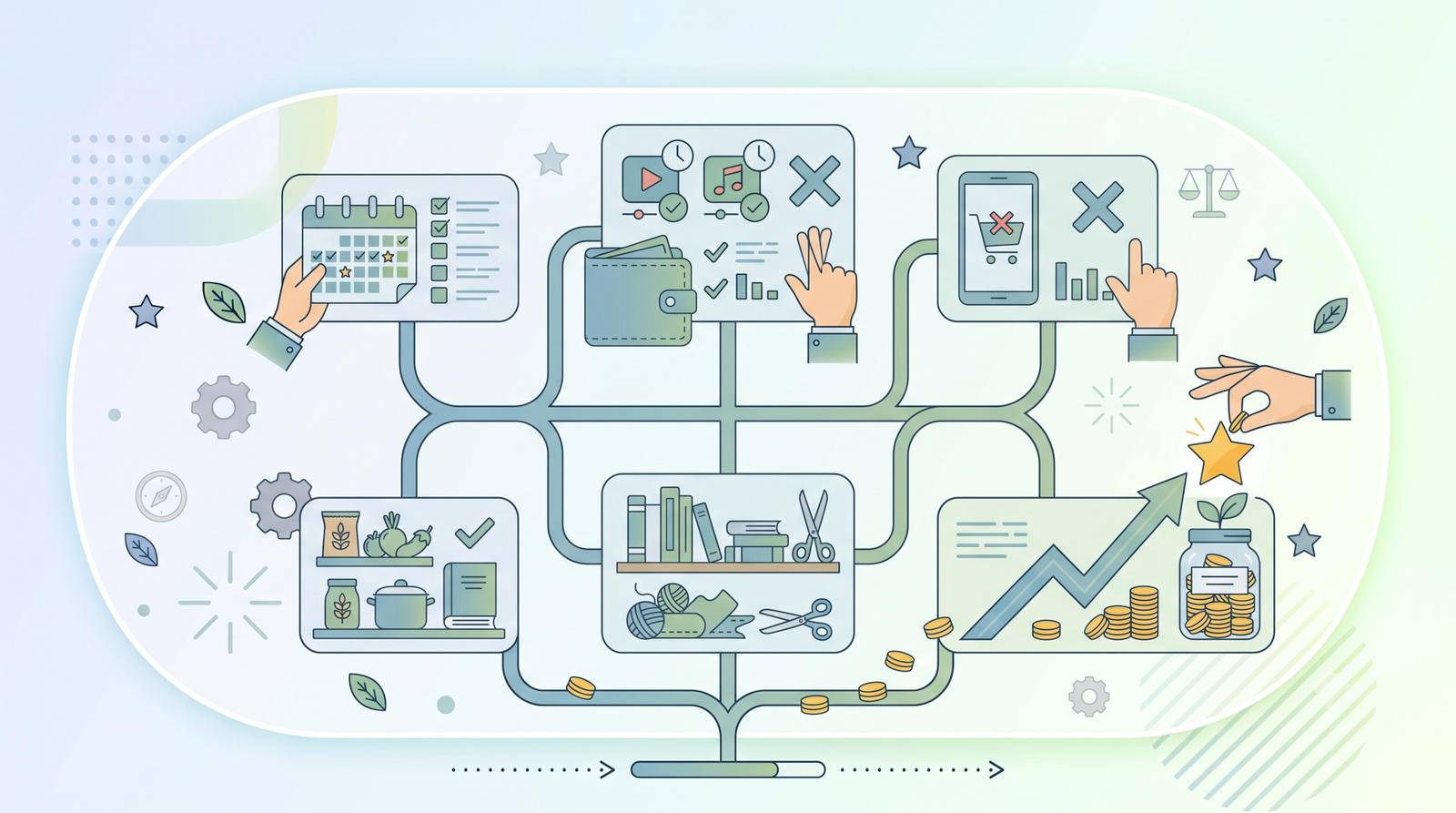
A Simple Bill-Reduction Checklist

Use this process once every three to six months:
Step 1: Gather Statements
Collect bank statements, card statements, utility bills, and service invoices.
Step 2: List Recurring Payments
Write down every monthly, quarterly, and annual charge.
Step 3: Mark Unused or Overpriced Services
Highlight anything you no longer use or believe is too expensive for its value.
Step 4: Compare Alternatives
Check lower plan tiers, competing providers, discounts, or free alternatives.
Step 5: Make One Call or Change at a Time
Document the new price, terms, and cancellation date.
Step 6: Redirect the Savings
Send the money saved toward a specific goal instead of allowing it to disappear into other spending.
For example, if you save $75 per month, automatically move it toward an emergency fund, debt payment, or planned expense. Giving the savings a purpose makes the change easier to maintain.
Common Mistakes When Cutting Monthly Bills
Choosing the Cheapest Plan Without Checking the Details
A low monthly price may come with higher fees, limited service, poor reliability, or a short promotional period.
Compare the full cost and conditions.
Canceling Important Protection
Do not reduce insurance, medical care, maintenance, or safety-related expenses without understanding the consequences.
The aim is to remove waste, not create a larger future risk.
Focusing Only on Small Bills
Canceling a small subscription is easy, but larger categories such as housing, transportation, energy, and debt may offer more savings potential.
Review small and large expenses together.
Forgetting Annual and Irregular Bills
A monthly budget that ignores annual renewals or seasonal costs will appear cheaper than it really is.
Divide annual expenses by twelve and set aside money each month.
Spending the Savings Elsewhere
If you lower your internet bill by $30 but spend an extra $50 on takeout, your financial position has not improved.
Redirect savings automatically whenever possible.
Accepting a Longer Contract Without Calculating the Total Cost
A contract may lower the monthly payment but increase your total obligation. Calculate the full cost, including fees and early cancellation charges.
Making Too Many Changes at Once
Changing every bill in one weekend can create confusion and accidental cancellations. Start with the easiest opportunities, document each change, and move to the next.
A Realistic Monthly Bill Example
Consider a household with these recurring expenses:
| Bill | Current Monthly Cost |
|---|---|
| Internet | $95 |
| Mobile phone plans | $145 |
| Streaming and apps | $85 |
| Electricity | $190 |
| Water | $70 |
| Insurance | $240 |
| Transportation fuel and parking | $360 |
| Household services | $120 |
| Total | $1,305 |
After reviewing the bills, the household decides to:
- Move to a lower internet plan and save $20
- Remove unused subscriptions and save $35
- Reduce mobile plan add-ons and save $25
- Improve energy habits and reduce electricity by an estimated $25
- Reduce paid household services by $30
- Combine errands and reduce fuel and parking by $40
The estimated monthly savings would be $175. Over a year, that equals approximately $2,100 before accounting for seasonal changes.
The household did not remove all entertainment, cancel important insurance, or make the home uncomfortable. It focused on unused services, unnecessary features, preventable waste, and convenience costs.
Actual savings will vary, but this is the general principle: several moderate adjustments can create a meaningful result.
Frequently Asked Questions
What is the fastest way to lower monthly bills?
Start with unused subscriptions, phone and internet plans, insurance comparisons, and recurring convenience services. Then review utilities and transportation. These categories often provide practical opportunities without affecting basic needs.
Should I cancel all my subscriptions?
Not necessarily. Keep services that provide regular value and fit comfortably within your budget. Cancel unused or duplicate subscriptions first, and consider rotating services instead of paying for all of them simultaneously.
How can I reduce utility bills without sacrificing comfort?
Focus on waste rather than comfort. Maintain appliances, reduce unnecessary heating or cooling loss, turn off unused devices, repair leaks, and use efficient lighting. Small changes are often easier to maintain than extreme temperature adjustments.
Is it worth switching internet or phone providers?
It can be, but compare the total price, service quality, fees, contract terms, equipment costs, and promotional period. A lower advertised price may not remain lower after temporary discounts expire.
Should I pay bills annually if there is a discount?
An annual payment may reduce the total cost, but only if you can pay it comfortably without damaging your emergency savings or using expensive debt. Compare the discount with the value of keeping the money available each month.
How often should I review my monthly bills?
A review every three to six months is reasonable for many households. Also review bills whenever you move, change jobs, add a family member, pay off a loan, or notice an unexpected price increase.
What should I do with the money I save?
Give the savings a specific purpose. You might build an emergency fund, pay down high-interest debt, prepare for annual expenses, or save for a longer-term goal. Automatic transfers can prevent the money from being spent accidentally.
Is a lower monthly payment always better?
No. A lower monthly payment can sometimes mean a longer repayment term, higher interest, additional fees, or a larger total cost. Always compare the complete financial commitment.
Key Takeaways
- Review your monthly bills regularly because prices, plans, and household needs change.
- Create a complete inventory of fixed and flexible expenses.
- Cancel unused subscriptions and review duplicate services.
- Compare phone, internet, insurance, and household service plans.
- Reduce electricity and water waste without making your home uncomfortable.
- Review transportation, grocery, debt, and convenience costs.
- Calculate the total cost before accepting a lower monthly payment or longer contract.
- Redirect the money saved toward an emergency fund, debt payment, or financial goal.
- Do not cut important protection or maintenance without understanding the possible consequences.
- Start with two or three changes instead of attempting a complete financial overhaul.
- The process connects naturally with frugal living tips, grocery-saving strategies, and broader household budgeting principles.
Lowering monthly bills is not about making every part of life as inexpensive as possible. It is about removing expenses that no longer provide enough value and directing that money toward something more useful.
Start by reviewing one category this week. Cancel one unused service, compare one plan, or identify one recurring cost that can be reduced. Small monthly savings may seem modest at first, but when they continue for twelve months, they can create meaningful room in your budget.
This article is for informational purposes only and is not financial advice.