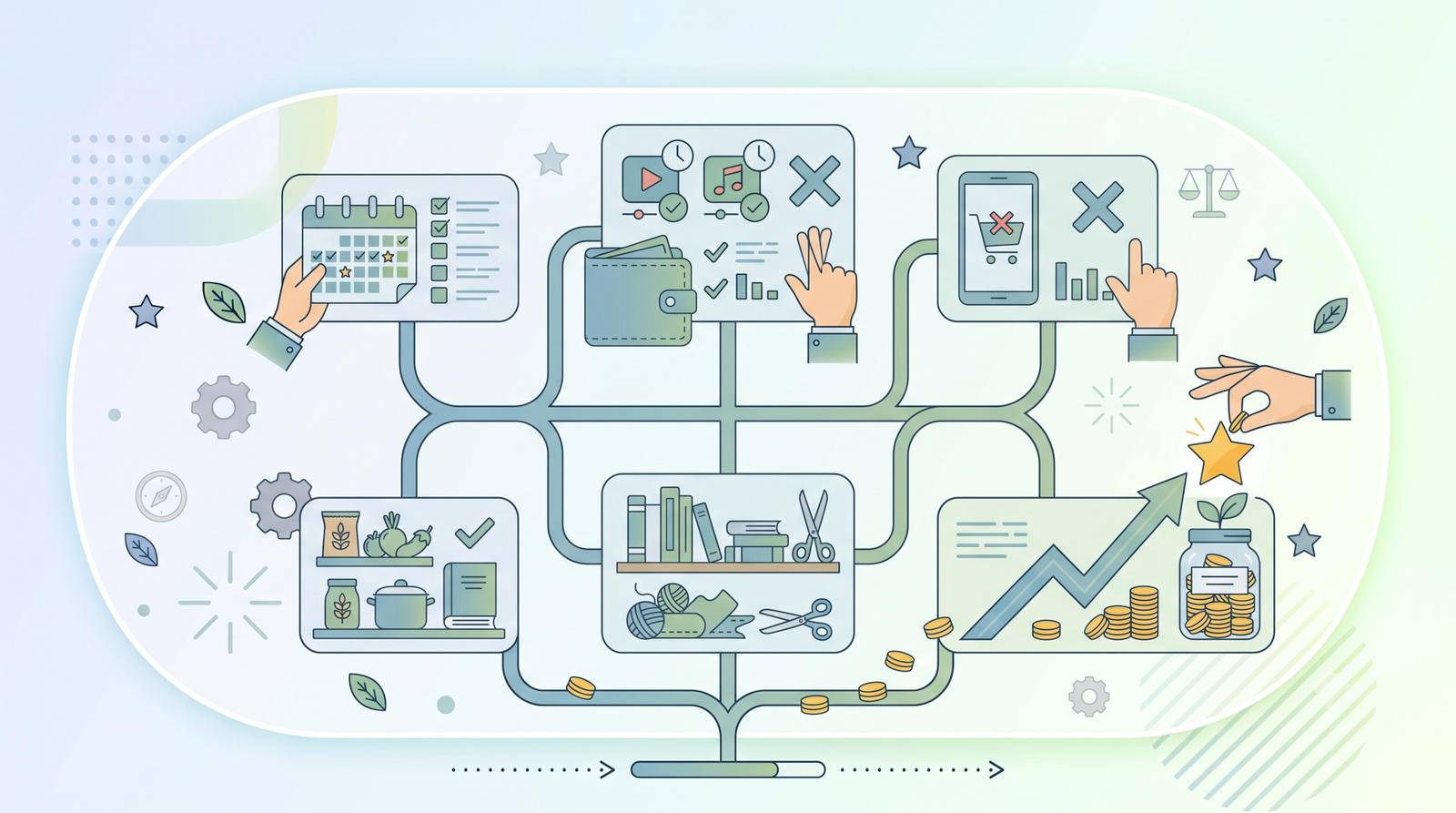







Grocery shopping is one of the easiest places for a monthly budget to get off track. You may enter the store planning to buy a few basics and leave with snacks, convenience foods, special offers, and extra items you did not originally plan to purchase.
The problem is not always one large shopping trip. It is often a combination of small decisions:
- Shopping without a list
- Buying food you already have
- Choosing convenience products regularly
- Letting fresh food expire
- Shopping while hungry
- Paying for delivery or last-minute trips
- Buying larger quantities than your household can use
The good news is that saving money on groceries does not require eating boring food or using extreme couponing methods. A few consistent systems can help you lower your grocery bill while still buying meals your household enjoys.
This guide explains how to save money on groceries with 30 practical ideas covering planning, shopping, food storage, cooking, leftovers, and household habits. These tips also connect to the broader principles in our frugal living 101 guide, where the goal is not simply to spend less but to get better value from your money.
Why Grocery Bills Become So Expensive
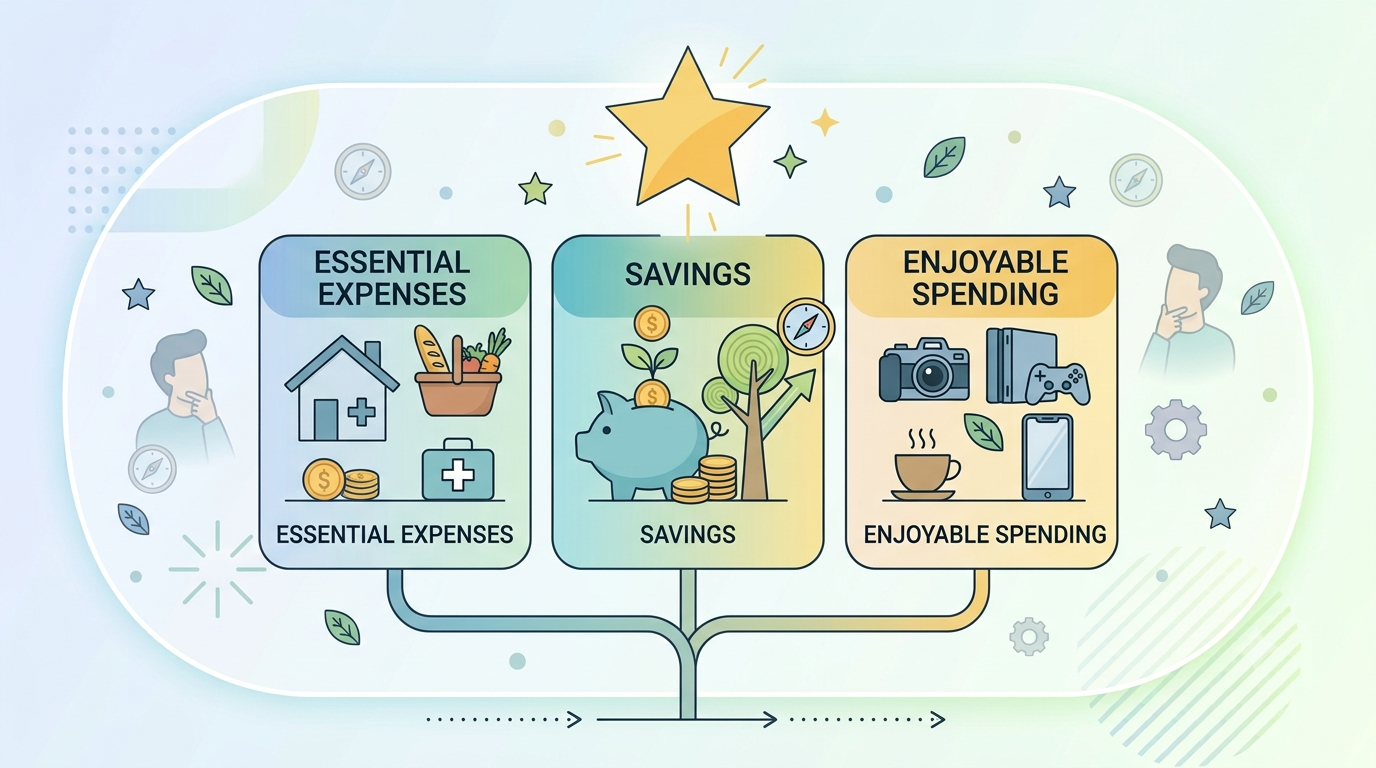
Food is a necessity, but grocery spending often includes both essential needs and optional wants.
For example, a basic meal may require:
- Rice, pasta, potatoes, or another staple
- Vegetables
- Protein
- Cooking ingredients
- Fruit
- Milk or another household necessity
But the same shopping trip may also include:
- Premium brands
- Prepared meals
- Individual snack packages
- Specialty drinks
- Delivery fees
- Impulse purchases
- Food bought for an imagined future meal
- Products purchased because they are discounted
None of these items are automatically bad. The issue is that they can quietly increase the final bill.
Grocery prices can also vary based on season, location, household size, dietary requirements, and local availability. A strategy that works for one household may not work exactly the same way for another.
The most useful approach is to focus on habits that reduce waste and improve planning without making meals difficult to manage.
Start With a Grocery Budget That Fits Real Life
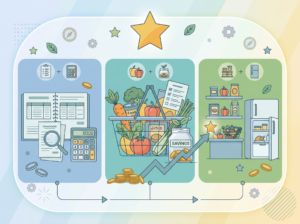
Before trying to lower your grocery bill, decide what you are currently spending and what you want to change.
Review the last two or three months of:
- Grocery receipts
- Supermarket transactions
- Delivery orders
- Convenience-store purchases
- Household products bought with food
- Takeout and restaurant spending
Separate groceries from restaurant meals and other categories where possible. If cleaning supplies, toiletries, and pet food are purchased during grocery trips, track them separately so you understand the true food cost.
Then ask:
- How many people am I feeding?
- Are there dietary or medical requirements?
- How often do I shop?
- How much food is wasted?
- Which meals are most expensive?
- Which items do I buy repeatedly?
- Are convenience purchases filling a time problem?
A grocery budget should be realistic. If you set an amount so low that it cannot cover your household’s basic needs, the plan will fail quickly.
A better strategy is to reduce spending gradually. For example, if your current grocery bill is $800 per month, aim for $740 or $760 first rather than trying to cut it immediately to $400.
30 Ways to Lower Your Grocery Bill
1. Check Your Kitchen Before Shopping
Look through your refrigerator, freezer, and pantry before creating a shopping list.
You may already have:
- Rice or pasta
- Frozen vegetables
- Canned beans
- Cooking sauces
- Spices
- Eggs
- Bread
- Meat stored in the freezer
- Ingredients left from a previous meal
Planning around what you already own reduces duplicate purchases and helps use food before it expires.
2. Create a Flexible Meal Plan
A meal plan does not need to specify every meal for every day. A flexible plan may include:
- Three main dinners
- Two easy backup meals
- Breakfast options
- Lunch ingredients
- Snacks
- One leftover night
This structure gives you direction without making the week feel rigid.
Choose meals that share ingredients. For example, a bag of onions, tomatoes, and spinach might be used in pasta, soup, eggs, sandwiches, and rice dishes.
3. Make a Shopping List and Follow It
A shopping list reduces the number of decisions you make inside the store.
Organize the list by section:
- Produce
- Meat or protein
- Dairy
- Pantry
- Frozen foods
- Household supplies
Check items off as you shop. If you see something not on the list, ask whether it is necessary, replacing something else, or simply appealing in the moment.
4. Do Not Shop While Hungry
Shopping while hungry can increase impulse purchases, especially of snacks, prepared foods, and sweet drinks.
If possible, eat a small meal or snack before shopping. This does not eliminate every unplanned purchase, but it can make it easier to follow your list.
5. Compare Unit Prices
The large package is not always the better deal.
Compare the price per:
- Kilogram
- Pound
- Liter
- Ounce
- Individual serving
The unit price allows you to compare different package sizes more accurately.
A larger container may be cheaper per unit, but only if your household will use it before it expires.
6. Try Store Brands
Store-brand products are often less expensive than national brands and may be similar in quality.
Try store brands for products such as:
- Rice
- Flour
- Sugar
- Pasta
- Canned vegetables
- Cleaning products
- Frozen foods
- Paper goods
- Basic spices
You do not need to switch everything at once. Compare a few products and keep the brands where the difference matters most to you.
7. Buy Seasonal Produce
Fruits and vegetables are often more affordable when they are in season and widely available.
Seasonal food may also taste better because it has not required as much storage or transportation.
Frozen and canned produce can also be useful, especially when fresh prices are high. Check labels for unnecessary added sugar, salt, or sauces when those ingredients matter to your household.
8. Use Frozen Foods Strategically
Frozen vegetables, fruit, meat, and prepared ingredients can reduce waste because they last longer.
Frozen products are especially helpful when:
- Your household is small
- You do not cook every day
- Fresh produce often expires
- You want quick ingredients for busy evenings
Frozen food is not automatically cheaper, but it may be more economical if it prevents unused fresh food from being thrown away.
9. Choose Cheaper Protein Options
Protein can be one of the most expensive parts of a grocery bill.
Depending on your dietary needs, consider using more:
- Beans
- Lentils
- Eggs
- Chickpeas
- Canned fish
- Tofu
- Yogurt
- Chicken thighs
- Ground meat
- Frozen protein
- Peanut butter
You do not need to remove more expensive protein completely. Mixing lower-cost options into your weekly meals can reduce the average cost.
10. Cook Larger Portions
Cooking a larger amount can reduce the cost and effort of future meals.
You can:
- Eat leftovers for lunch
- Freeze extra portions
- Use cooked ingredients in another meal
- Prepare several servings at once
- Create a planned leftover night
The important part is to store the food properly and label it so it does not become forgotten refrigerator clutter.
11. Use Leftovers Intentionally
Leftovers often become waste because they are treated as an afterthought.
Before cooking, decide how the extra food will be used:
- Lunch the next day
- A second dinner
- A filling for wraps
- An ingredient in soup
- A topping for rice or pasta
- A freezer meal
When leftovers are planned, they are more likely to be eaten.
12. Learn a Few Low-Cost Staple Meals
A household does not need dozens of complicated recipes. Build a short list of affordable meals that are easy to repeat.
Examples include:
- Vegetable and bean soup
- Rice with eggs and vegetables
- Pasta with homemade sauce
- Lentil curry
- Baked potatoes with toppings
- Stir-fried vegetables and noodles
- Chicken and vegetable stew
- Oatmeal with fruit
- Bean and rice bowls
- Homemade sandwiches
The goal is to have reliable backup meals for days when expensive takeout feels tempting.
13. Limit Individual Serving Packages
Individual packages are convenient, but they often cost more than larger containers.
Where practical, buy larger quantities and portion them at home.
For example:
- A large container of yogurt instead of individual cups
- A larger bag of nuts instead of small packets
- Whole fruit instead of prepared fruit cups
- A large bag of popcorn instead of single-serving snack bags
The savings may seem small, but repeated purchases can add up.
14. Drink More Water at Home
Bottled drinks, sweetened beverages, coffee-shop drinks, and energy drinks can increase grocery and convenience spending.
Keep water available at home and carry a reusable bottle when practical. If you enjoy flavored drinks, make them part of a planned category rather than purchasing them automatically every day.
15. Compare Different Stores
Different stores may have different strengths.
One store may offer better prices on:
- Produce
- Meat
- Bulk staples
- Household supplies
- Frozen foods
- Store-brand products
You do not need to visit several stores for every trip. Compare a few frequently purchased items and determine whether the savings justify the extra travel and time.
16. Avoid Shopping for Entertainment
When grocery shopping becomes a casual activity, it is easier to buy things without a plan.
Try to shop with a purpose and leave once the list is complete. If you enjoy browsing stores, set a separate entertainment budget so grocery shopping does not become a substitute for leisure.
17. Be Careful With “Buy One, Get One” Offers
Promotions can be useful when you already planned to buy the item and can use both products.
They are less useful when:
- You buy something only because it is discounted
- The product will expire
- You have limited storage
- The offer encourages you to buy an expensive brand
- You purchase more snacks than your household would normally eat
A discount is not a saving if it creates unnecessary spending.
18. Use Coupons Only for Planned Purchases
Coupons can help, but searching for coupons can also encourage unnecessary purchases.
Use a coupon when:
- You already need the product
- The discounted price is genuinely competitive
- You will use the item before it expires
- The coupon does not require buying something else you do not need
Do not allow a coupon to decide what you buy.
19. Reduce Food Waste
Food thrown away is money thrown away.
Common causes of waste include:
- Buying too much fresh produce
- Forgetting expiration dates
- Cooking portions that are too large
- Poor storage
- Buying ingredients for recipes that are never made
Store foods correctly, freeze items before they spoil, and organize your refrigerator so older products remain visible.
20. Use a “Use First” Area
Create one section of your refrigerator or pantry for items that need to be eaten soon.
Place there:
- Opened vegetables
- Leftovers
- Nearly expired dairy products
- Cut fruit
- Cooked meals
- Opened sauces
A visible “use first” area can prevent food from disappearing behind newer purchases.
21. Make Your Own Basic Foods
Depending on your time and skills, making certain foods at home can reduce costs.
Examples may include:
- Salad dressing
- Spice blends
- Sauces
- Bread
- Snacks
- Coffee
- Frozen meal portions
- Basic baked goods
Do not assume homemade is always cheaper. Include your time, ingredients, equipment, and the likelihood that you will actually prepare the item.
22. Reduce Pre-Cut and Pre-Prepared Products
Pre-cut vegetables, prepared fruit, grated cheese, and ready-to-cook meals can save time, but they often cost more.
Buy prepared items when the convenience is genuinely valuable. For other meals, preparing ingredients at home may lower costs.
23. Use a Cash or Category Limit
Some people find it easier to control grocery spending when they set a specific weekly amount.
You can use:
- A separate bank account
- A budgeting app category
- A weekly cash amount
- A prepaid card
- A simple envelope system
The method is less important than knowing the limit before shopping.
24. Shop Less Frequently
Frequent small shopping trips create more opportunities for impulse purchases.
Try planning one larger weekly trip, with a small backup trip only when necessary. This can reduce unnecessary snacks, convenience items, and duplicate purchases.
25. Keep Emergency Meals at Home
A lack of easy food often leads to expensive takeout.
Keep a few fast options available, such as:
- Frozen vegetables
- Eggs
- Canned beans
- Pasta
- Rice
- Soup
- Tortillas
- Oats
- Frozen chicken
- Canned fish
These ingredients can provide a meal when you are tired or short on time.
26. Check Your Receipts
Review your receipt before leaving the store or shortly afterward.
Look for:
- Incorrect prices
- Duplicate scans
- Unexpected substitutions
- Items you did not intend to buy
- Promotional discounts that did not apply
Receipt reviews also help you understand which categories are increasing.
27. Avoid Buying Groceries for an Imaginary Lifestyle
It is easy to buy ingredients for meals you hope to prepare rather than meals you realistically have time to cook.
Before buying specialty ingredients, ask:
- When will I use this?
- Do I already have the other ingredients?
- How long will it last?
- Will my household actually eat it?
Buy for your real schedule, not an idealized version of your week.
28. Share or Split Bulk Purchases
If a large package is cheaper but too much for your household, consider splitting it with family or friends when practical.
This can work for:
- Bulk spices
- Large produce boxes
- Household supplies
- Specialty foods
- Large meat packages
Make sure the arrangement is clear and fair before purchasing.
29. Plan Around Sales Carefully
Sales can reduce costs when they match your meal plan. Look at store promotions before shopping and adjust your plan around reasonably priced ingredients.
Do not create a meal plan around every sale. Too much variety can increase spending and waste.
30. Revisit Your Grocery Routine Every Month
Prices, schedules, household needs, and food preferences change.
Once a month, ask:
- Which meals were affordable?
- Which food was wasted?
- Which items were bought impulsively?
- Which store offered the best value?
- Did the grocery budget match reality?
- What one change should we try next month?
A grocery budget improves through regular adjustments rather than one perfect system.
Building a Simple Grocery Shopping System
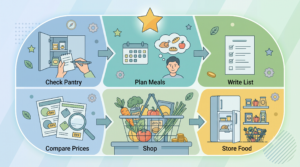
A repeatable shopping system can make saving money easier. Try this five-step process:
Step 1: Check What You Already Have
Review your refrigerator, freezer, and pantry.
Step 2: Select Affordable Meals
Choose meals that use existing ingredients and reasonably priced foods.
Step 3: Write a Specific List
Include quantities where useful. A list that says “vegetables” may be less helpful than “two onions, one bag of carrots, and one bunch of spinach.”
Step 4: Set a Spending Limit
Know your target before entering the store.
Step 5: Store Food Immediately
When you return home, organize food so older items are visible and fragile foods are used first.
This system reduces last-minute decisions, which are often more expensive than planned ones.
A Realistic Grocery Savings Example
Suppose a household currently spends $850 per month on groceries and related food purchases.
After reviewing its spending, the household identifies:
- $100 in restaurant delivery mixed into grocery transactions
- $75 in snacks and drinks bought during extra trips
- $60 in food waste
- $50 in premium convenience products
- $40 in duplicate pantry purchases
The household does not need to eliminate everything. It could:
- Separate restaurant spending from groceries
- Reduce extra shopping trips
- Create a use-first refrigerator area
- Replace some convenience products
- Check the pantry before shopping
If these changes reduce actual grocery spending by $150 per month, the household would save approximately $1,800 over a year.
The result will vary, but the example shows why systems matter. The household did not need to eat only the cheapest food. It reduced waste, duplication, and unplanned purchases.
Frequently Asked Questions
What is the easiest way to save money on groceries?
Start with a shopping list, check your pantry before shopping, plan several meals, and reduce food waste. These habits usually have a larger impact than searching for small discounts on individual products.
Is cooking at home always cheaper?
Cooking at home is often less expensive than frequent restaurant meals, but not every homemade meal is automatically cheap. Specialty ingredients, food waste, and complex recipes can increase the total cost. Choose simple meals that use ingredients efficiently.
Are generic or store-brand products worth buying?
Often, yes. Store brands may provide good value for basic products such as rice, pasta, canned food, flour, and cleaning supplies. Compare quality and unit prices rather than assuming either brand-name or generic products are always better.
How can I save money on groceries for a large family?
Plan meals around shared ingredients, buy appropriate quantities, cook larger portions, use leftovers intentionally, compare unit prices, and reduce food waste. A family budget should reflect the household’s actual dietary and age-related needs.
Should I buy groceries in bulk?
Bulk buying can help when the item is used regularly, has a long shelf life, and is genuinely cheaper per unit. It may cost more when food expires, storage is limited, or the larger package encourages overconsumption.
How can I stop buying unnecessary snacks?
Do not shop while hungry, create a specific list, set a weekly limit, and keep planned snacks at home. You can also use a waiting period for nonessential food purchases when shopping outside your regular grocery trip.
Is meal planning worth the effort?
A simple meal plan can reduce food waste, last-minute takeout, duplicate purchases, and unnecessary shopping trips. It does not need to be complicated. Planning three or four meals per week can still make a noticeable difference.
How much should a household spend on groceries?
There is no universal number. The appropriate amount depends on household size, income, location, dietary requirements, age, health needs, and local food prices. Use your current spending as a starting point and adjust gradually.
Key Takeaways
- Saving money on groceries starts with planning rather than extreme couponing.
- Check your refrigerator, freezer, and pantry before shopping.
- Use a flexible meal plan and a specific shopping list.
- Compare unit prices, try store brands, and buy seasonal or frozen foods when appropriate.
- Cook larger portions and plan how leftovers will be used.
- Reduce food waste by storing food properly and creating a visible “use first” area.
- Be careful with sales, bulk purchases, and convenience products.
- A grocery budget should be realistic for your household’s needs and responsibilities.
- Reviewing your grocery routine each month helps you find new savings opportunities.
- These habits are part of broader frugal living strategies, while separating essential groceries from optional food purchases connects to needs versus wants.
- Families managing food, household supplies, and shared expenses can also benefit from household budgeting for families.
A lower grocery bill does not require eating the same meals every day or choosing the cheapest product in every category. The biggest improvements usually come from reducing waste, planning around what you already have, shopping with a list, and making convenience purchases more intentional.
Start with two or three changes this week. Once those habits become normal, add another. Over time, small decisions can make your grocery budget more predictable and leave more money available for savings, debt payments, and the goals that matter most to your household.
This article is for informational purposes only and is not financial advice.