






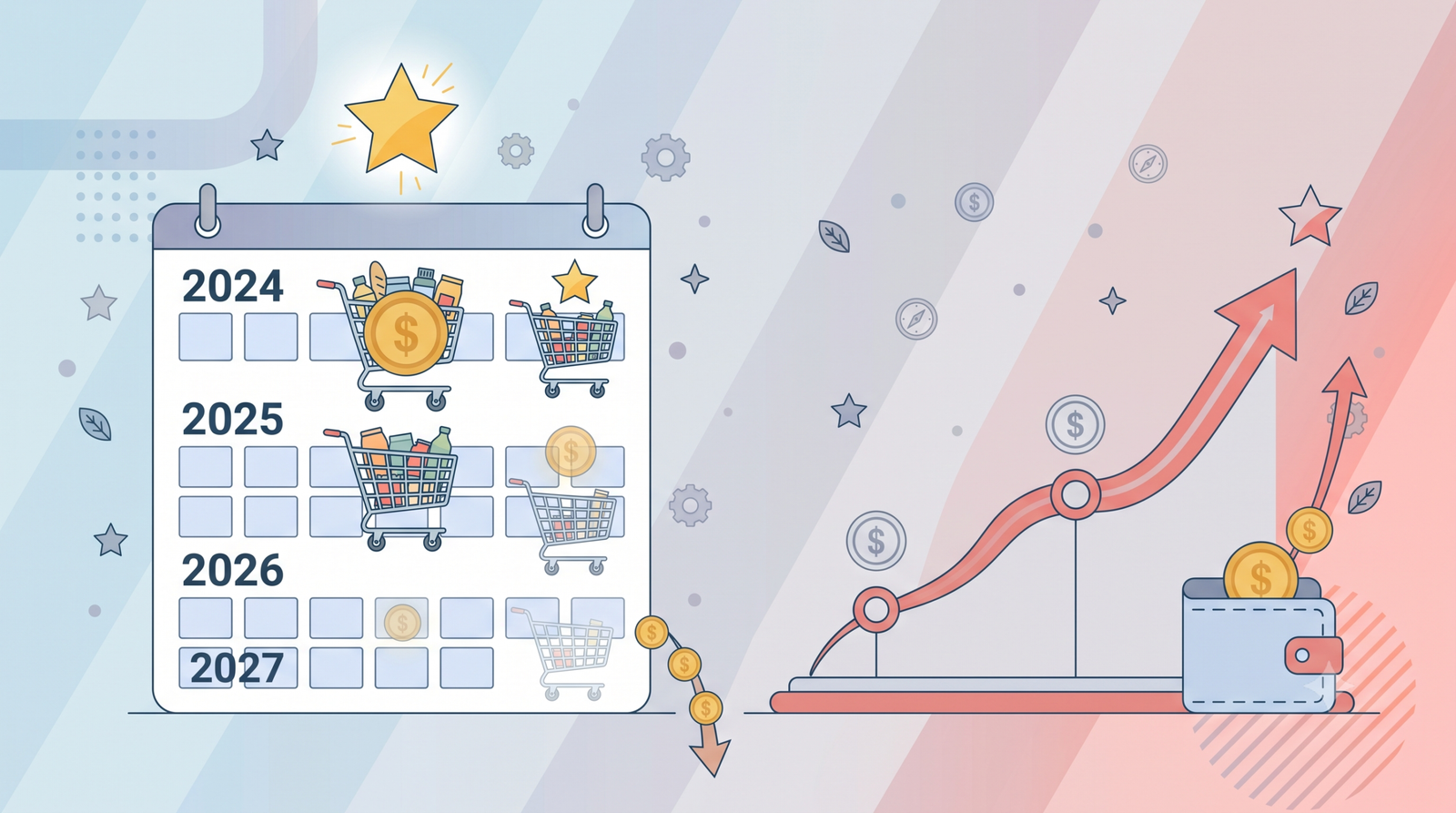
A dollar today doesn’t buy what a dollar bought ten years ago, and it won’t buy what a dollar buys today ten years from now. That’s inflation — a concept most people have heard of but few have actually seen explained in a way that connects to their own bank account, grocery bill, or savings plan. This guide fixes that.
By the end of this guide, you’ll understand exactly what causes inflation, how it quietly affects savings and everyday spending, and the practical steps that help protect your money from losing value over time. This connects directly to ideas covered in financial literacy 101 and the assets vs liabilities framework — inflation is part of why that distinction matters so much.
What Is Inflation, Exactly?
Inflation is the gradual increase in prices over time, which means each dollar buys a slightly smaller amount of goods and services than it did before. It’s usually measured as a percentage per year — if inflation is running at 3%, something that cost $100 last year costs roughly $103 this year, on average, across the broader economy.
The key word is average. Inflation isn’t a single number applied evenly to everything — groceries, housing, and gas can all rise at different rates, and some categories may even drop in price while the overall average still climbs. What matters for personal finance is less the exact percentage and more the underlying pattern: prices tend to drift upward over time, and money that just sits still tends to lose ground.
What Causes Inflation?
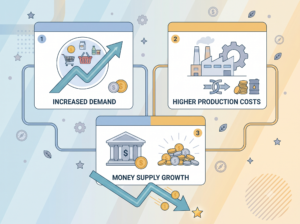
Inflation isn’t caused by one single thing — it’s usually a mix of a few forces working together.
Increased demand. When more people want to buy something than there is supply available, prices tend to rise. This is the most intuitive driver — more buyers competing for the same goods pushes prices upward.
Higher production costs. When it costs businesses more to make and deliver a product — due to raw material costs, labor, or transportation — some or all of that extra cost typically gets passed on to the consumer through higher prices.
Growth in the overall money supply. When there’s simply more money circulating in an economy without a matching increase in goods and services, each individual dollar becomes worth relatively less, which shows up as rising prices over time.
In practice, these forces overlap and interact, and economists debate the exact weighting of each cause during any given period. For everyday financial planning, the specific cause matters less than understanding that inflation is a normal, ongoing feature of most economies — not a rare emergency event.
How Inflation Quietly Affects Your Money
This is where the concept becomes personally relevant, beyond the abstract economics.
Cash sitting in a low-interest account loses purchasing power. If inflation runs at 3% a year and a savings account earns 0.5% interest, the real value of that money — what it can actually buy — shrinks by roughly 2.5% every year, even though the account balance itself never goes down.
Fixed incomes feel the pressure most. Anyone on a fixed salary, pension, or fixed budget can feel like their money is worth less each year, because in real terms, it often is — the number on the paycheck may stay flat while prices around it keep climbing.
Debt can behave differently under inflation. If you’re paying back a fixed-rate loan, inflation can work slightly in your favor over time, since you’re repaying with dollars that are worth less than the dollars you originally borrowed. This doesn’t make debt “good,” but it’s a nuance worth understanding.
Everyday purchases creep upward without a clear single moment of change. Inflation rarely feels like one dramatic price jump — it feels like a grocery bill that’s slightly higher than expected, month after month, until the cumulative difference becomes obvious in hindsight.
How to Protect Your Money From Inflation

You can’t stop inflation, but you can reduce how much it erodes your own finances.
- Keep short-term savings in the highest reasonable interest account available. Even a modest difference in interest rate helps offset some of inflation’s effect on cash sitting still.
- Use investing for long-term goals rather than only saving. Historically, diversified investments have tended to grow faster than inflation over long time horizons, which is part of why the assets vs liabilities framework treats investments differently from cash sitting idle.
- Revisit your budget periodically, not just once. A budget built a year or two ago may no longer reflect current prices; checking in periodically keeps it realistic.
- Focus spending awareness on categories that inflate fastest. Groceries and everyday essentials tend to be where inflation is felt most directly — our frugal living guide covers practical ways to manage rising costs in these categories specifically.
- Avoid keeping large amounts of cash idle for long periods. A reasonable emergency fund should stay in cash for accessibility, but money meant for goals many years away generally benefits from being invested rather than left to slowly lose value.
Common Misunderstandings About Inflation
- “Inflation means the economy is doing badly.” Some inflation is a normal, expected part of a functioning economy. It’s the rate and consistency of inflation that matters more than its mere presence.
- “If my income keeps up with inflation, I’m not affected.” Even when income rises alongside inflation, cash savings sitting in a low-interest account are still losing real value during that same period.
- “Inflation affects everyone equally.” In practice, it doesn’t. People who rent versus own, who carry fixed-rate debt versus variable-rate debt, and who have investments versus only cash savings all experience inflation’s effects differently.
- “There’s nothing I can do about it.” While no individual can control inflation itself, the choices around where money sits — cash versus invested, fixed-rate debt versus variable — meaningfully change how much inflation affects a specific household.
A Realistic Example
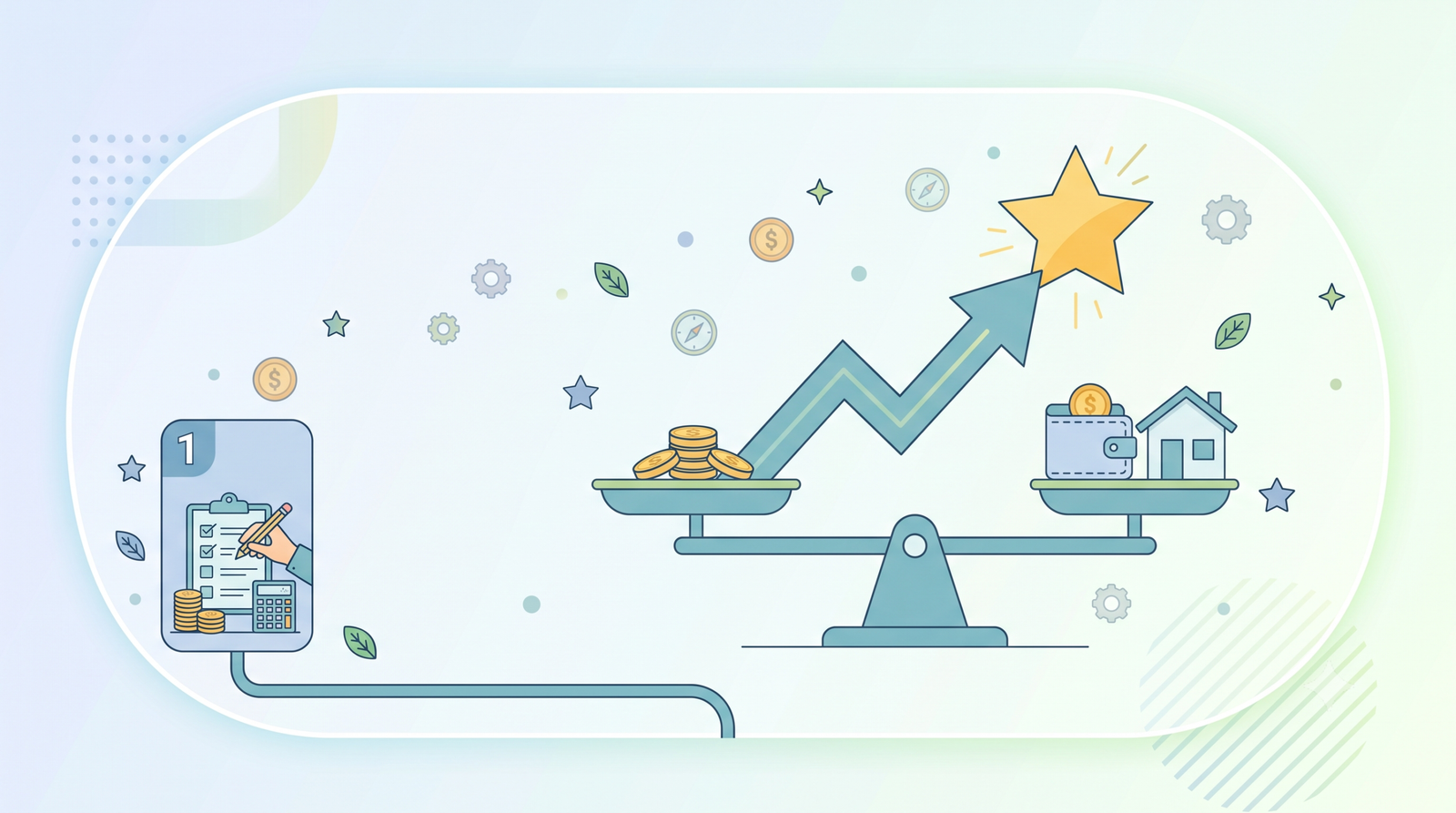
Consider $10,000 sitting in a savings account earning 0.5% interest, compared to inflation averaging 3% a year. After five years, the account balance grows to roughly $10,253 — technically more money than it started with. But because prices have also risen by roughly 3% annually over that same period, the real purchasing power of that balance is closer to $8,900 in today’s terms. The number on the statement went up; what it can actually buy went down.
Now compare that to the same $10,000 invested in a diversified fund averaging 7% annual growth over the same five years, ending at roughly $14,000. After accounting for the same 3% average inflation, the real purchasing power is closer to $12,000 — meaningfully ahead of where it started, rather than quietly behind.
This isn’t a suggestion that all cash savings are a mistake — an emergency fund needs to stay liquid and accessible, and that’s worth the inflation trade-off. It’s a demonstration of why money meant for longer-term goals is generally better protected from inflation by being invested rather than left sitting still.
Frequently Asked Questions
Is some inflation actually a good thing?
Most economists consider a low, steady rate of inflation to be a normal and even healthy feature of a functioning economy, as opposed to either runaway inflation or falling prices (deflation), both of which create their own economic problems.
Does inflation affect debt in a good way?
For fixed-rate debt, inflation can slightly reduce the real burden of repayment over time, since you’re repaying with dollars worth less than when you borrowed them. This is a secondary effect, though, not a reason to take on debt intentionally.
Should I stop keeping money in savings because of inflation?
No — savings still serve an important purpose for short-term needs and emergencies, where accessibility matters more than growth. The key is not leaving money meant for long-term goals sitting entirely in low-interest savings for years at a time.
How can I tell if my income is actually keeping up with inflation?
Comparing raises or income changes to the general rate of inflation for a given period gives a rough sense, though the more direct check is whether your budget is covering the same categories comfortably as it did a year or two ago, or whether the same spending now requires a larger share of income.
Key Takeaways
- Inflation is the gradual, ongoing rise in prices that reduces how much each dollar can buy over time.
- It’s driven by a mix of demand, production costs, and money supply growth — no single cause explains it entirely.
- Cash sitting idle loses real value under inflation, even while the account balance itself stays the same or grows slightly.
- Investing for long-term goals, revisiting your budget periodically, and being intentional about where money sits are the most practical ways to reduce inflation’s impact on your own finances.
- This concept connects directly to assets vs liabilities and the habits covered in financial literacy 101 — understanding inflation is part of why “just saving” isn’t always enough on its own.
Inflation isn’t something any one household can control, but it’s also not something that has to be ignored until it shows up as a surprise on a grocery receipt. Once the mechanics are visible, the response is fairly simple: keep short-term money accessible, let long-term money grow, and revisit the plan periodically as prices — and your own life — continue to change.
This article is for informational purposes only and is not financial advice